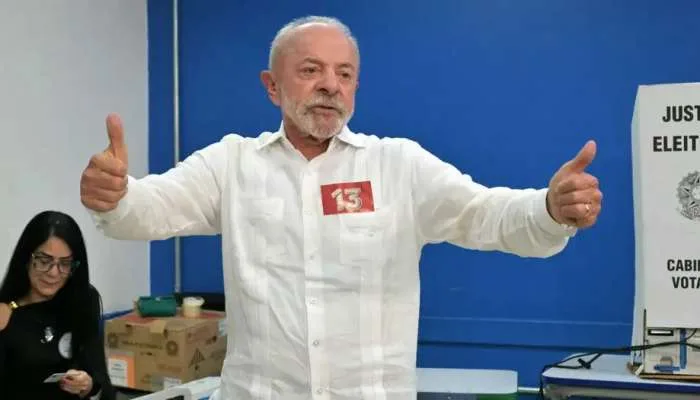
Lula da Silva, the 80-year-old President of Brazil and member of the Workers' Party, achieved a significant victory on Sunday in the second round of the Brazilian presidential elections. He returned to power by defeating Jair Bolsonaro in a tense competition and is recognized as one of the longest-serving presidents in Brazil's history.
Election Details and Results
According to statistics and forecasts, with 99.77 percent of the votes counted, Lula won the second round of the elections with 51.76 percent of the votes, while Bolsonaro secured 48.24 percent. This victory allows Lula to increase his record as the second president with the longest tenure in Brazil's history, after Getúlio Vargas. By the end of his fourth term, Lula will have served for 16 years as president, a record in Brazil's democratic history.
Read more: Qatar's Emir expressed condolences following the attack on a church in Jordan
Concerns and Challenges Ahead for Lula
Lula's victory came in an election heavily influenced by economic, security, and corruption concerns. He first served as President of Brazil from 2003 to 2010 and is recognized as a leftist leader during this period. Lula faced numerous challenges during the campaign, including rising living costs and high crime rates. Additionally, his opponent, Bolsonaro, emphasized a tough-on-crime approach and promised to reduce food prices.
On election day, due to last-minute requests from both candidates, voting was extended by two hours. This election was also the first since the return of direct presidential elections in 1989 in which a candidate won the second round after finishing second in the first round.
Voting Abroad
Brazilian citizens in Germany also voted for Lula, with him receiving 79.09 percent of the votes among 20,923 voters. This percentage shows an increase from the 71.9 percent he received in the first round. In Berlin, the highest support for Lula was observed with 88.77 percent of the votes, while Frankfurt showed the least support for Bolsonaro with 29.03 percent of the votes.
Despite only about half of the 41,552 eligible voters participating in the election, these results indicate strong support for Lula among Brazilians residing in Germany.
Impacts of Lula's Victory
Lula's victory will have implications not only for Brazil but for the entire Latin American region as well. He has emphasized strengthening Brazil's foreign policy independence and seeks closer relations with Global South countries and China, especially as tensions with the Trump administration in the U.S. have increased.
Lula, who began his career as a union leader in the 1970s, later founded the Workers' Party and was first elected president in 2002. He was re-elected in 2006 and handed over the presidency to Dilma Rousseff, one of his ministers, in 2010. Lula now faces new challenges ahead, but with his recent victory, he has returned to the center of Brazilian politics.
Read more: Oman Ambassador: The role of the Kurdistan Region in managing regional tensions is positive and balanced · Belgrade: A gathering of 150,000 supporters of the student movement before the decisive elections