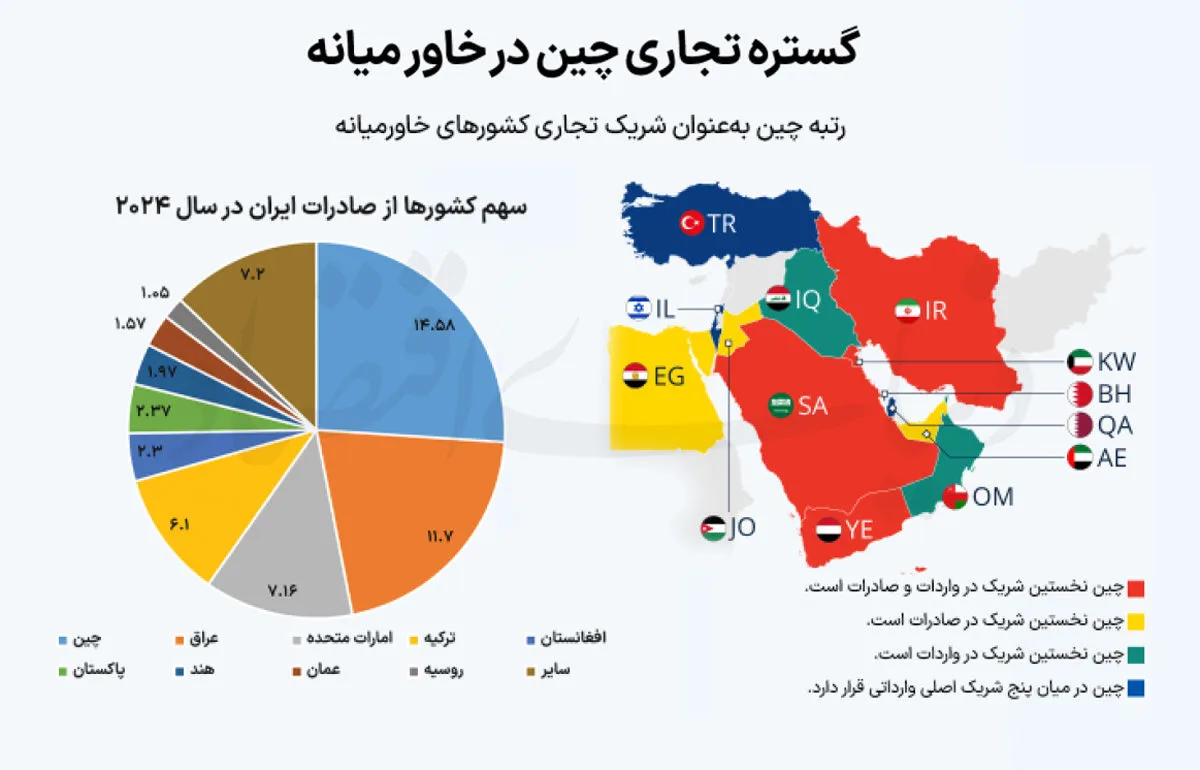
China has warned about the increasing tensions and instability in the Middle East, viewing it as an issue beyond political and geopolitical aspects. In recent years, the country has established a wide network of trade, energy, and investment relations in this region, and any disruption in the security of the Persian Gulf could severely affect China's economic interests as the world's second-largest economy.
China and Iran Relations
As one of Iran's important economic partners, China has sought to maintain its relations by providing political support to Tehran against U.S. pressures in recent years. However, evidence suggests that Beijing is not looking to engage in costly confrontations in favor of Tehran and is more focused on reducing tensions and restoring stability to the region.
Read more: Bangladesh Foreign Minister Emphasizes Positive Relations with India Ahead of Prime Minister's Visit
This imbalance in relations has become more apparent, especially under current conditions. Due to its broader global interests, China is reluctant to enter into direct confrontations with the U.S. and prefers that disputes be resolved through political and diplomatic means.
The Importance of Regional Stability for China
The significance of this issue is heightened by China's high dependence on Middle Eastern energy. Half of China's crude oil imports come from this region, and any insecurity in the Persian Gulf could significantly increase the costs of energy supply and trade for the country. Although Iran is considered an important supplier for China, Beijing can easily turn to other suppliers.
For this reason, China is working to strengthen its relations with other Middle Eastern countries, including Saudi Arabia and the United Arab Emirates, and to avoid entering into disputes between Iran and Arab countries. The country seeks to preserve its economic interests and prevent the spread of instability.
Overall, as a key player in the Middle East, China is striving to avoid military conflicts and emphasize stability and security in the region. This approach is likely to contribute to the formation of a new diplomatic order in the Middle East that benefits all parties.
Read more: Protests in Syria Continue Over Rising Fuel Prices · Iran and Oman: Delay in Holding Security Meeting Regarding the Strait of Hormuz at Saudi Arabia's Request