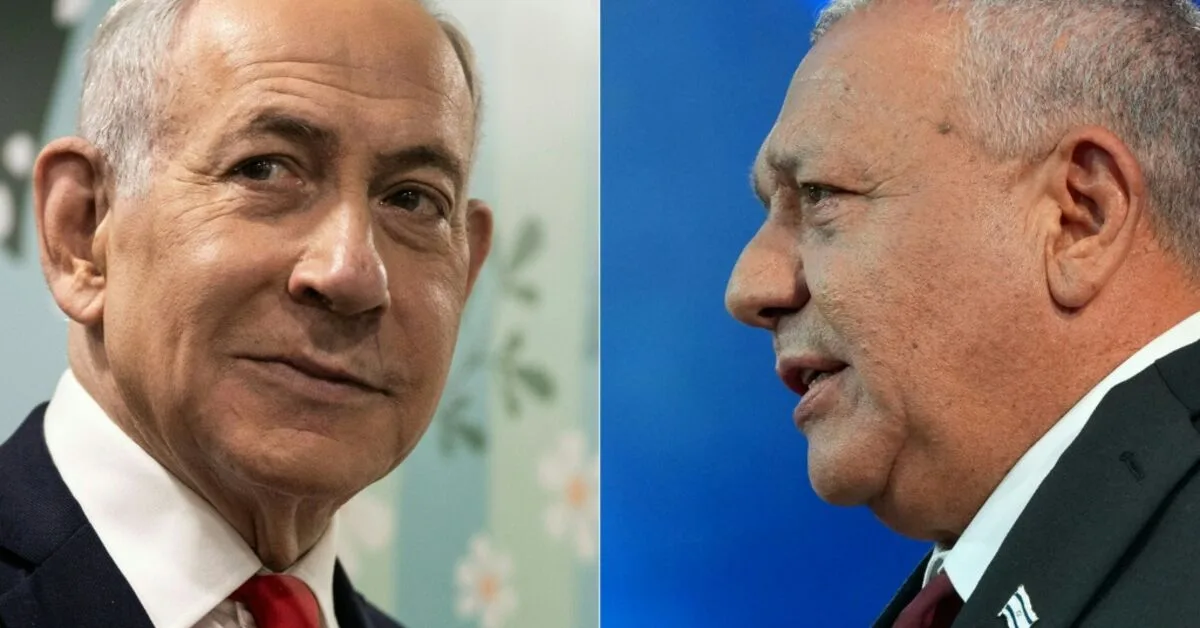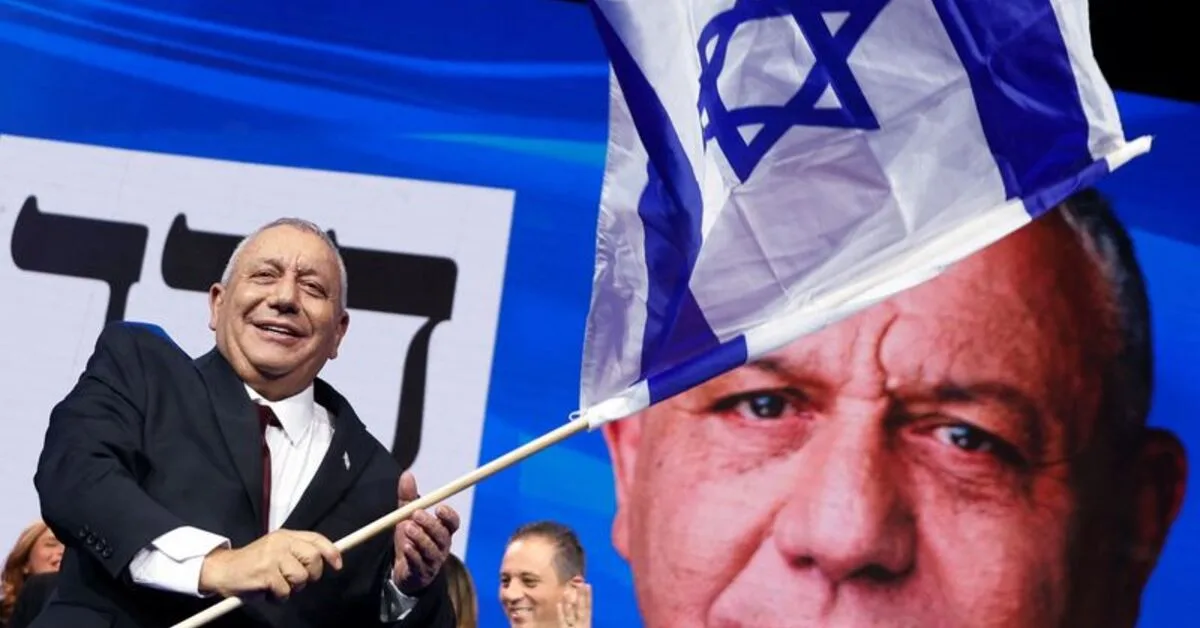
Israeli President Isaac Herzog appointed Gadi Eisenkot, the main rival of Benjamin Netanyahu, on Saturday to attempt to form a new government. This selection followed the elections on October 27, where neither side was able to secure a clear majority.
Challenges in Forming a New Government
Benjamin Netanyahu, recognized as Israel's longest-serving leader, is trying to remain in power while his religious-nationalist coalition has lost its majority in the recent elections. However, his coalition is still recognized as the largest bloc in the parliament.
Read more: Syria has no plans to send forces to Yemen
The spokesperson for President Herzog stated: "President Herzog has invited Gadi Eisenkot to come to the presidential residence, where he will be tasked with forming a government tomorrow." This role is largely ceremonial and involves designating a candidate to form a coalition after the elections.
Possible Pathways to Power
Following Eisenkot's appointment, lengthy negotiations are expected to begin. He has 28 days to try to form a government, with a possible 14-day extension. Possible pathways to power include attempting to form a minority government with Arab support from outside, forming a coalition with ultra-Orthodox parties, or creating a unity government with Netanyahu.
Analysts believe that all three options seem unlikely. If Eisenkot fails in his efforts, another candidate may be able to attempt to form a government, and if that candidate also fails, the parliament can introduce another candidate. The deadline for this process is about 100 days, and if unsuccessful, another election will be held.
The Likud party has won the most seats in the 120-member Knesset with 27 seats, but Netanyahu's broad religious-nationalist coalition has only secured 53 seats, less than the 61-seat majority. The Yashar party, led by Eisenkot, is identified as the second-largest party with 21 seats, and his coalition, which includes four parties from center-left to right-wing, has only obtained 48 seats. Two parties representing the Arab minority in Israel have also unprecedentedly won 19 seats.
Eisenkot, 66, the son of Moroccan immigrants, would be the first Prime Minister from the Mizrahi community in Israel if he succeeds in forming a government. He is known as a calm and reserved person and only entered politics in 2022.
Eisenkot served briefly as a minister in Netanyahu's war cabinet and returned to the opposition after Hamas's attack on Israel on October 7, 2023. He has strongly criticized Netanyahu for his leadership, including the management of the military campaign in Gaza, and has sworn not to serve in his government.
Eisenkot has also emphasized his security credentials in his electoral campaign, referencing the "Dahiya Doctrine," which refers to responding to attacks with disproportionate force, applied during the 2006 Lebanon War. He has also raised criticisms of settler violence against Palestinians, which has increased since 2023 and heightened tensions in Israel's relations with Western countries.
Read more: Macau: 12-year sentence for former political activist Au Kam San · Gadi Eisenkot, main candidate to form the Israeli government after recent elections