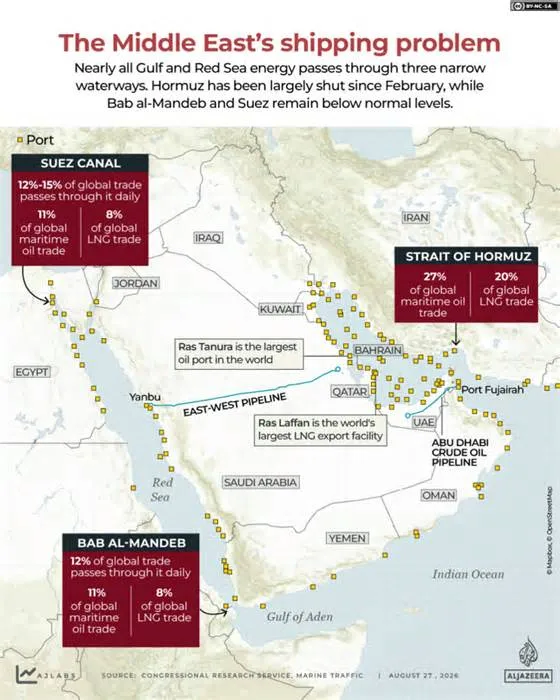
The Strait of Hormuz, one of the most important waterways in the world, has once again come into the spotlight. While Trump claims that the United States passes about 30 oil tankers through this waterway daily, ship tracking data tells a different story.
What do the statistics say?
Recent analyses show that the actual number of passing ships is significantly lower than the announced figure. This issue affects not only the Strait of Hormuz but also the global oil market and U.S. oil policies. In today's world, where information spreads rapidly, discrepancies in statistics can lead to distrust.
Moreover, this discrepancy in statistics can raise serious questions about the coherence of information from U.S. officials. Are these numbers deliberately exaggerated to showcase U.S. power on the global stage? Or are the security and economic realities changing and require more attention?
Impact on the Oil Market
Given that the Strait of Hormuz is responsible for the transfer of about one-third of the world's oil, any changes in the number of ships can impact global oil prices. Economists believe that these discrepancies could lead to significant volatility in the market, especially in a situation where geopolitical tensions in the region have reached their peak and any development could lead to serious crises.
Ultimately, it remains to be seen whether U.S. officials will respond to these discrepancies and what measures they will consider for clarification in this regard. In the world of information, the truth is not always accessible, and it seems that in this particular case, facts and claims are in an intriguing confrontation.