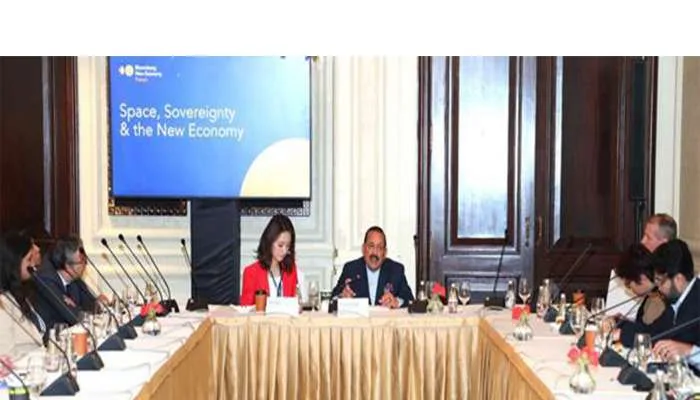
India's space economy is projected to grow from approximately $9 billion to $40 to $45 billion over the next seven to eight years. Jitendra Singh, India's Minister of State for Space, emphasized the need for increased private investments, expedited regulatory approvals, and sustainable commercial demand as key factors to achieve this growth during a media roundtable in New Delhi.
Development of Space Companies with Global Competitive Capabilities
Singh stated that India must move beyond showcasing technological capabilities and aim to create globally competitive commercial space companies. According to a statement from the Ministry of Space, he asserted that "more domestic and international investment, predictable demand, faster regulatory approvals, and sustainable business models are essential for scaling Indian companies and expanding their presence in global markets."
The Importance of Demand and Government Support
This development is expected to bring India's space economy to approximately five times its current size, but achieving this goal requires private companies to develop commercially viable products and secure a stable customer base. Singh added that the opening of India's space sector to private partnerships in 2019-2020 has yielded significant results, but the next priority is to convert technological capabilities into sustainable businesses.
The minister also emphasized the importance of demand, stating that government institutions can act as primary customers for private space companies, assisting them in developing and testing technologies before commercial deployment. Additionally, Singh called for expedited installation approvals and export licenses, reduced business costs, and strengthened supply chain integrity. He also stressed that reforms related to goods and services tax concerning space products should lead to practical benefits for businesses.
In terms of investment, the minister highlighted the need to attract both domestic and foreign capital while strengthening indigenous capabilities and maintaining strategic autonomy. He also pointed to the commercial potential of satellite communications, earth observation, and geographic programs in monitoring infrastructure, agriculture, disaster management, and defense.
Singh stated that the next phase of expanding India's space sector depends on a combination of private investment, predictable demand, efficient regulations, and international partnerships to build globally competitive companies.