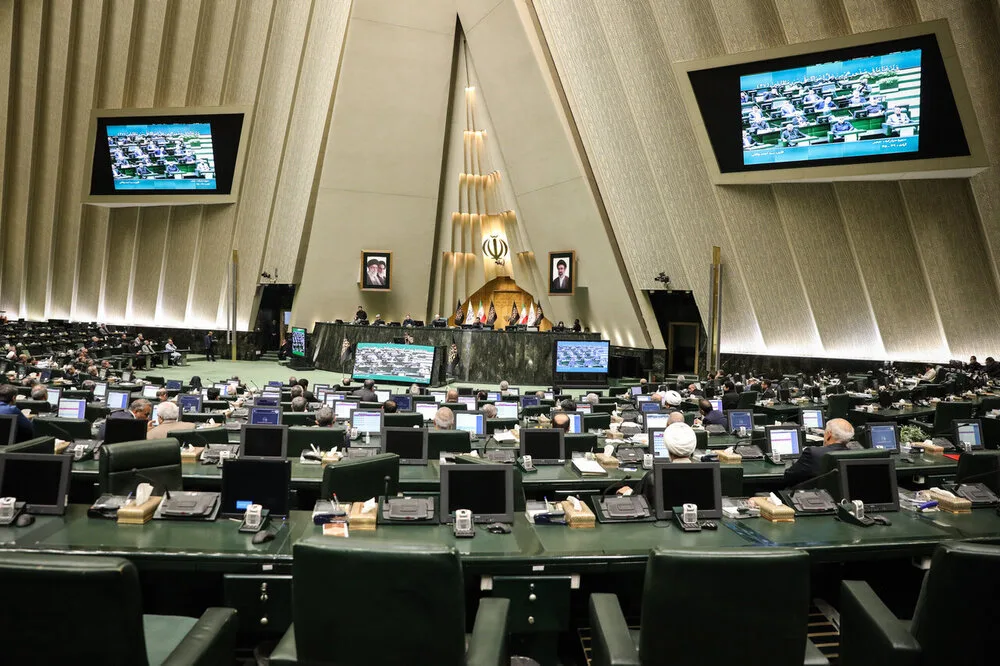
The open session of the Islamic Consultative Assembly began on November 1st, chaired by Ali Nikzad, the Deputy Speaker of the Assembly, at 9:05 AM with the presence of 199 representatives virtually.
Agenda of the Islamic Consultative Assembly
At the beginning of this session, Rouhollah Motahari Azad, a member of the Assembly's board, read today's agenda. The most important items discussed in this session included:
Read more: The agenda of the Islamic Consultative Assembly of Iran for next week has been specified
- Continuation of the review of the National Security and Foreign Policy Commission's report on the bill to combat foreign infiltration
- The report of the Urban Development Commission on the bill of the cooperation agreement regarding maritime transport between the Government of the Islamic Republic of Iran and the Government of the Sultanate of Oman
- The report of the Economic Commission on the bill of the bilateral agreement regarding mutual administrative assistance in customs matters between the Islamic Republic of Iran and the Republic of Indonesia
- The report of the National Security and Foreign Policy Commission on the bill to amend the law on the use of weapons by armed forces personnel in emergency situations
- Continuation of the review of the report of the Interior Affairs and Councils Commission on the proposal to support gatherings and marches in accordance with Article 27 of the Constitution of the Islamic Republic of Iran
- The report of the Economic Commission on the bill for managing public debts
Importance of the Bill to Combat Foreign Infiltration
The bill to combat foreign infiltration is one of the critical issues raised in this session, focusing on the examination and analysis of foreign intelligence services' infiltration in the country. This bill aims to strengthen national security and protect the interests of the Islamic Republic of Iran against external threats. In the current situation where the international environment is highly turbulent, the approval of this bill could significantly enhance the country's security infrastructure.
Additionally, the review of the cooperation agreement on maritime transport with the Sultanate of Oman and the bill for mutual administrative assistance in customs matters with the Republic of Indonesia are other important issues of this session that could help strengthen the country's trade and economic relations.
Economic Challenges and Consequences
The bill for managing public debts, which is on the agenda of this session, is presented as an important tool for controlling and managing the country's finances. Given the current economic conditions, this bill could help improve the country's financial situation and increase transparency in economic matters. A thorough review of this bill and other related proposals could have positive impacts on the macroeconomy of the country.
Ultimately, today's session of the Islamic Consultative Assembly is held with the aim of reviewing and approving proposals and bills that can contribute to the security and economy of the country, and representatives are carefully and attentively addressing these issues to make the best decisions in line with national interests.
Read more: Review of the investigation and scrutiny of 6 banks in the Islamic Consultative Assembly · Holding the second edition of the Al-Mazuna Economic Exhibition and Conference in Oman and Yemen