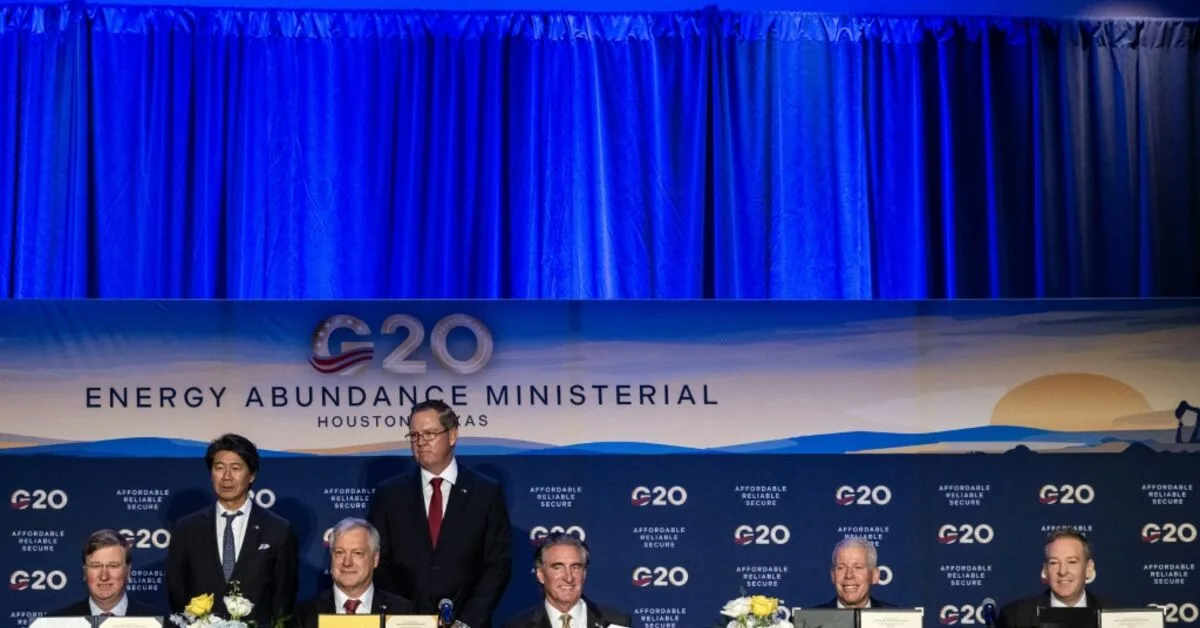
The United States delivered a strong message about its dominance in the energy sector at the G20 Energy Ministers' meeting held on Tuesday in Houston, while overlooking the consequences of its war in Iran and environmental concerns.
Emphasis on America's Energy Capabilities
The slogan of this meeting was "Unleashing the Full Potential of American Energy," which has been repeatedly echoed by U.S. officials since the gathering began on Monday. Members of President Donald Trump's cabinet view his policies as a reversal of those of his predecessors, particularly Joe Biden, with the head of the Environmental Protection Agency, Lee Zeldin, accusing Biden of participating in "climate change hysteria" due to promoting renewable energy.
Effects of War and Energy Needs
Doug Burgum, the Secretary of the Interior, stated, "The overall goal was to produce enough energy for domestic prosperity and also to provide secure, affordable, and reliable energy for all our allies." In response to the increasing demands of the artificial intelligence industry, the Environmental Protection Agency announced a reduction in pollution restrictions from gas and coal power plants, which has led to serious criticism from environmental activists.
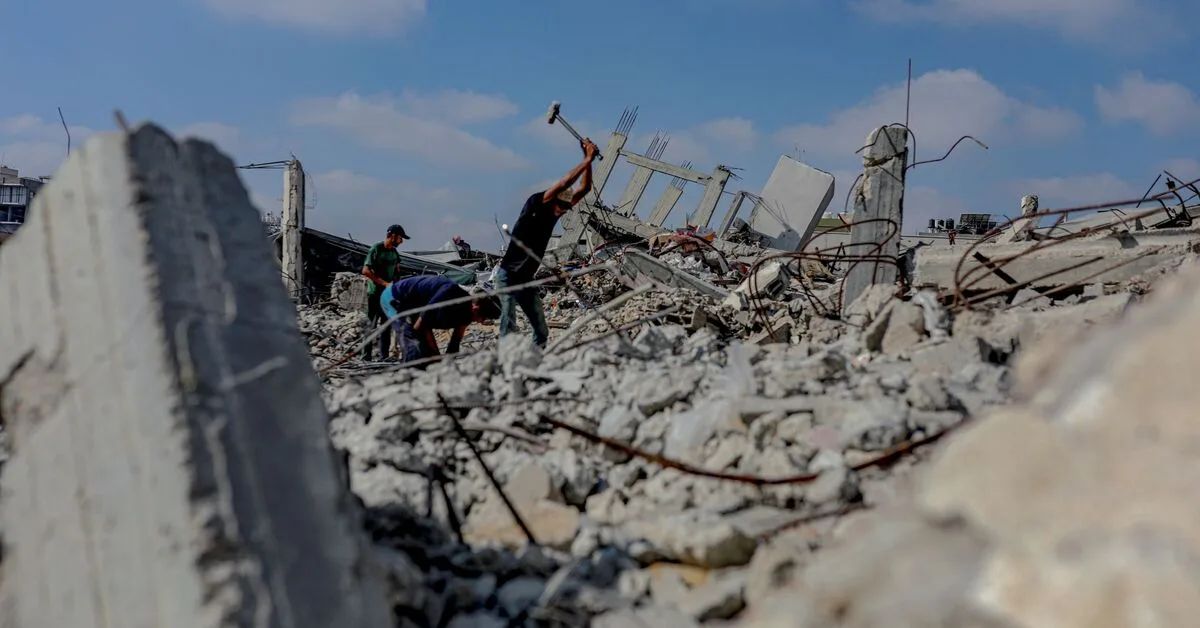
After Trump's return to the White House in 2025, he has promised to boost U.S. oil production, a move that has intensified since the start of attacks against Iran with Israel on February 28. In Houston, where ministers from the world's largest economies like China, India, Japan, and Germany meet with oil powers like Saudi Arabia, Qatar, and Canada, statements regarding the war in the Middle East are rarely seen.
However, concerns in the oil industry are undeniable and increasing. The closure of the Strait of Hormuz by Iran has sharply raised oil prices, and new advances by Iranian-backed Houthis in controlling the Bab el-Mandeb Strait have impacted the movement of Saudi oil.
Burgum said, "President Trump wants the whole world not to pay attention to the disrupted region." He added that this area is in a "cycle of disruptions."
Analysts say that the world without the Middle East in oil is "like a band without a drummer. You need the whole band to make music."
Trump administration officials assert that the solution lies in domestic production. Burgum emphasized, "The lowest energy prices in the world are in the United States, and the safest energy is also in this country." White House energy advisor Jarod Agan stated that one of the main goals of the Trump administration is to "turn the Western Hemisphere into a hub of affordable, reliable, and secure energy."
The United States relies on a major asset: Venezuela. Since the deployment of U.S. special forces to capture Nicolás Maduro, Venezuela's new leader has become an ally of Washington, and the U.S. intends to exploit this country's vast oil reserves. Under an agreement reached this summer, the United States will take control of nearly one-fifth of Venezuela's oil reserves, the largest in the world.
However, the country's infrastructure has been damaged due to years of neglect, and it will take a long time to increase production. Kent Medlock, a researcher at the Baker Institute at Rice University in Houston, said, "Venezuela is not a short-term solution, although it may help increase production in the long run."
He also warned that under current conditions, "the G20 cannot do anything to balance supply and demand unless diplomatic efforts are made to resolve issues in the Middle East and the Russia-Ukraine crisis." Medlock added that a cold winter in Europe "could be extremely challenging" given the supply constraints.