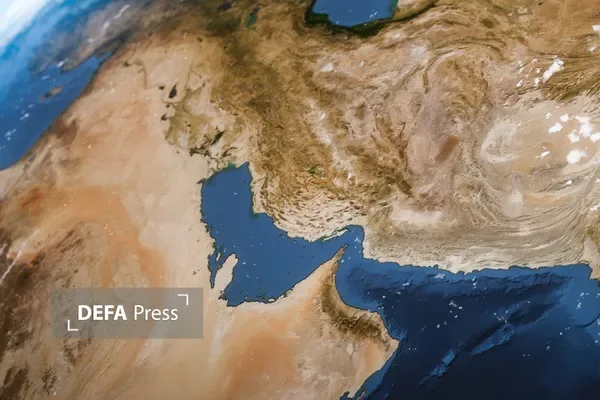
The security of the Persian Gulf has largely been defined in recent decades in terms of power competition and military balancing. In this model, each country strengthens its military capabilities and forms alliances to enhance its security. But will this approach lead to increased collective security?
Security Challenges in the Persian Gulf
The events of 2026 demonstrate that any security crisis can extend beyond bilateral relations and impact energy security and global trade. The United Nations has also emphasized the importance of the Strait of Hormuz for regional stability and the global economy, highlighting the necessity of collective action to maintain its security. Therefore, the main question is: what kind of security architecture can prevent rivalries from turning into chain crises?
Transition to Collective Security
In international relations theory, power balancing is one of the mechanisms to prevent the hegemony of a player. However, in the Persian Gulf, this balance faces challenges. The defensive actions of one country may be perceived as a threat by another, leading to greater insecurity. Therefore, the main problem is not just the lack of power, but also the absence of trust and permanent mechanisms for crisis management is of great importance.
In this context, the concept of 'collective security' gains special significance. In collective security, a threat to the security of one member is considered a concern for the entire security system, and members are committed to managing disputes through common rules. Thus, the presence of Iran and the coastal Arab countries in this framework is indispensable.
Signs of Change
Recent developments indicate that the discussion about the future of the Persian Gulf security architecture is not merely theoretical. In September 2026, some Gulf countries are exploring alternative frameworks for their traditional security arrangements, and Qatar has also proposed a regional plan that includes Iran. This process is in its early stages, and the security dependence of regional countries on foreign defense cooperation remains significant.
Additionally, Saudi Arabia, Turkey, and Pakistan have discussed deepening defense cooperation and military coordination. These two processes, namely strengthening deterrence and seeking regional frameworks, may seem contradictory, but they can be viewed as two responses to a common issue: how to enhance security in an unstable environment?
The Model of Collective Security in the Persian Gulf
The proposed model for the future security of the Persian Gulf is called 'Transition from Power Balancing to Collective Security.' In this model, the main regional actors must participate in a common architecture. This model is based on fundamental principles such as respect for sovereignty and the non-use of force.
Maritime security and the Strait of Hormuz should also be considered as one of the primary areas of cooperation. Establishing communication channels among military forces and protocols to prevent clashes can help prevent incidents from escalating into widespread crises. Thus, by creating a common security system and institutionally managing disputes, collective security in the Persian Gulf will become possible.
Read more: The Sultanate of Oman participated in the Financial and Economic Cooperation Committee of the Gulf Cooperation Council · Amin Mirzazadeh became the champion of Greco-Roman wrestling at the 2026 Asian Games in Nagoya