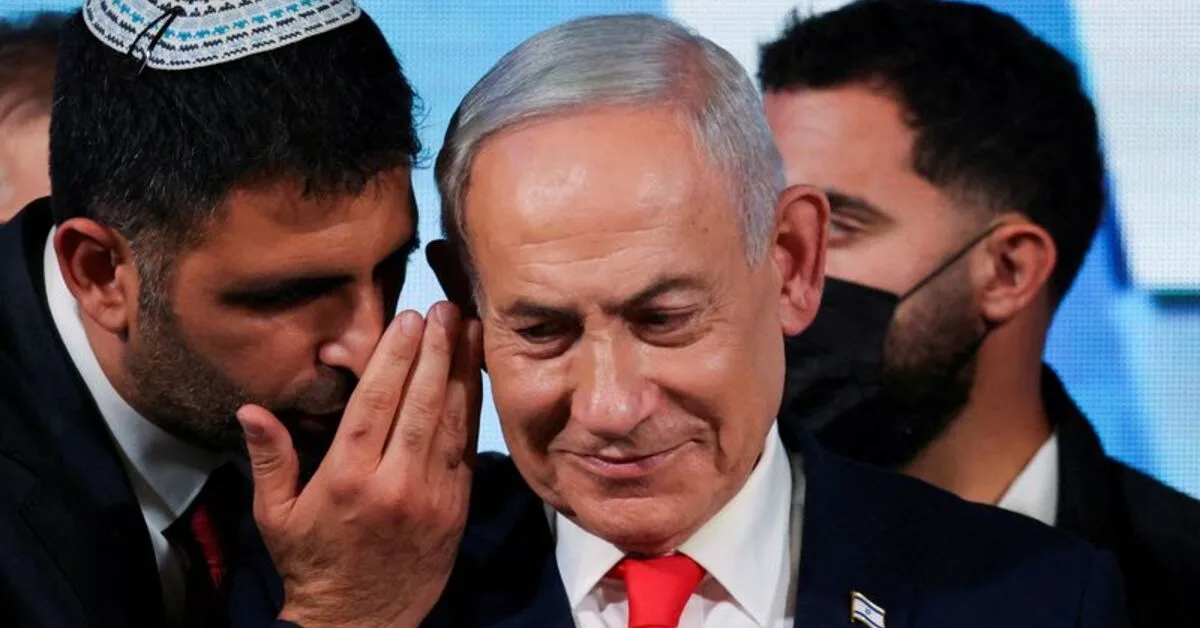
Benjamin Netanyahu, the Prime Minister of Israel, is facing serious challenges in his efforts to continue his presidency after the recent elections. With the lack of support from the Haredi Jewish party and the endorsement of an Arab-language party for his main rival, Gadi Eisenkot, Netanyahu's position has been significantly weakened.
Challenges Facing Netanyahu
The October 27 elections in Israel have resulted in a deadlock, with neither Netanyahu nor Eisenkot able to secure a decisive majority in the Knesset (Israeli parliament). Currently, the President of Israel, Isaac Herzog, is tasked with choosing one of the two to form a government. Herzog must make his final decision by November 11, and until then, Netanyahu will continue as Prime Minister in a caretaker government. If he fails to form a new government, new elections will be held.
Read more: JD Vance's Effort to Form a New Political Alliance with Disgruntled Trump Supporters
Party and Coalition Status
Netanyahu's Likud party has secured the most seats in the Knesset with 27 out of 120 seats, but his nationalist-religious coalition has only obtained 53 seats. Meanwhile, Eisenkot's coalition, which includes four center-left to right-wing parties, has only gained 48 seats, and two parties representing the Arab minority have unprecedentedly secured 19 seats.
On Thursday, the United Torah Judaism party, one of the two major parties representing Haredi Jewish voters and a long-time partner in Netanyahu's coalition, refrained from introducing a candidate to form a government. This is seen as a setback for the Prime Minister. Additionally, while Eisenkot has so far rejected forming a government with the two Arab-language parties, one of these parties supported Eisenkot on Thursday, and the other is expected to do so soon.
President's Call for Unity
Isaac Herzog is trying to meet with various parties and urging them to prevent a new round of elections. He believes that the security and diplomatic challenges facing Israel, along with its internal issues, place a significant responsibility on elected representatives.
In meetings with smaller parties, Herzog has emphasized the importance of building consensus and cooperation, reminding representatives that a peaceful transfer of power is a cornerstone of democracy. Together with the head of the electoral committee, Supreme Court Justice Noam Sohlberg, he has stressed the need to maintain public trust in the political system.
As Netanyahu faces the risk of losing power, some of his allies on the far-right have called for the arrest and interrogation of Arab party leaders. Meanwhile, the Central Election Committee of Israel has stated that the integrity of the elections has not been compromised.
Read more: Oman's Ambassador to Somalia Presents His Credentials · Israeli President Calls for Political Agreement After Controversial Elections