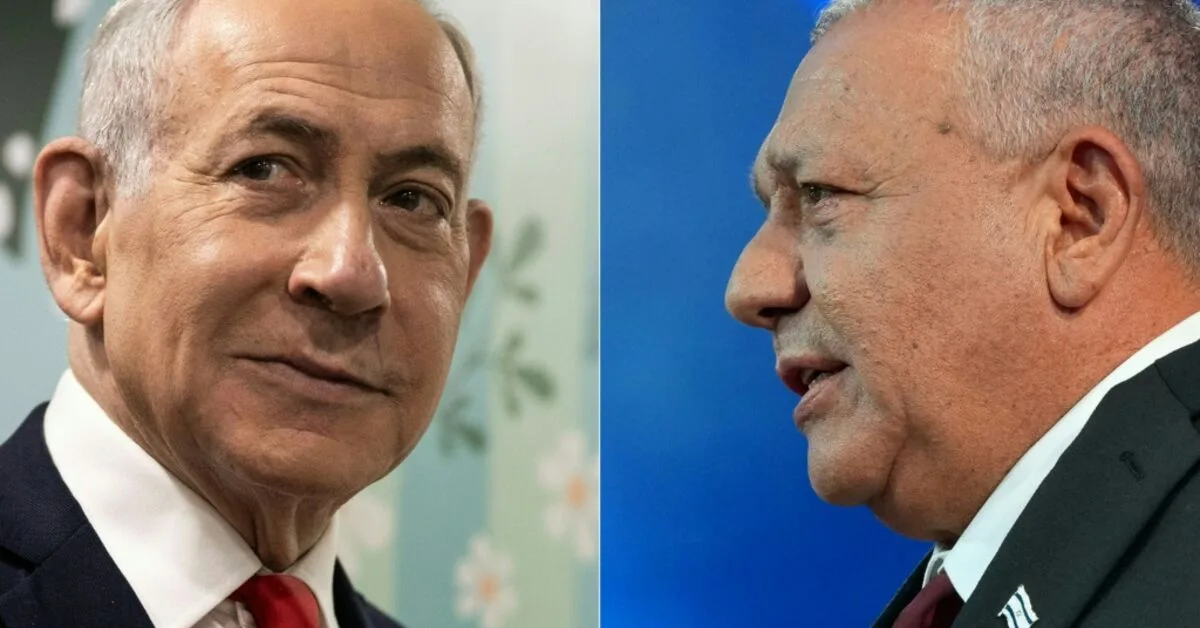
Gadi Eisenkot, former chief of the Israeli army, received a tough mission on Sunday to form a new government to succeed Benjamin Netanyahu, Israel's longest-serving prime minister. Eisenkot, who presents himself as a novice politician, has promised to bridge the deep political divide in Israel that emerged during Netanyahu's tenure.
Meeting with the President
Eisenkot, 66, is set to meet with President Isaac Herzog to officially begin his mission to form a government. This mission comes with an initial 28-day deadline. Born to a family of Moroccan labor immigrants, he will be recognized as the first Sephardic prime minister in a country that has been predominantly dominated by Ashkenazi elites.
Read more: Macau: 12-Year Sentence for Former Political Activist Au Kam San
Political Challenges and Alliances
Netanyahu, who has served as prime minister for nearly two decades and has played a role in wars against Gaza, Lebanon, and Iran, lost support in last month's elections, although no party gained an absolute majority. In last week's consultations with Herzog, Eisenkot received recommendations from parties that collectively include 67 representatives, while Netanyahu has only 46 representatives.
Eisenkot has called for the formation of a "national emergency government," aimed at ousting Netanyahu, whom he described as "a fundamental threat to the existence of democracy in Israel." He has rejected an alliance with Netanyahu and seems to intend to seek support outside of Israeli Arab parties by forming a minority government.
However, he faces many challenges. Avigdor Lieberman, a staunch critic of Netanyahu, has not supported any alliance with Israeli Arabs and emphasized cooperation with ultra-Orthodox Jews. These attitudes and disagreements could significantly impact the government formation process.
In this context, Neri Bar-On, an educational expert in Tel Aviv, has expressed hope that Eisenkot can form a government, but he also emphasized that even if successful, this would not resolve the country's main issues.
Read more: Humanitarian Crisis in Yemen: Homeless Mothers in Taiz Struggle for Survival · Kuwait's Public Pension Fund Wins in London Court