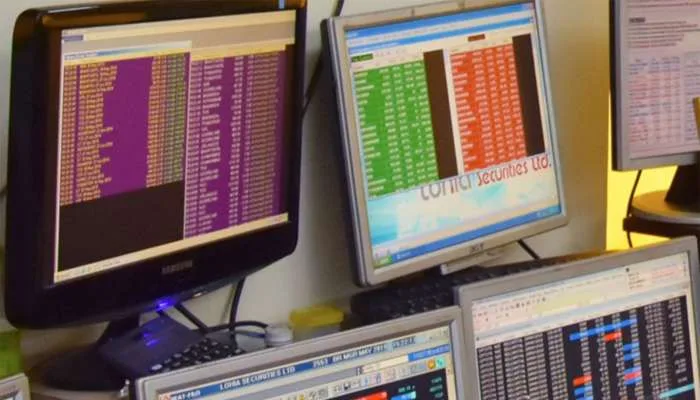
The Indian markets are currently under pressure from the outflow of foreign investments and the increase in global bond yields. Despite these challenges, it is expected that improvements in corporate profitability will assist in the return of investments in the near future.
Impact of Capital Outflows and Market Volatility
HSBC, in its reports on the Indian equity and debt markets, has referred to the extensive reforms that took place in September and stated that high crude oil prices, geopolitical tensions in the Middle East, and tighter monetary policies in major economies have been the main factors behind these reforms. According to HSBC, corporate profitability growth will play a central role in determining market performance in an uncertain global environment.
Read more: Severe Economic Growth Decline in Kuwait, Qatar, and Bahrain
Statistics and Future Predictions
The Nifty 50 index faced a 6% decline in September, while the Nifty Midcap 150 and Nifty Smallcap 250 indices fell by 7.1% and 3.1%, respectively. Additionally, foreign institutional investors (FII) exited the Indian stock market with $4.1 billion this month, reversing the $2.4 billion inflow in August. However, domestic investors attracted $8.1 billion in September.
HSBC also emphasized that the long-term outlook for the Indian stock markets is supported by the potential improvement in corporate profitability, increased private investments, and the possibility of trade agreements with the European Union and the United States.
While market sentiment in the debt sector remains weak, HSBC has predicted that as bond yields rise significantly, bond valuations will gradually become more favorable. The company plans to extend the duration of investments in bonds if interest rates and oil prices stabilize.
Finally, HSBC noted that the Nifty 50 index is currently trading at 17 times its projected one-year earnings, which is about 13% lower than its 5-year average. Therefore, the state of the Indian markets will depend on the improvement in corporate profitability, the potential revival of private investments, and developments in global rates and oil prices.
Read more: Kuwait: Suspension of Issuing Paper Car Insurance Policies and Transition to Electronic System · Signing of Three Strategic Development Agreements in Oman