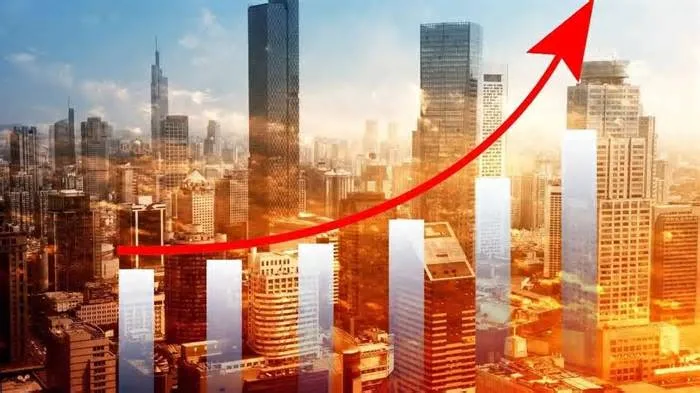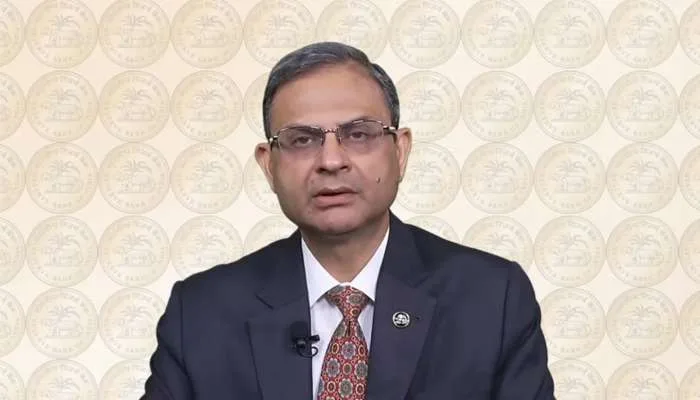
Shakti Malhotra, the Governor of the Reserve Bank of India (RBI), on Wednesday raised the real economic growth forecast for the country for the fiscal year 2026-27 by 40 basis points to 7.1%. This increase is due to the strength of India's economic activities despite global challenges.
Global Challenges and Their Impact on Forecasts
During the announcement of the results of the RBI's Monetary Policy Committee meeting, Malhotra explained that geopolitical tensions, high international commodity prices, additional disruptions in global trade, and tough global financial conditions could impact India's growth outlook. He stated, "Taking all these factors into account, the real economic growth is projected to be 7.1% for this year, with 7.2% in the second quarter, 6.9% in the third quarter, and 6.8% in the fourth quarter."
Read more: World Bank Increases India's Economic Growth Forecast to 7.1%
Strength of Consumption and Investment
Malhotra stated that India's real GDP growth in the first quarter reached 7.8%, supported by resilient private consumption and strong investment activities, which recorded an increase of nearly 12%. Additionally, the contribution of net exports remained positive.
He continued, "We have shown resilience in the face of global challenges, as evidenced by the 7.8% real GDP growth in the first quarter." According to him, high-frequency indicators for the second quarter indicate that economic activities are maintaining momentum, although with some decline compared to the previous quarter.
Manufacturing activities have remained stable despite cost pressures, while activities in the services sector have also remained robust, supported by domestic and foreign demand. Both the manufacturing and services PMI indices have remained in the expansion zone, although the pace of expansion has slowed compared to the first quarter.
Private consumption has generally remained resilient, supported by discretionary spending, while fixed investment has continued to be strong. However, Malhotra noted that some weaknesses are observed in non-durable goods and domestic air traffic.
Goods exports recorded high double-digit growth in July and August, attributed to efforts to expand market access and diversify markets. Service exports also experienced rapid growth during these two months.
Overall, Malhotra announced that global economic uncertainty and supply chain disruptions could impact domestic economic activities. He also noted that a weak southwest monsoon and strong El Niño conditions could affect the upcoming spring season and rural demand.
Malhotra stated that ongoing infrastructure spending, a rebound in private investment, and strong credit flows will help support investment activities. Service exports are expected to remain stable, and recently operationalized bilateral trade agreements will support goods exports.
Read more: Investment Opportunities in Oman's Airports Reviewed · India's Foreign Minister Outlines Strategic Roadmap for Emerging and Middle Powers