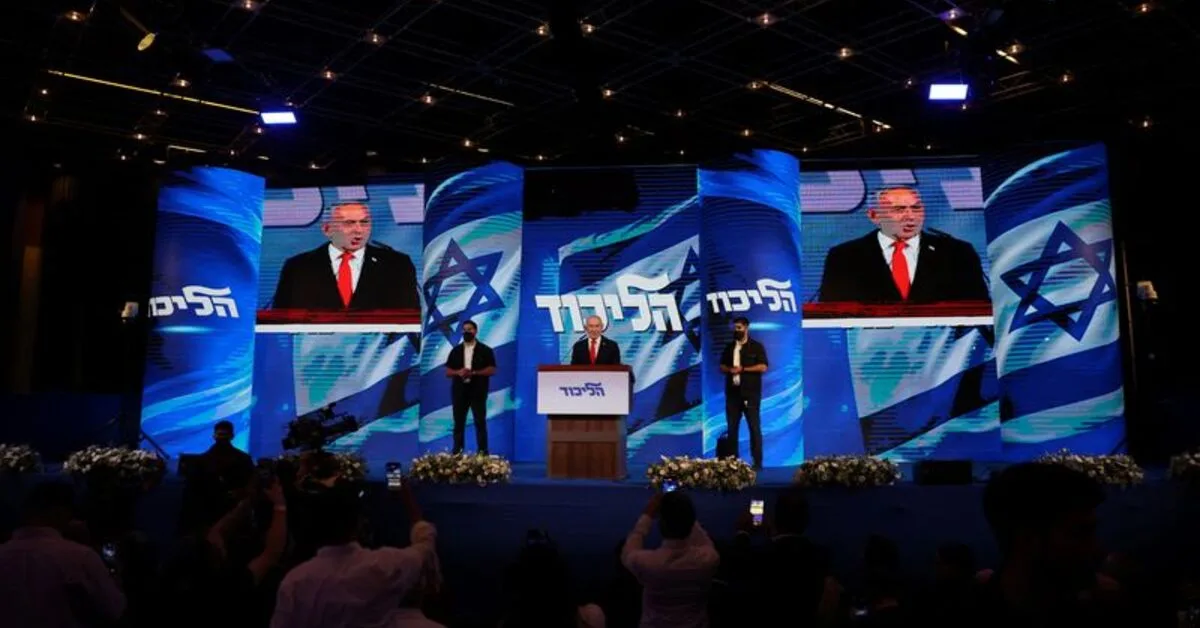
Benjamin Netanyahu, as Israel's interim prime minister, will face new challenges following Tuesday's elections. Nevertheless, experts believe that his government still possesses significant powers, especially regarding decision-making on the war with Iran.
Failure to Achieve Majority in Elections
According to Israeli media reports, neither Netanyahu's right-wing coalition nor the opposing bloc led by Gadi Eisenkot, the former Chief of Staff of the Army, is expected to achieve a majority in Israel's 120-seat Knesset. Eisenkot has emphasized that Netanyahu remains in the position of interim prime minister, but has warned that he may exploit security issues for his political goals.
Read more: Jordan and Syria Form Joint Security Committee
Netanyahu's office has previously denied allegations that he uses tensions with Iran for political gain. In response to requests for comments on this matter, his office did not provide a prompt reply.
Legal Powers of the Interim Government
Guy Lurie, a researcher at the Israel Democracy Institute, says: "If you look at the text of the law, an interim government has the same powers and authorities as a regular government." He also added that an interim government has a "duty of caution" and has fewer powers to act in certain areas. Additionally, an interim government faces restrictions on issues such as appointments, but can act on matters related to public interests.
Oren Asher, a researcher at the Tahlil Institute in Tel Aviv, stated: "Generally, security issues are the clearest exception to this duty of caution." He reminded that the Israeli Supreme Court has previously emphasized that an interim government should refrain from making broad decisions unless there is an urgent necessity.
Asher also explained that "the Supreme Court has historically refrained from intervening in decisions related to war, and parliamentary oversight in the weeks following the formation of the new Knesset and before its committees are formed is at its minimum." He added that "an interim prime minister can legally lead Israel into war, including against Iran."
After the final vote count of the elections, it is expected that Isaac Herzog, the President of Israel, will consult with party leaders and then choose the candidate who has the best chance of forming a government. The selected candidate will then have up to 42 days to form the government.
Read more: Storm in Turkey Claims Four Lives in Antalya · Israel Elections and the Look at the Far-Right