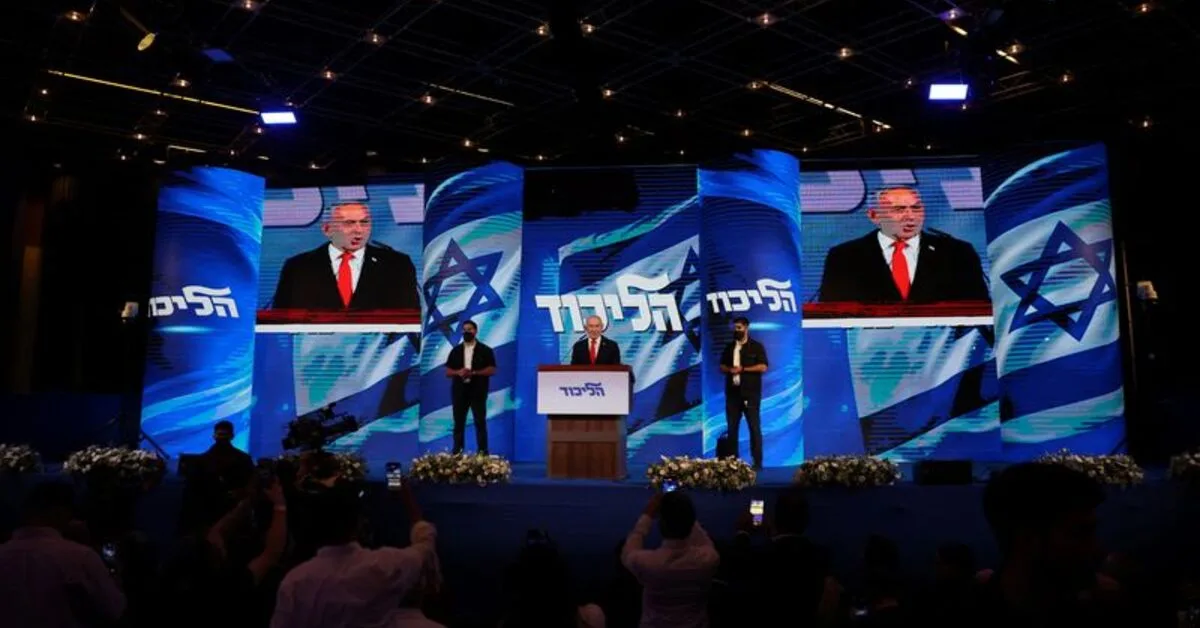
The results of the Israeli elections this week ended without a clear outcome, and none of the candidates are able to form a government. Benjamin Netanyahu remains as the interim Prime Minister, but he is confronted with a majority opposition in the Knesset that is seeking to oust him.
Upcoming Scenarios
After the official election results are published next week, Isaac Herzog, the President of Israel, will begin consultations with representatives of the parties and then will select the candidate who he believes has the best chance of forming a government. If this candidate fails, another candidate may attempt, and this process will continue until someone succeeds in forming a government. This process will take about 100 days, and if unsuccessful, new elections will be held.
Read more: Increased pressure on 2028 Democratic candidates to reject Biden administration policies in Gaza
Efforts to Avoid New Elections
Herzog announced on Wednesday that all efforts must be made to prevent new elections and urged the parties to come to consultations with an open mind. Netanyahu's Likud party, as the largest party in the Knesset, is trying to form a coalition that will likely include centrist and right-wing parties. This coalition could secure 66 seats in the 120-member parliament. However, this option currently seems unlikely, as Netanyahu may have to abandon his natural political allies, the right-wing parties and ultra-Orthodox Jews.
If neither side is able to form a government, a unity government may be formed as a last resort. Additionally, new conflicts with Iran or other actors could bring the parties closer together.
Currently, Gadi Eisenkot's party, with 48 seats, has been proposed as an option to form a government, while the Arab parties also have 19 seats, totaling 67 seats for a majority. However, even if Eisenkot retreats from his electoral promise not to cooperate with Arab parties, this will be difficult for many Israelis whose attitudes towards the Arab minority in Israel have hardened.
Netanyahu has focused on undermining support for Arab parties in his election campaign, and currently, only the Democrats, a centrist party, have publicly called for their participation. Both Arab parties have stated that they are ready to cooperate with Eisenkot.
However, Netanyahu is facing a reduction in the number of seats in his coalition from 64 to 53 seats. But as one of Israel's most skilled politicians, he may be able to strengthen his coalition by attracting members of the opposition parties.
Read more: Zelensky warns of the trilateral meeting of the US, Russia, and China · Palestinians protest against Israeli military demolitions in the West Bank