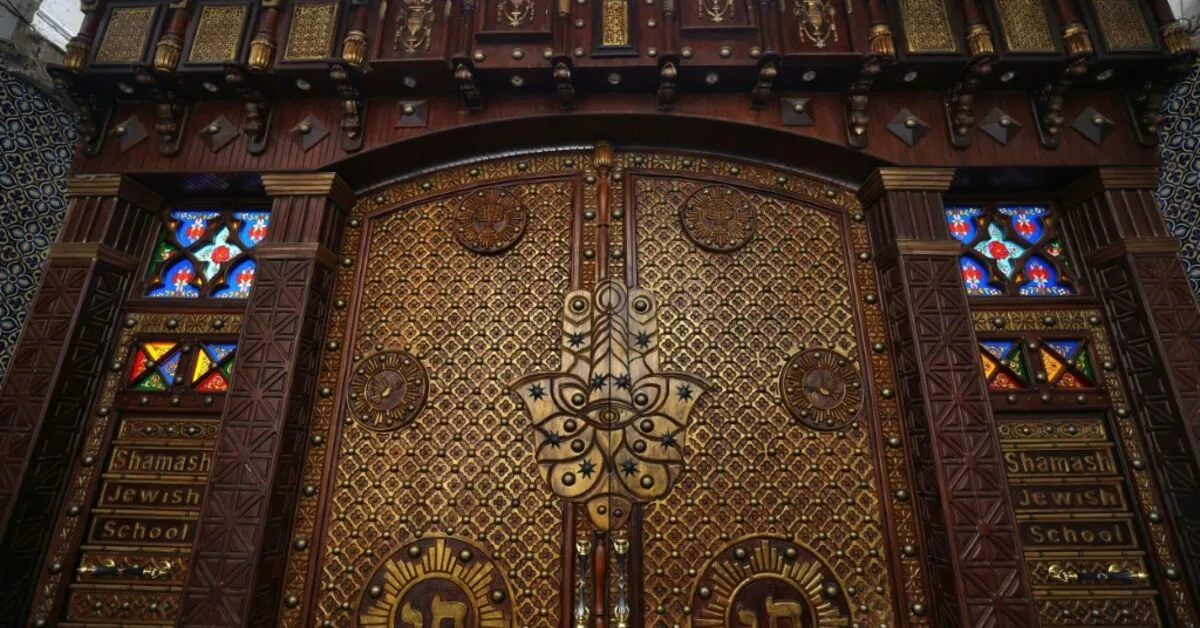
The Shams Museum, the first Jewish museum in Iraq, has been inaugurated in Baghdad and has been welcomed as a symbol of the efforts of the Jewish community in this country to preserve their cultural heritage. This museum is located in an old Jewish school established in 1928, situated on Al-Rasheed Street, one of the historical centers of Baghdad.
History and Significance of the Shams Museum
Amram Tamimi, a lawyer for the Iraqi Jewish Committee responsible for managing the properties of this community, stated: "This is the only museum in Iraq that belongs to the Jewish community." The Jewish community in Iraq in the 1940s was one of the largest Jewish communities in the Middle East, with over 130,000 people, and its history dates back 2,600 years. However, today only a few dozen Jews remain in Iraq, most of whom live in the Kurdistan region.
Read more: Emily McGonigal, former British lawyer, became the voice of a successful Netflix series
This museum features a large wooden entrance and decorations of Shimon and colored glass geometric patterns, including halls that display documents and old images of Iraqi Jews. It also houses old educational certificates and gradually attracts local and foreign visitors.
Preserving the History and Culture of Iraqi Jews
The walls of this museum are adorned with images of prominent Jewish figures, including Sassoon Eskell, the first Minister of Finance of Iraq (1860–1932), and the famous physician Zafer Foad Eliyahu (1960–2021), who was known for his free services in Iraq. Shams, the Jewish school established nearly a century ago by Yaqub Shlomo Shams, offered an English-language curriculum to students from various communities, especially Jews.
In the 1970s, this property was confiscated by the government and turned into a public school until it was returned to the Jewish community by court order in 1992. Efforts to revive this school faced numerous obstacles; from sanctions in the 1990s, the U.S. military invasion in 2003, to sectarian conflicts in 2006 and 2007 and the rise of ISIS between 2014 and 2017.
However, with the onset of relative stability in Iraq and an increasing interest in culture and entertainment, Jewish community leaders, led by Khalid Foad Eliyahu, 63, have begun to revive their places. Ramzi Al-Saidi, 74, who visited this museum, described it as "important for remembering Jewish history and civilization" and recalled that his Jewish neighbors on Al-Kaif Street in Baghdad were kind and simple people who never harmed anyone.
Today, fewer than 50 synagogues and Jewish sites remain in Iraq, most of which are located in Baghdad and Hilla, the capital of Babil province, where many Jews were relocated during the Babylonian captivity. Tens of thousands of Jews left the country after a deadly massacre in 1941 known as the Farhud, when a group of demonstrators killed over 100 Iraqi Jews, and after the establishment of the State of Israel in 1948.
The Jewish community in Iraq has long been striving to restore their temples and synagogues that suffer from neglect. Many of these places have turned into warehouses or ruins and have been damaged in the wars that have engulfed Iraq.
Read more: Opening of the "Muscat Art 2026" exhibition under the patronage of HH Sayyid Bilarab · Abbas Araghchi: Iran has no hostility towards the Gulf Cooperation Council countries