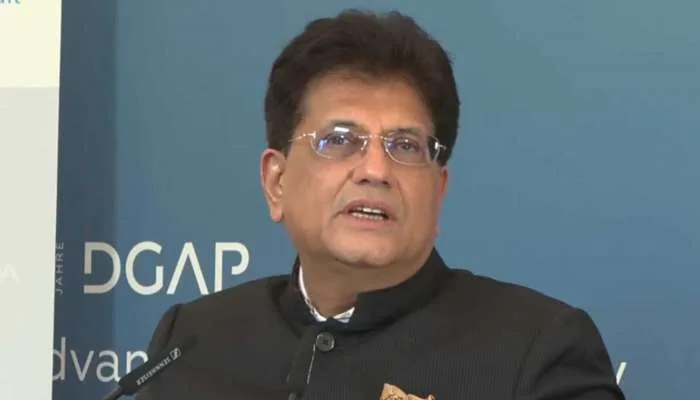
Piyush Goyal, India's Minister of Commerce and Industry, assured at the India-Germany business meeting in Berlin that the trade agreement between India and the European Union (FTA) is moving swiftly towards signing and may be implemented in the next 4 to 5 months. He urged Indian and German companies to begin preparations to maximize the benefits of this agreement.
Preparation for Utilizing the Agreement
Goyal stated at the meeting that companies should start identifying potential customers and partners, exchange product samples and quality requirements, and discuss prices so that when the trade agreement is implemented, they can be among the first to benefit from it. He emphasized: "This is the right time for companies to start exchanging samples, quality notes, and prices to benefit from this agreement when it comes into effect."
Emphasis on Trade Cooperation
The Indian Minister of Commerce stated that this agreement, which was finalized earlier this year, will be signed quickly, and he hopes that it will be signed by both parties before the end of the current calendar year. He also referred to the close cooperation between India and the European Union in various fields including manufacturing, investment, technology, and skill development, stating: "Germany's technical expertise and industrial capabilities overlap with India's expanding infrastructure and skilled workforce, creating new opportunities for both countries."
Goyal also stressed the need for stronger cooperation to enhance supply chain resilience amid global uncertainties, stating that India and Germany can collaborate without jeopardizing economic openness. He identified economic security, green transition, and emerging technologies as key areas requiring close collaboration and emphasized that trust must remain at the center of business interactions.
During this meeting, the Indian Minister of Commerce also appreciated the role of the European Union Trade Commissioner, Valdis Dombrovskis, and other EU trade ministers in advancing the negotiations, stating that companies should now focus on turning this agreement into tangible economic outcomes.