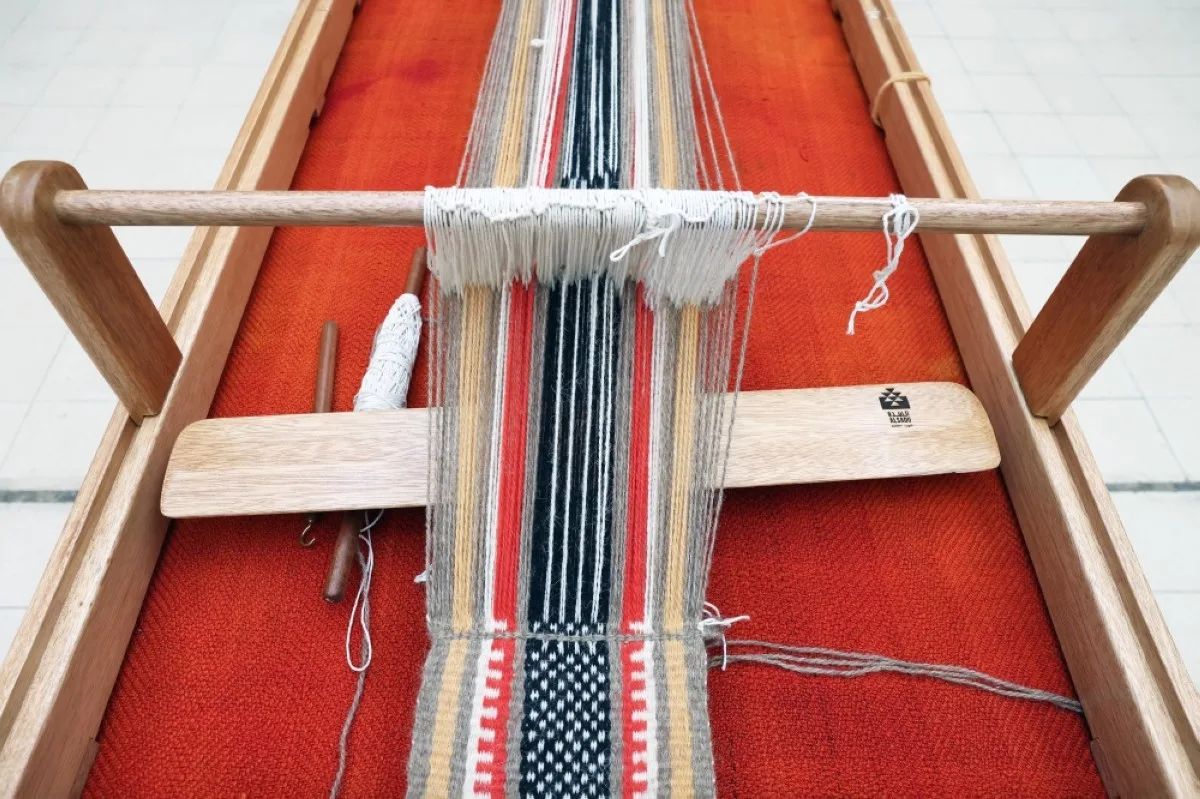
Sheikha Bibi Al-Sabah, head of the Al-Sadu Society and founder of the Soof wool spinning factory, is striving to turn the wool produced from Kuwaiti sheep, which is often sold as waste or at low prices, into a valuable resource. This factory, recognized as the first sustainable wool spinning factory in the Gulf Cooperation Council (GCC), was established with the aim of producing local yarn for traditional Sadu weavings and other textile applications.
History and Importance of Wool in Kuwait's Economy
Wool played a significant role in Kuwait's domestic economy in the past. For generations, women cleaned, spun, and woven wool, producing everyday textiles including Sadu weavings, decorative items, and materials used in traditional tents. However, over time, imported yarns and manufactured textiles became more popular due to their lower prices and easier access, leading to the gradual disappearance of local wool collection and processing systems.
Read more: Oman Seeks to Produce 121,000 Tons of Green Hydrogen by 2032
Goals and Benefits of the Soof Project
The main goal of the Soof project is to rebuild the wool supply chain in Kuwait. Sheikha Bibi Al-Sabah stated, "We are reconstructing the connection between the animal, the raw material, the artist, and the final product." This project aims not only to preserve traditional handicrafts but also to create economic and social opportunities for shepherds, wool processors, and artists.
The yarn produced by Soof is currently used in the production of traditional Sadu pieces, artistic products, and educational workshops. Sheikha Bibi emphasizes that "this project goes beyond preserving heritage. Our broader goal encompasses environmental, economic, and social aspects."
The Soof team intends to use local wool to produce items such as rugs, cushions, fashion accessories, and acoustic materials for interior design. This project also aims to provide raw materials at competitive prices for small industries and artists, helping to reduce dependence on imported yarns.
Challenges and Solutions
One of the biggest challenges is rebuilding the value chain that has largely disappeared. Sheikha Bibi noted, "Installing spinning equipment is not enough. We need a reliable supply of wool, which must be accompanied by improved shearing, collection, and management practices."
Moreover, market perceptions also pose a barrier. Locally produced wool has long been regarded as a lower-quality commodity compared to imported fibers. "We need to educate consumers, designers, and producers about the value of Naeemi wool and its unique characteristics," Sheikha Bibi added.
However, Soof is exploring ways to increase processing capacity, improve yarn quality, and expand its operations. Strengthening wool collection and closer collaboration with livestock stakeholders are other goals of this project.
Sustainability and Zero Waste Approach
The Soof factory is also striving to reduce the environmental impact of processing. In Kuwait, which faces water scarcity, washing wool can consume significant resources; thus, water recycling is part of the factory's approach. Additionally, this factory uses solar energy and natural dyes and is looking for ways to utilize wool waste.
Ultimately, with a zero waste approach, waste that cannot be converted into yarn is turned into natural fertilizer. Sheikha Bibi stated, "This means that our thinking in product development expands from textiles to agriculture and a circular economy."
Read more: The Sultanate of Oman Recognized Internationally for Developing Investment Opportunities · Kuwait: Mild Weather Forecast with Cloudy Skies on Thursday