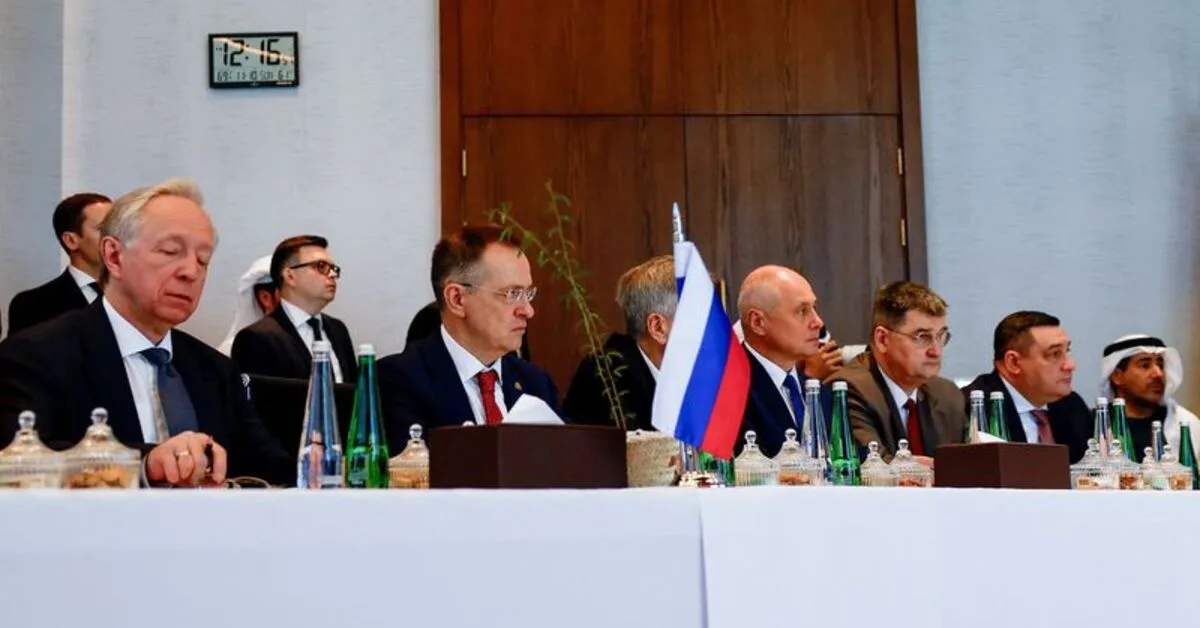
Russian and Ukrainian officials met on Tuesday in Abu Dhabi for the first time since the war began in Ukraine last February, under U.S. mediation. This meeting comes after Donald Trump, the former President of the United States, suggested last week that a broad agreement to end the war in Ukraine and ensure security in Europe might be possible.
Positions of the Parties in the Negotiations
Jared Kushner, the U.S. Special Representative, told representatives of both sides during the meeting that recent contacts with both parties "have helped identify and reduce gaps" and that the United States has "good ideas" for bridging viewpoints. Kushner emphasized that Trump is committed to achieving peace and has asked his team to make further efforts to find a solution that leads to the end of the war.
Read more: UN Human Rights Office Concerned About Press Freedom in Egypt
However, more than four years after Russia's full-scale invasion of Ukraine, and while Russian forces control about one-fifth of Ukrainian territory, Moscow and Kyiv remain far apart on the terms of a peace agreement. Rustem Umerov, Ukraine's chief representative, emphasized in his opening remarks that Kyiv is focused on achieving security guarantees and sustainable peace.
Differences in Approaches to European Security
Sergey Lavrov, the Russian Foreign Minister, stressed Moscow's preference to negotiate a broader security framework in Europe before addressing the details of the war. He stated that "the idea of setting clear parameters for a future security architecture and then addressing the actual resolution of the Russia-Ukraine conflict is entirely reasonable."
In contrast, Ursula von der Leyen, President of the European Commission, stated on Monday that security talks should only take place after a ceasefire in Ukraine. Lavrov once again rejected the idea of a ceasefire, saying that Europeans are trying to buy time for Ukraine.
New U.S. initiatives to reach an agreement have prompted European officials to strive for a presence in these negotiations to seek an end to this deadly conflict, which has caused the highest casualties since World War II. Before the main negotiations began, Ukrainians held separate meetings with European, NATO, and EU representatives, as well as two U.S. representatives, Kushner and Steven Witkoff.
France has emphasized that sustainable peace in Ukraine is not possible without addressing European security, and this requires the involvement of Europeans. Meanwhile, Russia has clearly stated that it does not see a place for Europeans in these negotiations with Ukrainians and Americans.
On the eve of these negotiations, Trump stated that Washington has witnessed a "strong desire" to end the war and that both sides are "tired of the war." After a private meeting with Vladimir Putin, the President of Russia, at the White House last week, Trump predicted that a peace agreement might soon come to fruition.
Although Trump has repeatedly stated that an agreement is close, no agreement has yet been reached. However, negotiations have resumed in recent weeks after Washington's attention had shifted to the war in Iran.
Publicly, there are no signs that Putin is willing to relent on his demand for the complete surrender of the eastern Donbas region of Ukraine before a peace agreement is reached. Volodymyr Zelensky, the President of Ukraine, has firmly refused to cede land where his forces have lost lives in defense.
The advance of Russian forces this year has significantly decreased, but Moscow continues to bomb Ukrainian cities and energy facilities, while Ukraine has increased its attacks on oil refineries and other infrastructure deep within Russian territory.
A source in the Russian delegation stated that Russia believes the main goal of the negotiations will be to seek key elements of a new security framework for Europe post-war. On the eve of these negotiations, Zelensky emphasized Ukraine's increased bargaining power in the talks, stating that this is a result of his country's recent military performance in reclaiming some areas in Donetsk.
Zelensky said in his nightly video address: "Ukrainian forces are currently really strengthening Ukraine's negotiating position" and added: "Russia is suffering unprecedented losses" — a claim that Moscow has denied. He also urged Washington to convince the Kremlin to end the war.
American negotiators believe that Zelensky and Putin may be ready to reach an agreement on the land issue, each conceding a bit of their territory.
According to the proposed agreement, Ukraine must secure the end of the war along with security guarantees and a roadmap for joining the European Union. A senior Ukrainian official firmly rejected the notion that the government would consider any compromise and emphasized that the land issue should only be discussed at the leadership level and in the context of appropriate security guarantees for Ukraine.
Read more: Republican Lawmaker's Move to Impeach Defense Secretary Peter Hegseth · Russia and Ukraine in U.S.-Backed Talks to End the War