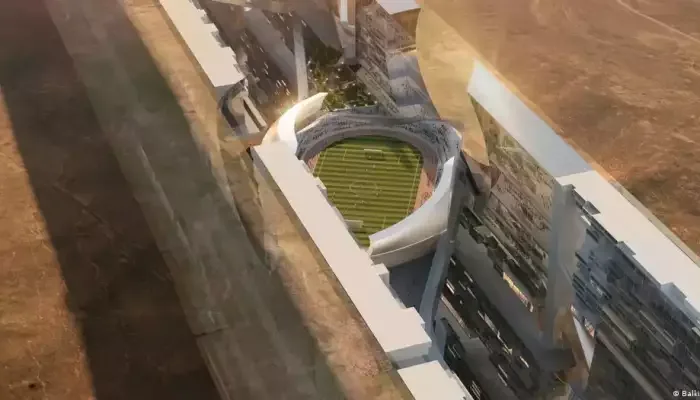
Saudi Arabia had introduced the Neom stadium construction project as one of the cornerstones of its plans for the 2034 World Cup, aiming to host a distinctive and unique event. However, it now appears that this project has faced significant reductions, and the Neom stadium, which was supposed to host several matches in this event, including a quarter-final game, may no longer be built.
Economic Impacts and Changing Priorities
Reports indicate that this decision was made due to changes in Saudi Arabia's financial situation and the need to reassess priorities. Gregory Gass, a regional affairs expert, has noted signs of decreased attention to the Neom project during his recent visits to Saudi Arabia. He emphasized that these changes are a result of the impacts of current wars and the state of the oil market, which have significantly affected the country's financial priorities.
Read more: Matt Renshaw leads Australia against South Africa in Durban with 190 runs
Yasir Al-Rumayyan, the head of the Public Investment Fund of Saudi Arabia, has also referred to this issue in his remarks, stating that the fund is reassessing its priorities. The war in the region has not only made economic optimization necessary but has also accelerated the review of major projects like Neom.
Comparison with the 2022 Qatar World Cup
Some experts believe that the changes in Saudi Arabia's plans for the 2034 World Cup may bear similarities to the 2022 World Cup event in Qatar, where the planning for 12 stadiums ultimately resulted in the use of eight stadiums. Political and economic changes in the region have also contributed to this trend.
However, Gregory Gass believes that Saudi Arabia still views hosting the World Cup as a major priority. He emphasized that this event remains in focus due to its global significance and Saudi Arabia's desire to shine in comparison to Qatar's hosting.
Despite the new limitations, it seems that Saudi Arabia is striving to remain a host for the World Cup by constructing new stadiums. However, it is likely that more matches will be held in the two major cities of Riyadh and Jeddah, while some other locations like Al-Khobar and Al-Ahsa may be lost.
Saudi Arabia will also host the AFC Asian Cup in January, which is seen as a preliminary test of the country's ability to hold a major event under these conditions. Recently, the hosting of the Arabian Gulf Cup final with 60,000 spectators in the stadiums has been a positive sign of Saudi Arabia's capability to host large events.
Read more: Shreyas Iyer praised Prince Yadav's outstanding performance after the 14-run victory against the Wild Indies · The foreign ministers of Saudi Arabia and Iran discussed regional tensions