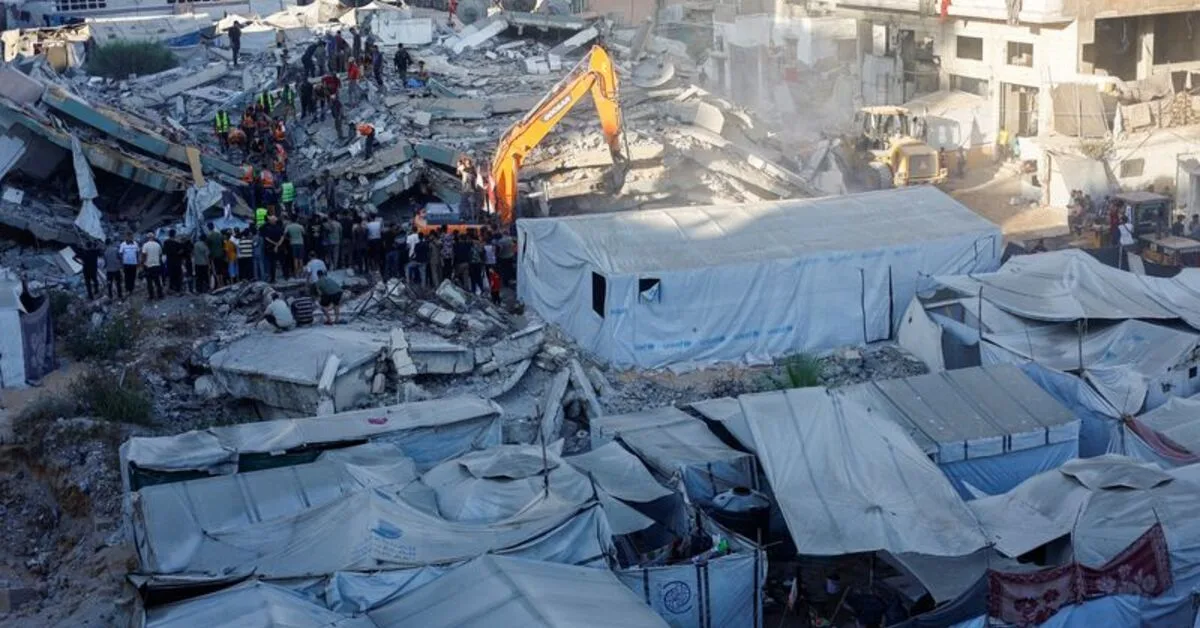
The collapse of a damaged building in Gaza on September 16 resulted in the deaths of at least 12 Palestinians, including five children, and several others were trapped under the rubble. This incident highlights the ongoing dangers for thousands of Palestinians living in around two thousand damaged buildings due to Israeli bombardments.
Incident Details
Rescue groups from civil services reported that following the collapse of this seven-story building, 12 people lost their lives and 14 others were injured. Nearly 100 others are counted as missing under the rubble. A video released in this context shows rescue forces trying to pull people from beneath the fallen walls.
Read more: Sultan Haitham bin Tariq visited the Republic of Botswana
Engineer Raed Al-Dahshan, the director of civil services in Gaza City, expressed hope that hearing sounds from beneath the rubble might indicate that there are still people alive. He said: "We are still hearing sounds from beneath the rubble, so we hope to find people."
Rescue Challenges and Human Impact
Alexandru Merakic, head of the United Nations Development Program office in Gaza, pointed to the difficulties of the rescue operations, adding that the lack of proper equipment has made the work more challenging. He stated: "The situation, as you can see, is catastrophic because we do not have the necessary equipment and machinery. In fact, some people are digging with bare hands. We must prepare for more deaths."
According to Merakic, about 400 buildings are at risk of collapse, and as winter approaches, this danger increases. Palestinian officials and the United Nations attribute the shortage of heavy machinery in the area to Israeli restrictions on Gaza. Israel claims that these restrictions are intended to prevent militant groups from accessing equipment.
Israeli attacks on Gaza, which began after Hamas's deadly assault on Israel in October 2023, have resulted in the production of about 61 million tons of waste and destruction, which the United Nations states may take seven years to clear.
Many families have resorted to living in partially destroyed buildings in recent months to protect themselves from rainstorms and winds, and due to a shortage of new tents for the homeless, this choice has become unavoidable.
Read more: Bangladesh's Foreign Minister emphasizes positive relations with India ahead of Prime Minister's visit · A look at life in the shadow of destruction; the voice of Khan Al-Ahmar against British sanctions