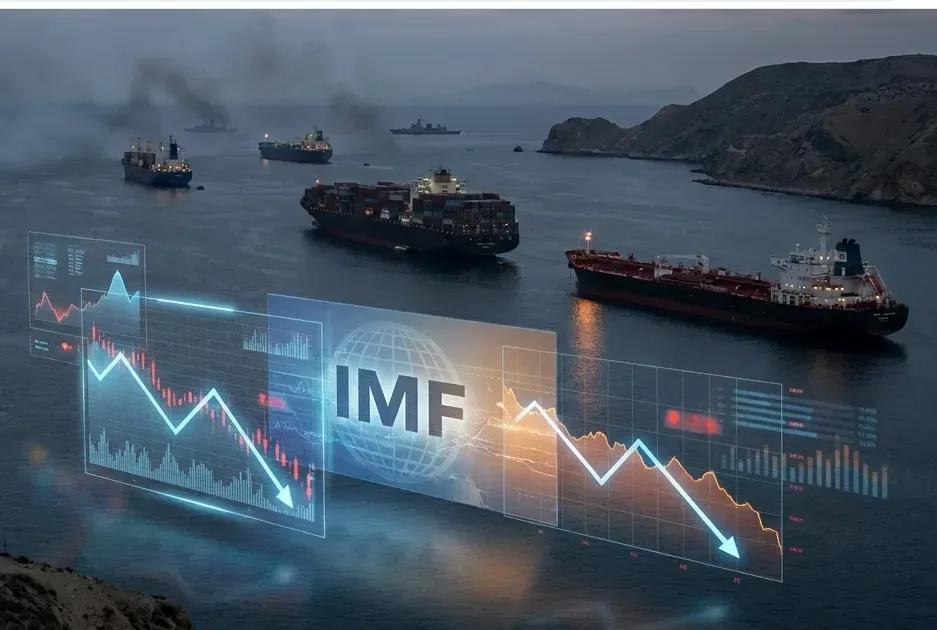
Iran has faced numerous economic challenges following the shock of war and naval blockade. The latest statistics released by the International Monetary Fund indicate that the economic situation in this country has been severely damaged by the war and naval blockade, and it is currently facing many challenges such as negative economic growth, high inflation, and rising exchange rates.
The Impact of War on Iran's Economy
The attack by the United States and Israel on Iran late last year led to increased uncertainty and economic turmoil in the country. After the war ended and despite a breathing space following the Islamabad agreement, Iran faced another shock in the form of a naval blockade and the cessation of oil exports. This situation has not only affected Iran's economy but has also harmed other countries in the Middle East region due to the war and blockade.
Read more: The Oman Investors Conference 2026 will introduce the investment attractions of Oman
The International Monetary Fund recently announced that Iran's economic growth in 2025 was negative 0.9 percent and is projected to reach negative 7.6 percent in 2026. In other words, Iran's economy will be 7.6 percent smaller in 2026 compared to 2025. This indicates the depth of the economic crisis caused by the war and naval blockade.
Widespread Damages in the Middle East
The damages from the war are not limited to Iran. Other countries in the region have also been affected by this war. Estimates show that the economic growth of Saudi Arabia and the UAE will be negative 3.3 percent and negative 3.9 percent respectively in 2026. Additionally, the economies of Iraq, Qatar, Kuwait, and Bahrain are also facing serious declines, with their economic growth estimated at negative 16 percent, negative 15.6 percent, negative 16.7 percent, and negative 11.3 percent respectively.
This situation reflects the widespread impacts of the war and naval blockade on the region's economy and has left negative effects on the economic performance of countries. In fact, the naval blockade and disruption of oil exports have severely harmed Iran's foreign exchange revenues, and consequently, neighboring countries have also faced challenges in oil transportation through the Strait of Hormuz.
Forecast for Improvement in the Future
However, according to the International Monetary Fund's forecasts, the economies of Iran and other regional countries may move towards improvement and recovery by 2027 with a reduction in tensions and the end of the war. For example, Iran's economic growth is estimated to be 3.6 percent next year, indicating hope for overcoming economic crises and returning to economic stability.
Overall, the current economic situation of Iran and other Middle Eastern countries is the result of a combination of war crises, naval blockade, and years of sanctions. Even with the end of the war and the lifting of the naval blockade, Iran's economy will require time and serious efforts to achieve stability and peace.
Read more: India announces the first extension of a 3000 crore currency swap facility with Maldives · Trump's renewed threats regarding Iran's nuclear program