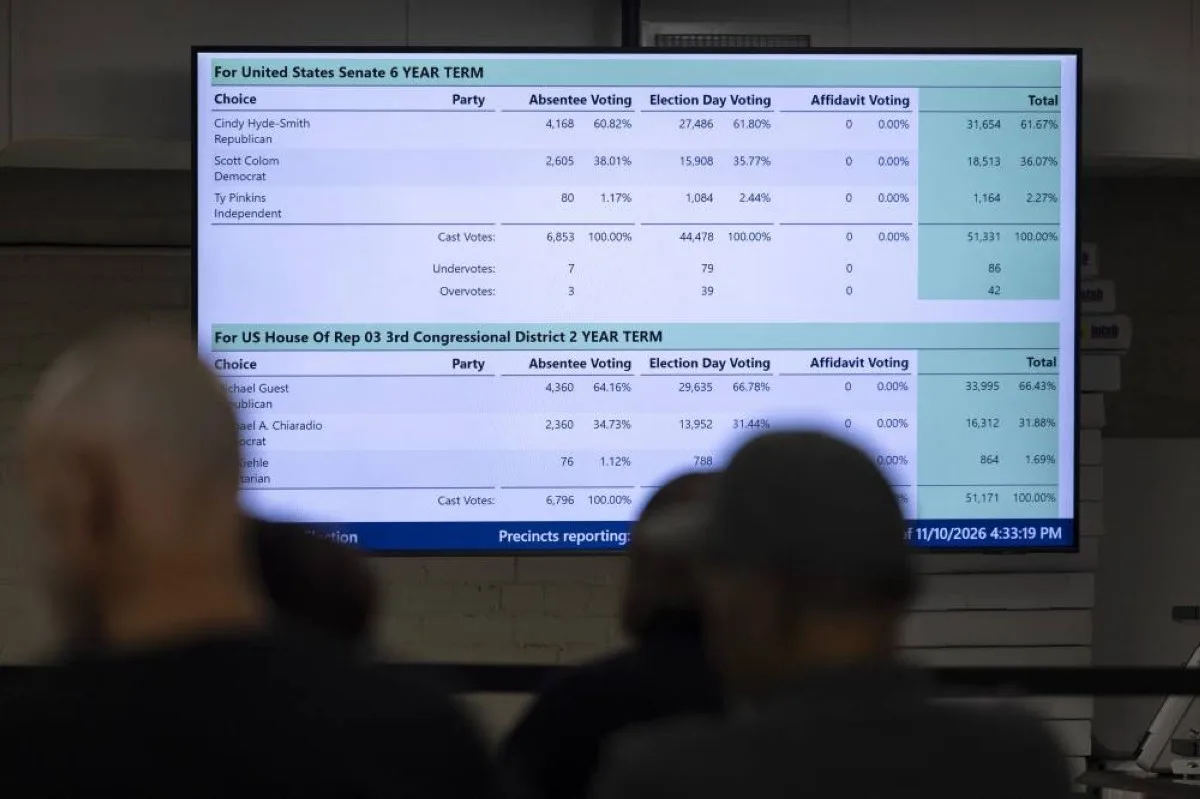
The United States government is facing new challenges ahead of Donald Trump's trip to Asia. After heavy losses for the Republican Party in the midterm elections, Trump must demonstrate that he still has the ability to set U.S. foreign policy. His trip to the Association of Southeast Asian Nations (ASEAN) summit in the Philippines and the Asia-Pacific Economic Cooperation (APEC) summit in China is part of this effort.
Political Changes in the United States
After the Democrats' victory in both the House of Representatives and the Senate, Donald Trump is confronted with a changed political landscape at home. Due to legal restrictions on running for the 2028 elections, Trump may find himself more inclined to focus on the international stage in the remaining two years of his presidency.
According to experts, this trip is an opportunity for Trump to engage in a kind of "reset" of U.S. foreign policy by rebuilding his image on the international stage. Edward Kagan from the Center for Strategic and International Studies (CSIS) stated, "After an unfavorable election, this is a path that presidents choose to return to the international scene."
China's Approach to the New Situation
China has described the midterm elections as an "internal issue" and announced that it will continue to cooperate with the United States. However, some Asian leaders have privately felt more at ease, as they suffer from the difficult conditions that the Iran war has created for U.S. partners in Asia. They hope that Trump's decisions on this matter will become a predictable process. Trump has stated several times after the midterm elections that the likelihood of renewing war with Iran is low.
On the other hand, some experts believe that Congress under Democratic control may adopt a tougher approach toward China and end Trump's "soft" policies toward Beijing. This change could be concerning for U.S. allies in Asia. Asian leaders also hope that the Democrats will resist Trump's tariffs that have impacted export-dependent economies.
Important Meetings Ahead
The Trump administration has announced that he expects to meet with Xi Jinping, the President of China, and Vladimir Putin, the President of Russia, at the APEC meeting in Shenzhen on November 18 and 19. The main topics of this meeting will include "denuclearization" and ending the war in Iran. Kurt Campbell, head of the Asia Group and senior diplomat during Joe Biden's administration, stated that Trump's main goal may be a photo opportunity with these two leaders.
Victor Cha, head of Korea at CSIS, also pointed out that Trump's defeat in the midterm elections increases the likelihood of a significant meeting, and he may focus on North Korea as a legacy issue. Cha added, "No one else in the U.S. government, other than the President, is making policy on North Korea."
Read more: The United States Government Does Not Consider Military Action Against Iran Necessary at This Time