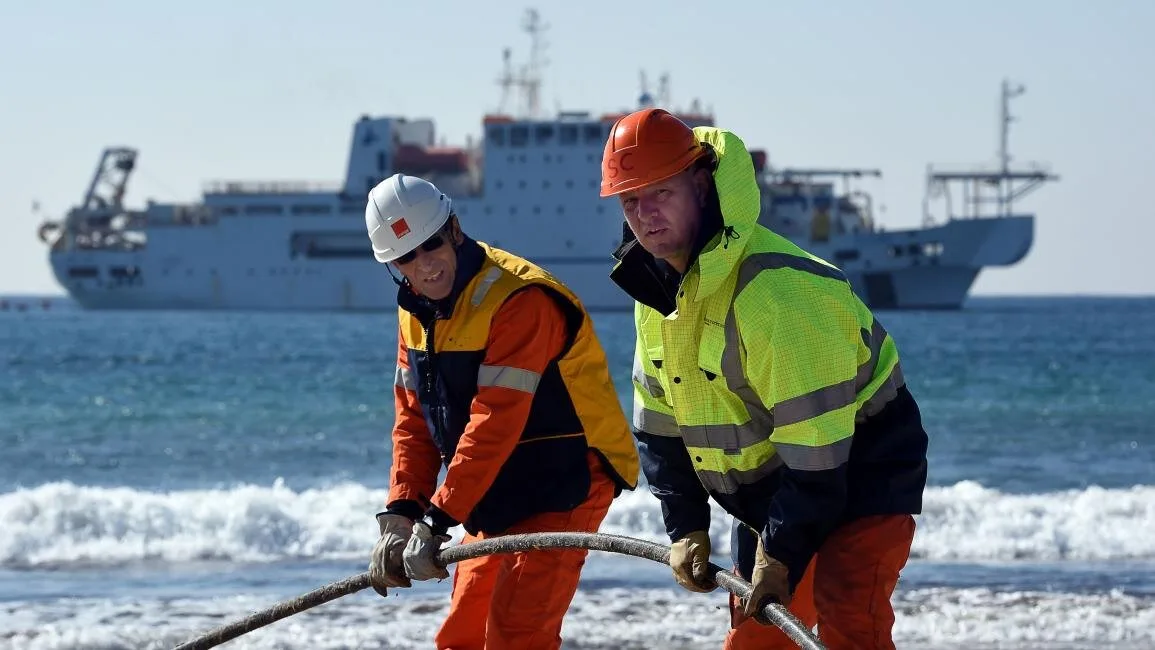
The economies of Gulf Cooperation Council countries are in a critical situation as tensions in the region escalate and Iran threatens to target submarine internet cables, adding new dimensions to this challenge. The Islamic Revolutionary Guard Corps has identified seven submarine cables passing through the Strait of Hormuz as potential targets.
Economic and Digital Impacts
Although the traffic volume of these cables does not exceed one percent of global internet traffic, significant investments are being made in this area. Microsoft plans to invest $400 million in regional connectivity routes by 2030. This, in turn, raises concerns about the continuity of these projects in the event of security disruptions.
Read more: The Sultan of Oman praised the President of Algeria on the national day of that country
Alan Safa, an economic expert and professor at the University of Nice, France, states that targeting digital infrastructure and communication cables in the region could pose serious risks for the Arab Gulf countries. These countries are moving towards a service-based and digital economy, and therefore, any disruption in these infrastructures could harm key sectors.
Major Investments and Vulnerabilities
Investments by the Arab Gulf countries in artificial intelligence and data center projects exceed $250 billion. These investments include a $100 billion initiative from Saudi Arabia and a $20 billion partnership from Qatar. These projects aim to enhance data center capacity and improve digital infrastructure, but security threats could jeopardize these efforts.
Previous experiences have also shown that cyberattacks can have a profound impact on banking and commercial services. Attacks that occurred last March on Amazon facilities in the UAE and Bahrain disrupted cloud services and highlighted the vulnerability of digital infrastructures in the region.
Firas Shabou, an economic expert and professor of financial management at Başakşehir University in Turkey, emphasizes that targeting submarine internet cables could directly affect the banking sector and disrupt daily services. Additionally, such attacks could increase financing costs and make access to financial services more difficult.
The distribution map of fiber optic routes in the region shows that different countries are at varying levels of risk. Iraq, Kuwait, Bahrain, and Qatar are particularly vulnerable due to the lack of any submarine routes outside the Strait of Hormuz.
Ultimately, these threats could halt foreign investment flows and seriously impact the development of technology and digital infrastructures in Gulf countries. Currently, trust in this region is heavily influenced by the security of infrastructures, and restoring this trust will require time and serious efforts.
Read more: Arrest of a suspect in the murder of a guard at a construction site in Kuwait · Unprecedented increase in attacks on ships in the Strait of Hormuz in October