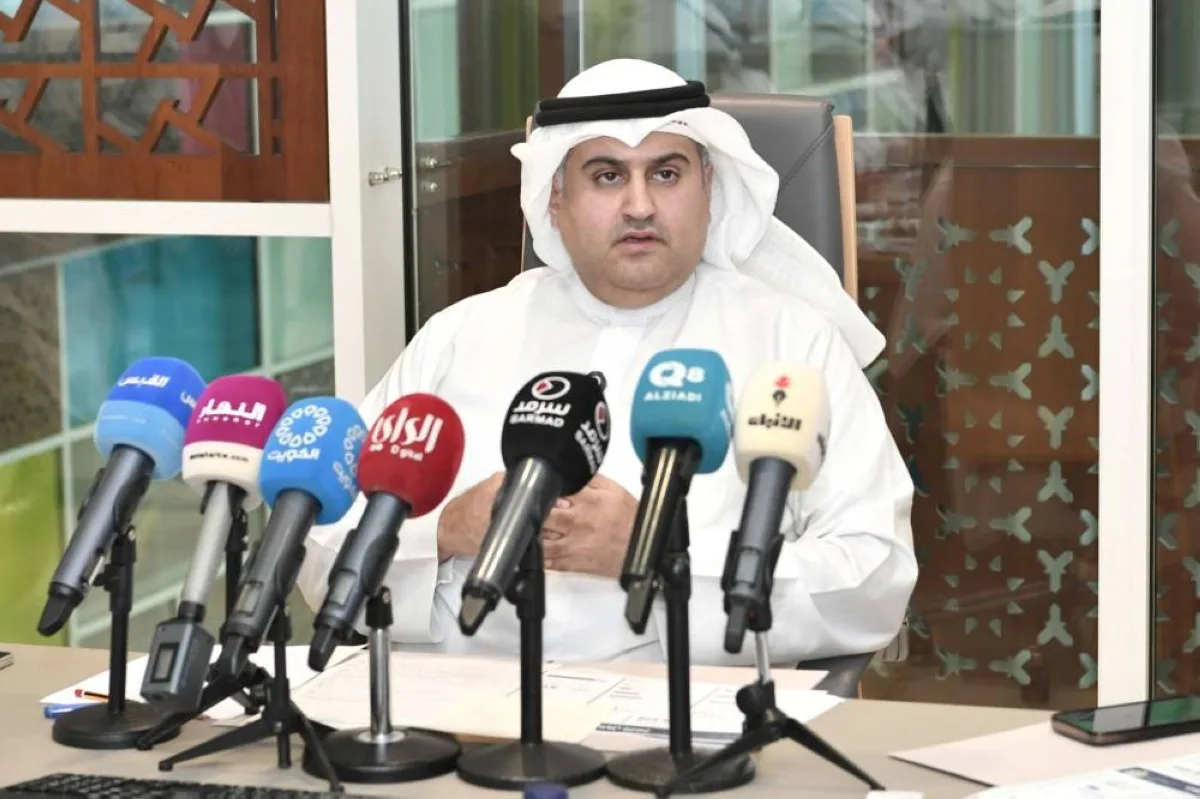
The Minister of Justice of Kuwait, Nasser Al-Sumait, announced on Sunday that the number of judicial cases across Kuwait decreased by 20% in the first nine months of 2026 compared to the same period in 2024. This reduction is equivalent to approximately 170,000 cases and reflects the impact of ongoing efforts to modernize the judicial and legal system in Kuwait.
Details of the Decrease in Cases
The Minister of Justice mentioned this during a press conference held to announce the final results of the campaign to support debtors. The total number of cases decreased from about 835,000 cases between January 1 and September 30, 2024, to approximately 665,000 cases in 2026. Additionally, the number of cases in the Supreme Court has decreased by 39%, from about 16,000 cases to nearly 10,000 cases.
Read more: Dialogue between the Foreign Ministers of Kuwait and Qatar on Regional Developments
Legal and Social Impacts of the Reforms
Al-Sumait further added that cases related to appeals have also seen a 41% decrease, with their number dropping from 5,700 cases to 3,300 cases. Moreover, criminal cases in all courts have faced a 21% decline, equivalent to approximately 117,000 cases, decreasing from about 566,000 cases to nearly 449,000 cases. Requests for payment orders have also significantly decreased by 60%, from nearly 67,000 to about 27,000 requests.
The Minister of Justice announced that as part of the third phase of the national modernization program for Kuwait's legal framework, which began at the end of June, work on the personal status law will be completed by the end of 2026. This law is designed to address major legal and social challenges affecting a significant portion of society.
Reforms in Civil Law and Its Implementation
Al-Sumait emphasized that reforms in civil law include protection for family homes, which will extend to all co-owners who meet legal conditions. Under these reforms, a court may postpone the division of a residential property for a specified period if it is proven that the property is the only residence of the person and they do not have sufficient financial resources to purchase a suitable alternative.
The Minister also pointed out that these reforms do not undermine the distribution of inheritance under Islamic law, and the Ministry of Islamic Affairs has confirmed an official fatwa that these reforms are consistent with the principles of Islamic Sharia. He further stressed the importance of balancing the enforcement of rights while considering human circumstances in the executive system.
In conclusion, Al-Sumait referred to the examination of introducing a comprehensive civil enforcement law, stating that this law will be considered instead of separate reforms for each provision of the civil and commercial procedure law.
Read more: Gulf Cooperation Council Statement on Houthi Attacks on Saudi Arabia · Kuwait: Fog Warning and Chance of Rain in the Coming Days