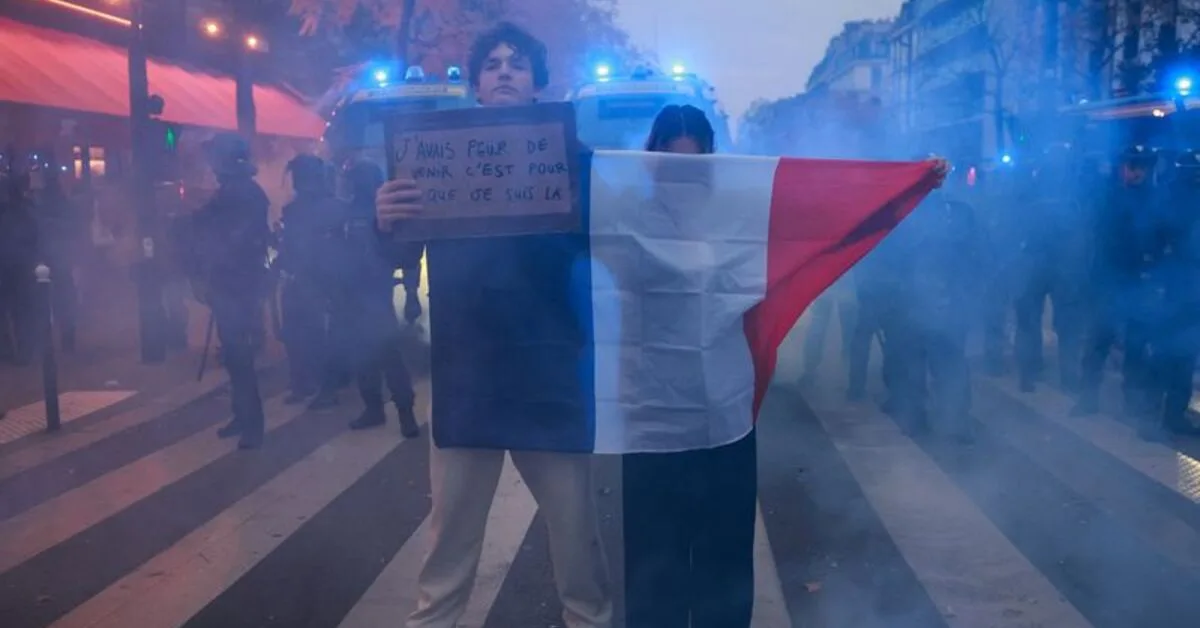
The Russian secret network known as "Operation Overload" has sought to exploit the recent unrest in France, attempting to attribute these disturbances to illegal immigration and portray the government as weak and out of control.
Dimensions of the Crisis and Media Narratives
The unrest in various cities across France last month followed protests against rising living costs and cuts to public services. In this context, investigations show that social media accounts linked to Israel and the U.S. MAGA movement have also disseminated hostile narratives related to this unrest, associating it with Islamic radicalism and immigration.
Read more: 200-Year Sentence for Cult Leader in Kenya for Child Murder
These assessments indicate the efforts of foreign actors to exploit domestic crises in France to achieve their political objectives. Misinformation analysts in Europe point out that these activities aim to weaken national governments and create fear and division within society.
Operation Overload and Its Impacts
EU analyses indicate that "Operation Overload" has engaged in disseminating videos that present themselves as Western media, with some incorrectly claiming that migrants have attacked protesters or that imminent terrorist attacks are occurring, with the aim of damaging the credibility of French leadership.
The Russian government has not responded to requests for comment on this matter, but in the past, Maria Zakharova, spokesperson for the Russian Foreign Ministry, has denied allegations of spreading misinformation regarding the French elections, considering these events part of the government's efforts to manipulate public opinion.
Research also shows that during a specific timeframe, posts related to "Russia supporters" accounts garnered over 2.8 million views, but this figure is not significant compared to posts related to the MAGA movement and Israeli officials, which received over 49 million views.
Elina Triguer, a political scientist at the RAND Institute, states that such campaigns act as part of a "narrative competition" that can gradually shape how Western democracies are viewed in Europe and beyond.
These analyses suggest that Operation Overload also functions as a coordinated effort to undermine European support for Ukraine, attempting to show that European governments prioritize Ukraine over domestic issues.
Ultimately, despite the lack of evidence for instigating or escalating these protests by Moscow or other actors, assessments indicate that these activities are viewed as opportunistic exploitation of unrest.
Read more: Pope Leo Goes to Argentina as Tensions Rise Over Austerity and Iran