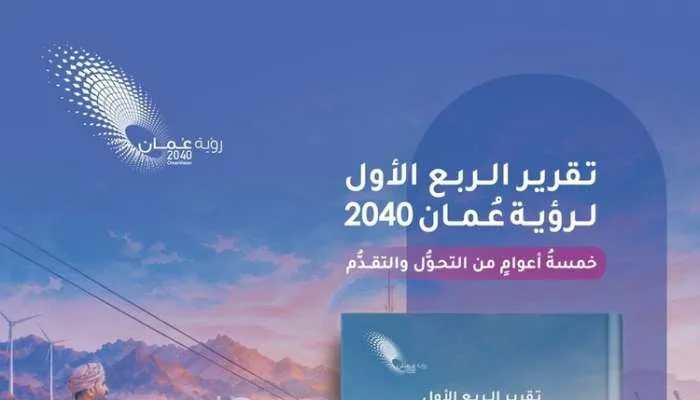
The first quarterly report of the Oman Vision 2040 examined the results of the first five years (2021–2025) of implementing this program and evaluated important updates and efforts in 2026. This report addressed the economic, legal, and institutional developments in the Sultanate of Oman and reviewed projects and programs that have contributed to expanding production and service capacities, enhancing development in the provinces, and improving services.
Key Developments in Projects
The report is distributed across four relevant chapters. The first chapter examines projects through six major transformations: legal transformation, transformation in national capacity development and quality of life, transformation in the economic development model, transformation towards a knowledge economy, transformation in the roles of government, the private sector, and civil society, and transformation towards decentralization and balanced provincial development.
Read more: Holding a Knowledge Economy and Human Capital Program at the National Defense College of Oman
The second chapter is dedicated to the provinces and examines the components, projects, and characteristics of changes in their activities and services. The third chapter addresses the indicators, their results, and trends in achieving the vision's goals. The fourth chapter forecasts the future by examining global developments, identifying related opportunities and risks, and assessing the readiness of the Sultanate of Oman to address them.
Economic Performance and Investment
In terms of the economy, real GDP performance changed from a contraction of 3.4 percent in 2020 to a growth of 2.4 percent in 2025. This growth indicates a revival of economic activities following the impacts of the COVID-19 pandemic. In 2025, GDP at constant prices increased from 34.48 billion Omani Rials to 39.29 billion Omani Rials, representing an increase of approximately 13.9 percent.
Oman has witnessed the implementation of numerous programs and projects aimed at economic growth and diversification during these years, including investment programs, economic diversification, and financial sustainability, as well as the development of renewable energy projects and manufacturing industries. These efforts have strengthened the productive base of the national economy and increased the share of non-oil activities in economic growth.
The ratio of private investment to GDP increased from 15.7 percent in 2020 to 16.8 percent in 2025, with statistics indicating an achievement of investments worth 7,073.4 billion Omani Rials in 2025. Additionally, the ratio of net foreign direct investment inflow to GDP rose from 2.9 percent in 2020 to 4.5 percent in 2025.
Read more: Forecast of 4.5% GDP Growth in Oman in 2026 · The 125th Executive Council Meeting of ALECSO Begins in Oman