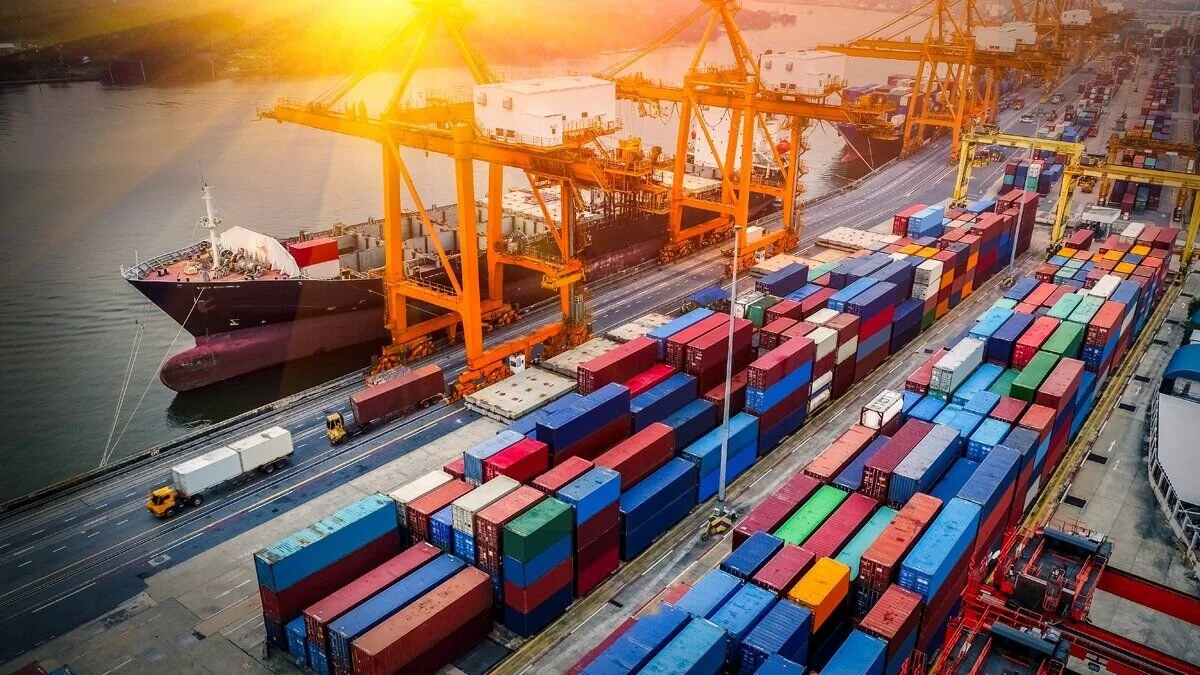
Luxembourg, San Marino, and Singapore rank at the top of the countries dependent on global trade. World Bank data indicates that these three countries are highly dependent on international trade due to their small size and open markets. Meanwhile, China, as the largest exporter of goods in the world, experiences a lower level of trade dependency.
The Role of Global Trade in National Economies
International trade is considered one of the most important factors shaping the economic structure of countries. It plays a decisive role in meeting household needs, industrial activities, infrastructure development, and job creation. However, the level of reliance of different economies on exports and imports is not the same and depends on factors such as population, the size of the domestic market, geographical location, and natural resources.
Read more: Economic Agreements between Syria and Jordan in the Meeting of Foreign Ministers
The trade dependency index is calculated from the total value of exports and imports of goods and services as a percentage of Gross Domestic Product. This index allows for the comparison of the level of a country's economy's connection to international markets and shows the position of foreign trade relative to the size of each country's domestic economy.
Top Countries Dependent on International Trade
According to World Bank data, Luxembourg, with a dependency index of 349.9 percent in 2025, is recognized as the most trade-dependent country in the world. San Marino, with 341 percent, and Singapore, with 320.3 percent, rank second and third, respectively. Ireland, Malta, Djibouti, and the United Arab Emirates also feature in the subsequent ranks of this list.
These figures indicate that in the group of countries with the highest trade dependency, exports and imports play a role far beyond a complementary economic activity and constitute a significant part of the production, services, and income structure of these countries. An important point in interpreting this data is that a higher value of trade compared to Gross Domestic Product does not mean that a country's economy is operating beyond its productive capacity.
Structural Differences in Trade Dependency
For example, Luxembourg is heavily dependent on international trade in financial services, particularly in the investment fund industry. Additionally, Singapore, as a major global trading and logistics hub, relies significantly on re-exports. According to data from the Singapore Statistics Department, re-exports account for about 62 percent of the country's goods exports in 2025.
In contrast, China, despite being the largest exporter of goods in the world, ranks among the countries with the least relative trade dependency. This country recorded a 38 percent index in 2025 and ranked nineteenth. Due to the large size of China's domestic market, a significant portion of its economic transactions occurs domestically.
Conclusion
An examination of the 10 largest economies in the world shows that none of these countries have a trade-to-GDP ratio higher than 80 percent. Germany has the highest trade dependency at 79 percent, while Japan and India are at lower levels with 45 and 46 percent, respectively. These differences indicate that even among large economies, the structure of production and the level of domestic demand can create a different pattern of trade dependency.
Read more: China: Trade Surplus in 2026 Reached Over One Trillion Dollars · Jefferies Report: Investment in Artificial Intelligence May Have Peaked