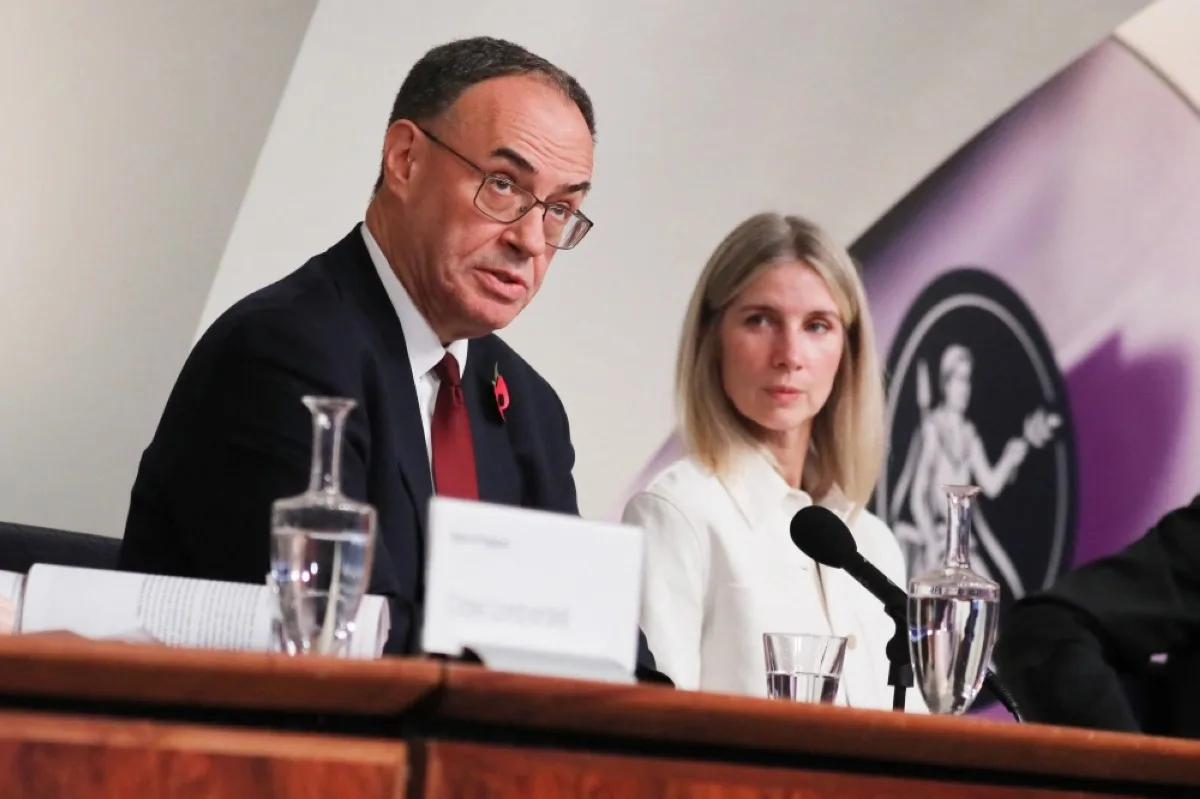
The Bank of England raised its interest rate to four percent on Thursday, marking the first increase in over three years. This action was taken to combat global inflation resulting from rising energy costs. The Bank of England warned that in the worst-case scenario, inflation in the UK could reach 6.2 percent in the third quarter of next year, while the current rate is 3.5 percent. This increase is driven by rising oil prices due to tensions in the Middle East.
Upward Revisions to Economic Growth Forecasts
Alongside this interest rate increase, the Bank of England has upgraded its economic growth forecasts for this year and next. These forecasts have improved due to "strength in business investments" and "demand related to artificial intelligence." The Bank of England joined the trend of rising rates initiated by the Federal Reserve and the European Central Bank with a quarter-point increase.
Read more: Oman and South Korea Discuss Future Economic Cooperation
Global Inflationary Pressures
Rising oil prices and disruptions in energy supply in the Gulf due to tensions between the United States and Iran have led to unprecedented diesel prices worldwide. Andrew Bailey, the Governor of the Bank of England, stated: "There are currently sufficient inflationary pressures arising from rising energy prices in the pipeline that necessitate an increase in interest rates." He also added: "Today's increase should not be viewed as the first in a long sequence of increases, but if tensions in the Middle East are not resolved, it is unlikely to be the last increase."
The Bank of England has projected that the UK's GDP will reach 1.6 percent this year and 1.3 percent next year. In previous forecasts, the bank had announced a growth of 1.1 percent for both years. These forecasts align with recent predictions from the UK government and the International Monetary Fund.
The Bank of England last raised its key interest rate in August 2023 and had maintained the rate at 3.75 percent for an extended period since December. Paul Dales, chief economist at Capital Economics, stated: "Ultimately, the extent of the interest rate increase and its duration will depend on energy prices and the domestic economy, as these factors will largely determine the impacts of second-round inflation."
The Bank of England has also forecasted that inflation in the UK will reach 4.9 percent in the second quarter of next year. Millions of British citizens will face rising energy bills starting in early 2027, even though the Labour government has proposed measures to assist them in its annual budget announcement.
Read more: Oman: Strengthening the Savings System for Non-Omani Workers · Impact of Federal Reserve's Tight Policies on Emerging Markets