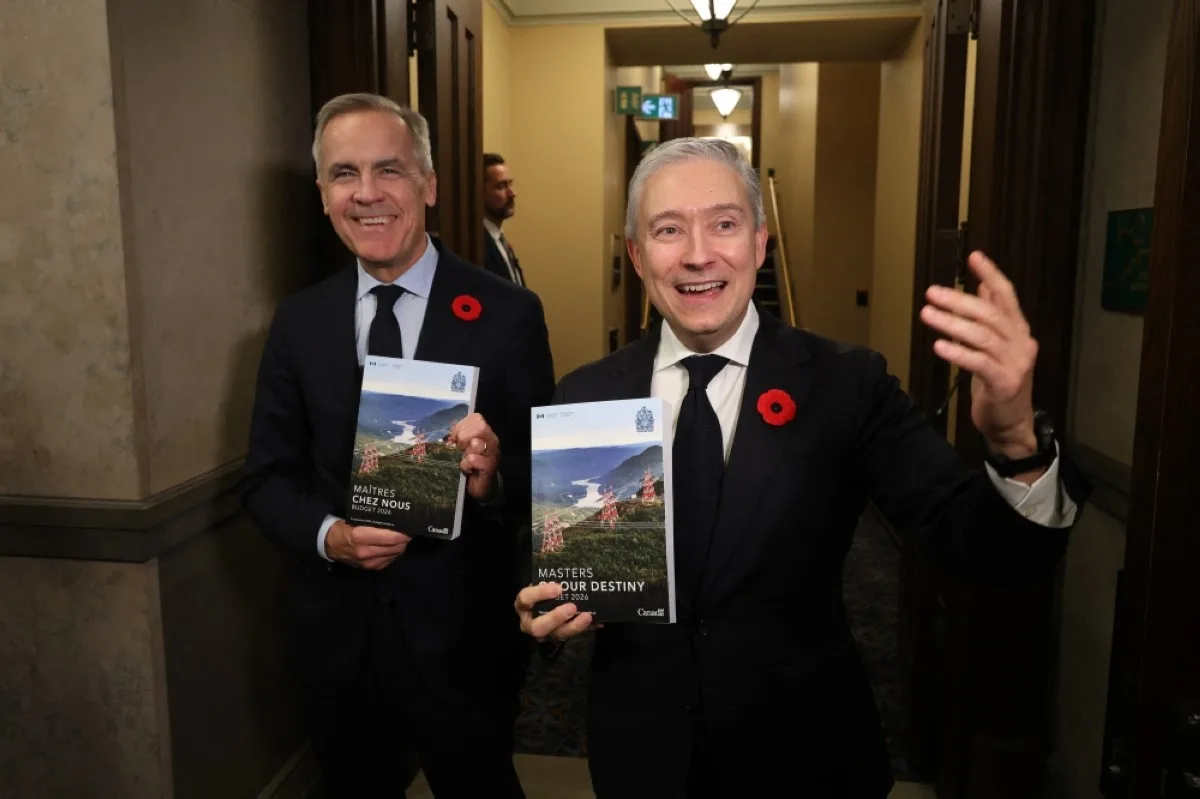
Canada introduced a budget on Thursday aimed at reducing the country's economic dependence on the United States. This program, which is the second budget presented by Mark Carney, the Prime Minister of Canada, since taking office, emphasizes that the transition towards economic independence will take time, but "this change is happening."
Emphasis on Economic Independence
The budget, titled "Gentlemen of Their Own Destiny," includes plans to establish Canada's first national wealth fund valued at 25 billion Canadian dollars (18.3 billion US dollars). This fund is designed to invest in major national projects, and Ottawa hopes that the government's stake in these projects will help attract private investments.
Read more: The Resilience of Oman's Financial System Amid Global Uncertainties
This budget also marks a clear distancing from the previous government of Justin Trudeau, another Liberal, which faced economic criticism. Finance Minister François-Philippe Champagne noted in this budget that the Carney government inherited an economy facing weak productivity growth and that "private sector investment has lagged behind." The budget also emphasizes that "Canada has been excessively dependent on the United States."
New Investment Opportunities
Carney also introduced a new financial incentive at the major investment conference in September. The "Large Productivity Deduction" allows businesses to deduct costs related to new investments. According to Ottawa, this plan will make Canada appear as a more attractive destination for investment compared to the United States.
Furthermore, the budget highlights the negative impacts of Trump's tariffs on key sectors of the economy, stating that 44 billion dollars has been allocated for businesses and workers affected by these tariffs.
This budget also responds to criticisms from Conservative Party leader Pierre Poilievre, who accused the Liberals of presenting a "credit card" budget. In Canada, if a budget is rejected, governments fall, and Carney needed support and abstentions from opponents last year to maintain power, but now the Liberals have gained a parliamentary majority.
Read more: Victory of Kuwait's Public Pension Fund in London Court · Upcoming Elections in New Zealand Amid Economic Concerns