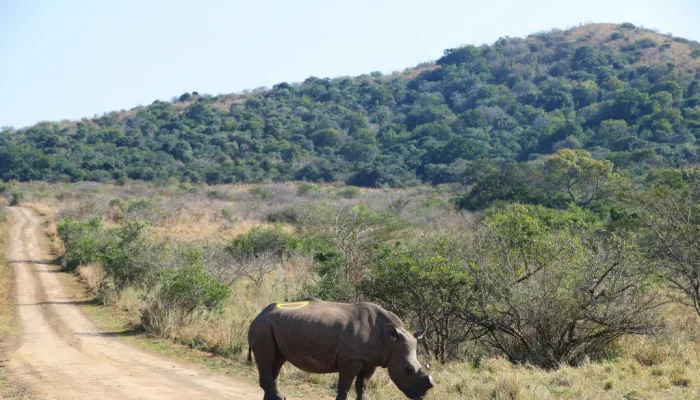
Hluhluwe-Imfolozi Park in KwaZulu-Natal (KZN), South Africa, serves as one of the oldest rhino sanctuaries in Africa, playing a vital role in the survival and conservation of southern white rhinos. By utilizing advanced smart technologies, the park has intensified its efforts to protect rhinos and is seeking to change conservation methods for this valuable species.
Smart Monitoring of Rhinos
In this park, a drone flies overhead, displaying images of rhinos resting among the bushes. This drone, known as the "eye in the sky," assists conservation teams in monitoring vast and difficult areas both day and night. This technology not only helps identify rhinos for monitoring and veterinary work but also protects them from poachers.
Read more: Oman will witness a rainier winter due to El Niño activities
According to Cedric Kwazi, senior rhino conservation advisor at the Isimangaliso Wetland Park KZN, Hluhluwe-Imfolozi Park is recognized as a "primary genetic resource" for southern white rhinos. This area has served as a refuge for rhinos since the late 19th century and has been striving to save this species from extinction ever since.
Conservation Challenges and Increasing Illegal Poaching
Despite ongoing efforts to protect rhinos, this species still faces serious challenges. According to the International Rhino Foundation, the global population of white rhinos has decreased from 17,464 in 2023 to 15,752 in 2024. South Africa, which has the largest population of rhinos in the world, continues to face significant pressure from poachers.
At Hluhluwe-Imfolozi Park, conservation measures have been enhanced using modern technologies. Hundreds of cameras have been installed throughout the park, transmitting images of unusual activities to the operations center. Additionally, over 20 kilometers of fencing in key areas have been updated with smart technologies to send alerts to the operations center in case of poacher incursions.
These technologies help conservation teams identify potential threats and coordinate necessary responses. Furthermore, the park remains reliant on its human resources and protects rhinos through regular patrols, fence inspections, and responses to incursions.
In the dehorning operations at this park, veterinarians, in collaboration with conservation teams, immobilize young rhinos and remove part of their horns to reduce their attractiveness to poachers. This process is conducted annually to prevent the risk of poaching.
According to the South African Department of Forestry, Fisheries and the Environment, the number of rhinos poached in the park has decreased from 198 in 2024 to 63 in 2025. This indicates the positive impact of investment in technology and improvements in anti-poaching units in the park.
Read more: The impact of the presence of Saudi experts on global climate reports · IQVIA Holdings: Will this company endure among competitors?