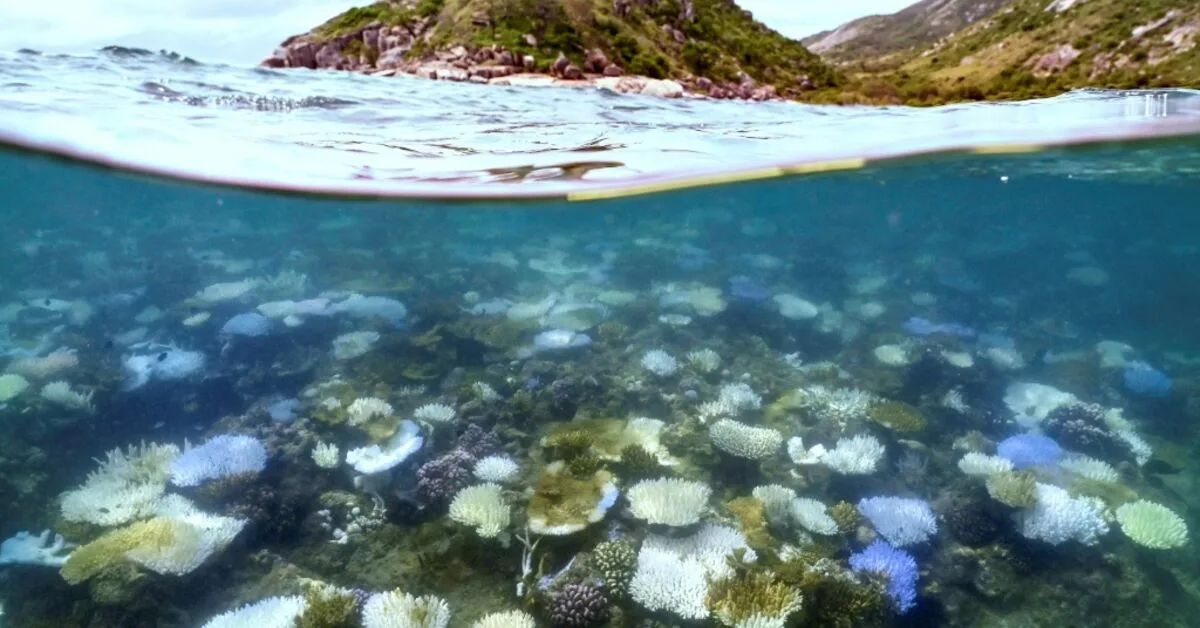
The International Union for Conservation of Nature (IUCN) has warned that nearly all shallow-water coral reefs around the world are facing a "very high" risk of collapse by 2075 due to climate change.
Risk of Coral Reef Extinction
This global assessment, conducted for the first time, shows that 96% of the planet's coral reef systems are classified as "severely endangered," the highest level of risk. Coral reefs are highly sensitive to heat and are particularly vulnerable to climate change caused by human activities. These changes are increasing ocean temperatures and the frequency and intensity of coral bleaching events.
Read more: IPCC Discussions in Addis Ababa on the Timing of Climate Reports Release
Necessary Actions for Rescue
Micheal Goudka, the scientific director of coral reef assessments at IUCN, stated: "The risk of coral reef collapse is increasing, but this should be a wake-up call to take action instead of despair." He added that coral reefs have shown an incredible ability to recover from devastating bleaching events.
Research to assess the status of coral reefs has utilized the "medium" scenario provided by the United Nations climate experts panel, which predicts that global temperatures will rise by 2.7 degrees Celsius above pre-industrial levels by 2100. The United Nations warned on Wednesday that, based on current global commitments to reduce greenhouse gas emissions, the world is on track for a temperature increase of 2.6 degrees Celsius this century.
In addition to climate change, overfishing also harms corals, as some herbivores and predators play a role in controlling algae and maintaining ecological balance. Overexploitation of parrotfish and other fish groups threatens 63% of coral reef ecosystems.
Coastal development, pollution, tourism, and frequent storms are other threats. This analysis examined 127 tropical and subtropical coral reef systems covering 188,362 square kilometers.
Some of the largest and most diverse coral reefs in the world, including the Great Barrier Reef in Australia, the Coral Triangle in Southeast Asia, and the coral reefs of the Red Sea, are classified as "severely endangered."
Collapse of a reef ecosystem occurs when hard corals — which form its foundation — largely disappear and are replaced by algae, debris, and sponges.
This report was released on the sidelines of the UN COP17 Biodiversity Conference in Yerevan, Armenia, where governments are under pressure to make progress towards a historic agreement to halt and reverse biodiversity loss by 2030. Despite this warning, IUCN stated that coral reefs in many parts of the world are "not lost yet." If scientists only look at what has happened in the past 50 years and ignore future climate predictions, 24% of coral reef ecosystems would be identified as "severely endangered."
Gertel Aguilar, the director general of IUCN, said: "It is not too late to give coral reefs a chance to recover, but this requires decisive action to combat climate change and stop further ocean warming."
Read more: Researchers at Shiraz University: Transferring Water from the Persian Gulf is Unprofitable and Environmentally Destructive · The Supreme Council of Oman is Reviewing the Environmental Law Bill