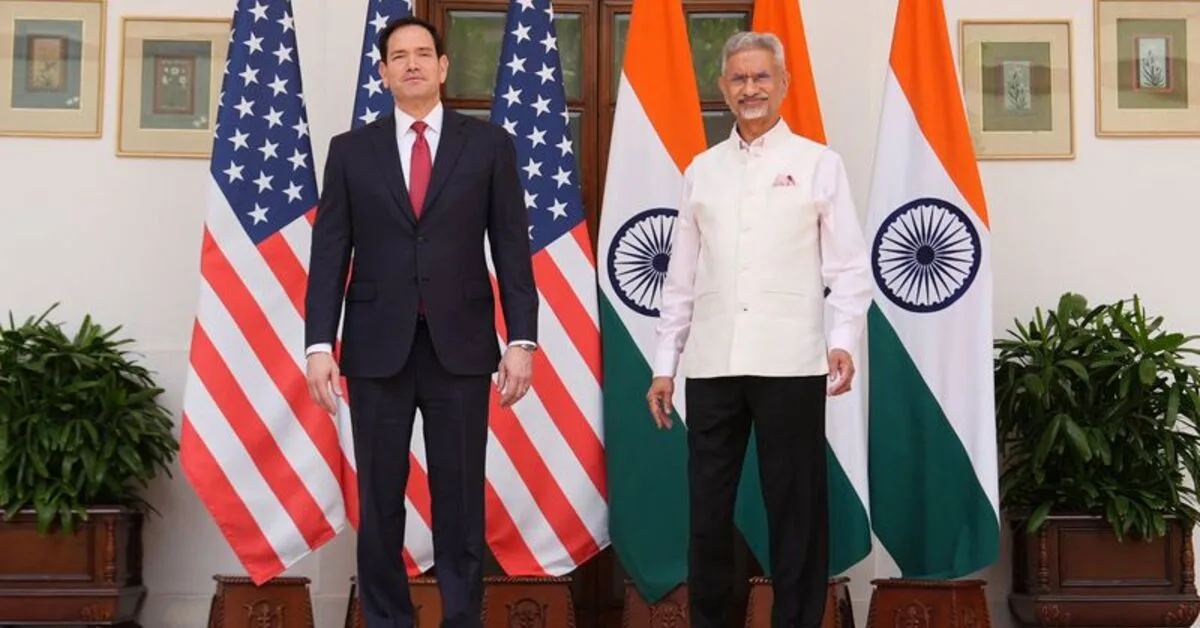
The U.S. Secretary of State, Marco Rubio, and the Indian Foreign Minister, S. Jaishankar, discussed measures that may be taken against countries that economically engage with Russia and Iran during their meeting in New York. This discussion followed the signing of new legislation by former U.S. President Donald Trump, which once again raised India's concerns in this regard.
New Sanctions Law
The legislation, known as the "Russia and Iran Sanctions Act," was passed by the U.S. Congress in response to increasing economic pressure on Russia due to its invasion of Ukraine in early 2022. This law gives the President the authority to impose tariffs of up to 100 percent on goods imported from countries that purchase oil or gas from Russia or any country that assists it.
Read more: French Foreign Minister: Palestinians Must Hold New Elections
Marco Rubio and S. Jaishankar, in a joint statement after the meeting, discussed potential sanctions that may be imposed on countries that economically cooperate with Russia and Iran. Jaishankar wrote on the social media platform X that he has "reiterated India's interests and concerns in this matter."
Impacts on Bilateral Relations
India had previously informed Washington that new measures to impose tariffs on Russian oil purchases could affect bilateral relations. This law allows Trump to impose tariffs of up to 100 percent on goods imported from five major buyers of Russian crude oil, especially if those countries continue to knowingly purchase new oil or gas.
India is recognized as one of the largest buyers of Russian oil, and following Russia's invasion of Ukraine, the purchase of discounted Russian crude oil has significantly increased. This surge in purchases was part of the reasons for imposing tariffs of up to 50 percent on Indian goods in August 2025 by Trump, which is considered one of the harshest tariffs on any country.
In February, Trump reduced these tariffs and referred to India's commitment to stop oil purchases from Russia. However, India only temporarily reduced its purchases from Russia in early 2026, after which they sharply increased, particularly following the supply shock that occurred after the U.S.-Israel war with Iran.
India believes that its large population and economic growth necessitate the need for affordable energy supply. Indian analysts also believe that India's purchases of Russian oil not only do not finance the war in Ukraine but also help stabilize global supplies and control domestic prices.
Read more: The United States Conditioned the Visa of the Sudanese Army Chief on the Ceasefire Plan · U.S.-Iran Talks in New York Turned into a New Hope