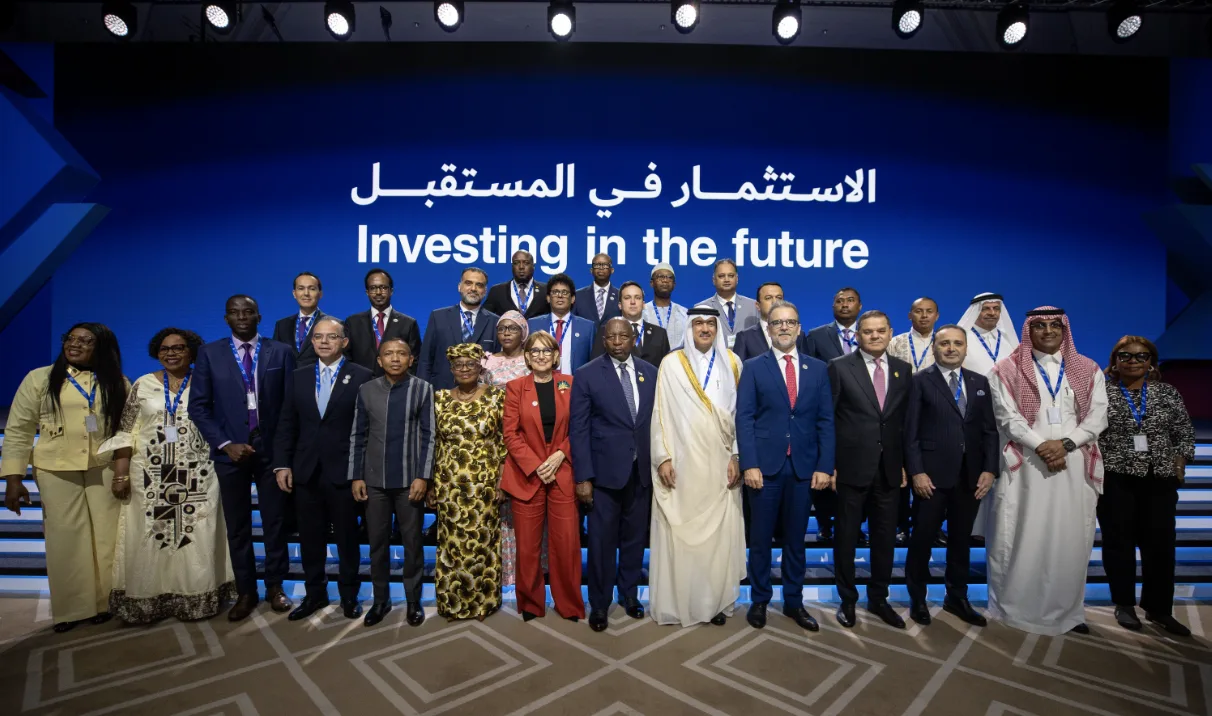
Sovereign Wealth Funds (SWFs) are entities established to invest public revenues in projects with financial returns and public benefits. These funds play a central role in today's world in foreign direct investments, especially in the food and agriculture sector, and have become important financial participants in global agricultural-food system changes.
Challenges of the Agricultural-Food System and the Response of Gulf Countries
Shocks to the agricultural-food system often provoke widespread reactions at the national levels. The global financial crisis in 2007 and the rise in global food prices led to hoarding of goods and food insecurity, creating a global food crisis. Since then, other crises such as food price fluctuations in 2011, the COVID-19 pandemic, and the food crisis resulting from the war in Ukraine have clearly highlighted the instabilities in global agricultural-food systems.
Read more: Qatar Introduced $60 Billion Investment Plans and the Future of Energy in New York
In response to these challenges, many countries have sought to shield themselves from dependence on global food markets and related shocks by increasing food production and acquiring agricultural land in other countries. This type of investment is typically undertaken by countries with lower agricultural production capacity.
Agricultural Investments and the Role of Gulf Countries
The Gulf Cooperation Council countries, due to a lack of freshwater resources and arable land, heavily rely on investments in other countries that have access to natural resources and suitable land for agriculture. For example, currently, Saudi Arabia's Public Investment Fund (PIF) has focused its efforts on food independence and investments related to agricultural-food systems.
Since 2015, Gulf sovereign wealth funds have increased their investments in the agriculture sector of other countries. In Sudan, significant investments in real estate and agriculture worth over $500 million have been made. Additionally, Qatar has established a $1 billion investment fund in Vietnam, part of which is allocated to agriculture.
Furthermore, the United Arab Emirates is seeking to establish close relations with the Serbian government, which includes investments in agricultural land. In 2013, the UAE Development Fund provided an initial $400 million loan for Serbian agriculture. These actions reflect the Gulf countries' efforts to ensure food security and reduce dependence on imports.
The Current Status of Sovereign Wealth Funds in the Gulf
Currently, each Gulf Cooperation Council country has at least one sovereign wealth fund. Some countries, like the United Arab Emirates, have multiple funds, allowing them to specialize in specific areas. The management of these funds is very complex due to their political sensitivity. For instance, the Abu Dhabi Investment Authority, the Saudi Public Investment Fund, and the Qatar Investment Authority all rank among the top 10 largest sovereign wealth funds in the world, with combined assets exceeding $2 trillion.
Ultimately, Gulf sovereign wealth funds play a crucial role in agricultural and food investments, significantly contributing to food security and addressing global challenges. These funds are increasingly evolving and diversifying their investment strategies to meet domestic and international needs.
Read more: Interest Rates Rise in Gulf Countries Following the Federal Reserve · Sultan Haitham Begins Official Visit to Angola to Strengthen Economic Relations