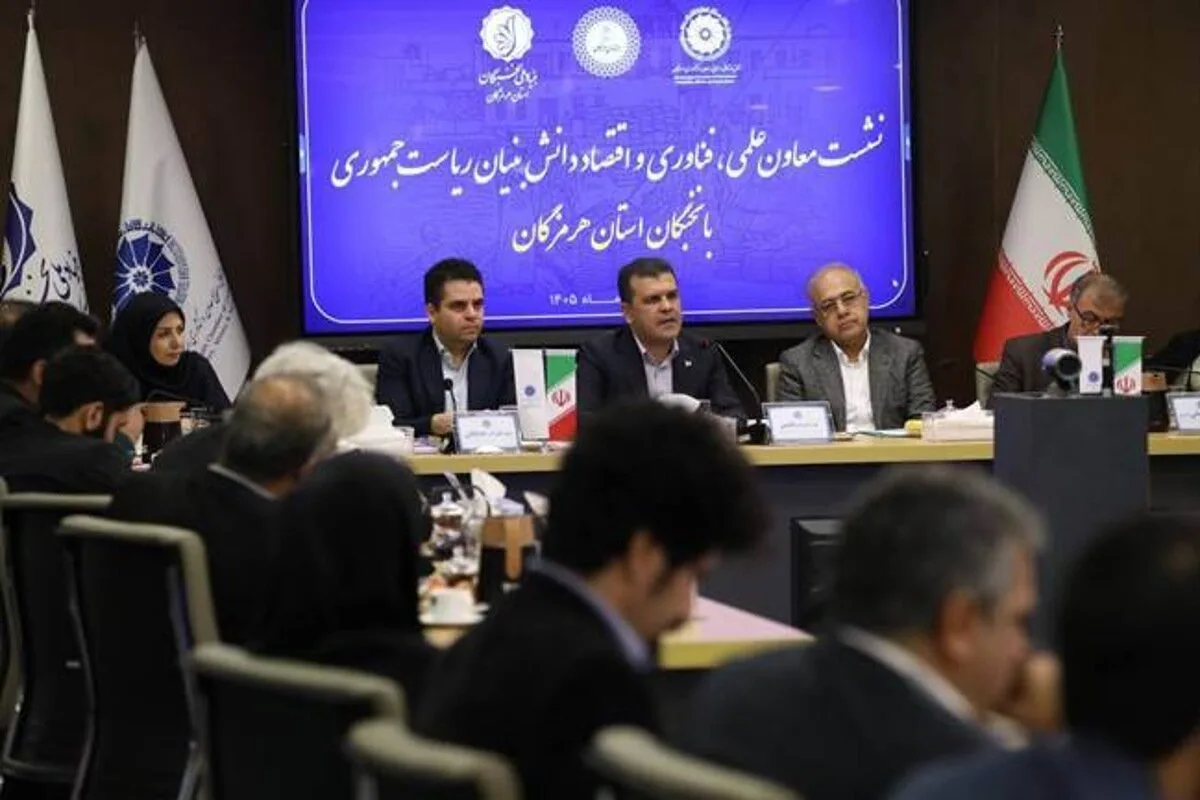
Hormozgan, as a strategic province with rich industrial, maritime, port, and energy capacities, can become one of the main gateways for the knowledge-based economy in the Persian Gulf. Mohammad Ashouri Taziani, the governor of Hormozgan, emphasized these capacities in his recent meeting with the province's elites, stating that due to its excellent geographical position and natural resources, this province is among those with strategic advantages for the development of a knowledge-based economy.
Special Economic Capacities of Hormozgan
Ashouri further referred to the activities of special economic zones in Hormozgan, adding that these zones are active in various industrial and service sectors and have provided a suitable capacity for the establishment and development of knowledge-based and technological companies with their port and industrial infrastructure.
Read more: The Impact of U.S. Diesel Export Restrictions on Domestic and Global Markets
The governor of Hormozgan also pointed to the province's position in the Makran region, stating that a significant portion of the Makran coastline falls within Hormozgan. The counties of Minab, Sirik, and Jask encompass an important part of this strategic area and could host population, industries, and new economic activities in the future.
Advantages in Energy and Fisheries
Ashouri emphasized the energy capacities of this province, stating that the two large oil refineries, Persian Gulf Star and Bandar Abbas, together produce about 60% of the country's gasoline, highlighting Hormozgan's position in the national energy chain. Additionally, Hormozgan has significant capacities in the steel chain, with companies like Hormozgan Steel and Saba Steel operating in this province.
The governor of Hormozgan also referred to the fisheries capacities of this province, stating that Hormozgan holds the first position in the country in the fisheries sector, which plays a significant role in employment and the province's economy. Of the approximately 59,000 direct and indirect job opportunities in fisheries, nearly 50,000 job opportunities were endangered during the recent war, highlighting the importance of this sector.
He emphasized the necessity of utilizing technology to increase productivity and added value in various sectors of the province, stating that large industries, ports, fisheries, agriculture, coastlines, and Makran capacities can become a platform for the activities of knowledge-based companies and the development of technological solutions.
Ashouri noted that creating an innovation hub in Hormozgan could help connect elites, universities, knowledge-based companies, and large industries in the province, facilitating the transformation of real issues in industrial and economic sectors into technological opportunities and new businesses.
The proximity of Hormozgan to the countries bordering the Persian Gulf is also considered an important advantage for developing the market for knowledge-based products and services. The governor of Hormozgan emphasized that the goal should be to integrate the province's large capacities in industry, energy, sea, and trade, alongside its scientific and elite capabilities, into a cohesive chain so that Hormozgan can not only play a role in the national economy but also strengthen its position in the regional knowledge-based economy.
Read more: The Agreement Between Iran and Oman on Mutual Administrative Assistance in Customs Matters Has Been Announced · India's Semiconductor Market Will Reach $200 Billion by 2035