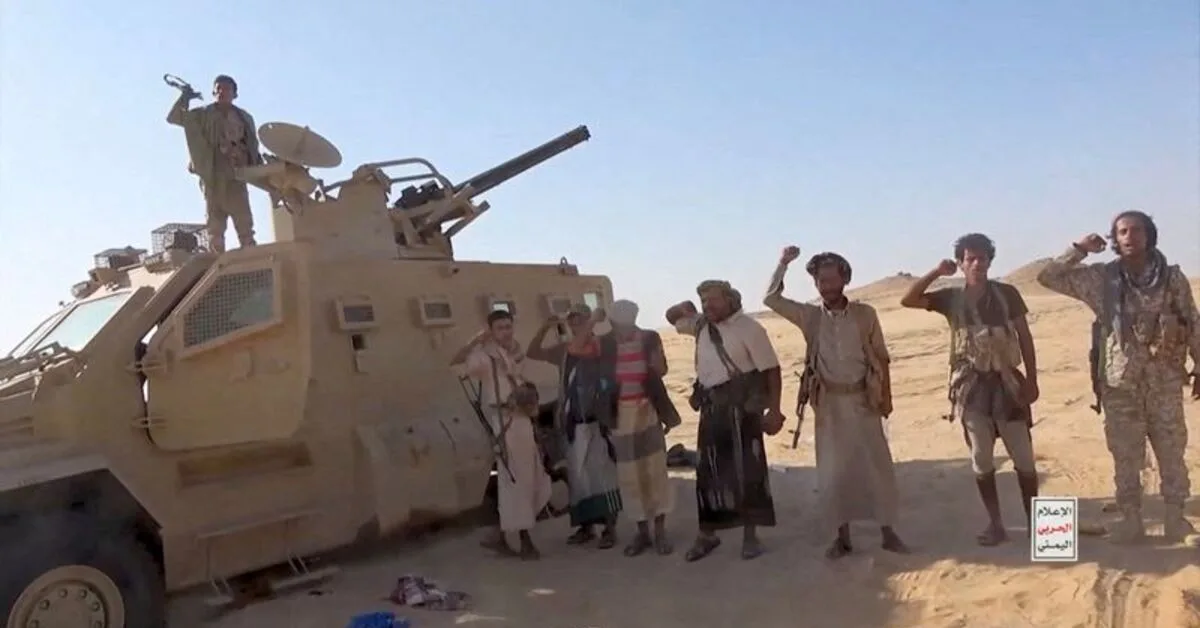
The Houthis on Monday sought to capture strategic heights in Yemen to cut off the connection between the Red Sea coasts and the remaining areas under Saudi control. This move came after a report indicated the last-minute cancellation of U.S. airstrikes against the group.
Rising Tensions in the Middle East
The rapid advance of the Houthi group, which is backed by Iran, has led to an escalation of broader conflicts in the Middle East and a greater threat to global energy supplies. Saudi Arabia has yet to comment on the potential first strikes against Yemen's capital, Sana'a, since the escalation began.
Reports indicate that the Trump administration was prepared to launch airstrikes against the Houthis on Sunday, but the decision was canceled at the last moment while forces were loading bombs onto planes. In this context, Trump spoke on Sunday with Rashid Al-Alimi, the president of the Saudi-backed government in Yemen, who requested military assistance, but it appears Trump did not make any direct promises regarding military support during this call.
Field Developments and Consequences
The Houthis, who have controlled Yemen's capital since 2014, have captured the Red Sea coasts this month and pushed back Saudi government forces. In recent days, Saudi Arabia has conducted hundreds of airstrikes against Houthi positions in the heights in response to these movements.
According to United Nations reports, nearly 700 people have been killed and thousands injured in these conflicts. Additionally, nearly 130,000 Yemenis have fled their homes in Yemen, and over 3,000 have escaped towards Africa via the Red Sea.
Five Yemeni military sources reported that the Houthis are now attempting to capture strategic heights known as the Khaboub Mountains in the two provinces of Taiz and Lahij. These heights separate the Red Sea coasts from the southern areas controlled by the government. The fighting has concentrated on the outskirts of the mountainous Al-Waziah area in Taiz province and Ras Al-Ara on the shores of the Indian Ocean.
The Houthis aim to ensure the retreat of their forces around the Bab el-Mandeb Strait, which leads to the Red Sea, by capturing these heights. This would allow them to open new fronts and protect their newly established positions.
The increase in clashes between Saudi Arabia and the Houthis poses a serious challenge for Trump, who is under pressure to support his Saudi allies. He is also concerned about the further escalation of a war he began against Iran in February, which has faced significant public criticism. The United States previously attacked the Houthis for two months in early 2025 but halted these attacks after reaching a ceasefire.
The Houthis' new control over the Bab el-Mandeb Strait could cut off the main alternative route for Saudi oil exports that was used to bypass disruptions in the Strait of Hormuz. In response, Saudi Arabia has increased its attacks through Hormuz and is paying unprecedented costs for oil exports to its customers in Asia and elsewhere, despite the risks of war.