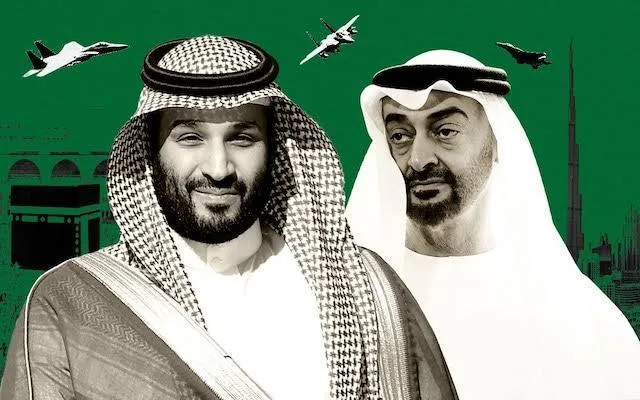
In recent years, Saudi Arabia and the United Arab Emirates have faced increasing tensions in their relations, which have been clearly evident in various issues including Yemen and Sudan. This rivalry, which had remained somewhat hidden, reached its peak on December 30, 2025, when Saudi Arabia targeted two Emirati ships in the port of Mukalla in Yemen. This action was a response to internal developments in Yemen and the dominance of the Southern Transitional Council (STC) over certain areas of Yemen.
Impact of the Bombings on Bilateral Relations
Following these bombings, all Emirati personnel and equipment were withdrawn from Yemen, and the Southern Transitional Council quickly faced defeat across the country. Yemen has remained a clear battleground for tensions between Riyadh and Abu Dhabi. However, these tensions do not end here and are also evident in other issues, including security and foreign policy matters.
Read more: Opening of Educational and Recreational Facilities at the Oman Military Technology College
In June 2026, in the days leading up to the signing of the memorandum known as "Islamabad," the UAE, along with Saudi Arabia and other Gulf countries, urged the United States to end the war between Israel and Iran. However, this agreement appears to have been merely a superficial consensus, as the UAE, as one of the signatories of the Abraham Accords, had previously called on Israel and the U.S. to attack Iran.
Historical Roots of the Rivalry
Historically, relations between Saudi Arabia and the United Arab Emirates have been accompanied by numerous tensions, especially over issues like sovereignty over the Buraimi Oasis, which was only resolved in 1974. Since the beginning of the 21st century, particularly under the leadership of Mohammed bin Zayed, the UAE has been increasing its power and influence based on its oil revenues, continuing to challenge Saudi Arabia's dominance in the region.
Moreover, documents released by WikiLeaks indicate that since 2009, the UAE has viewed Saudi Arabia as a serious threat to its security. Yousef al-Otaiba, the UAE ambassador to the U.S., has noted that while the UAE shows close relations with Riyadh, it actually considers Saudi Arabia the second biggest threat after Iran.
Changes in Saudi leadership in 2015, with the rise of King Salman and his son, Mohammed bin Salman, quickly impacted the relations between the two countries. Initially, these relations were described as close cooperation between the two crown princes, but over time, disagreements and tensions gradually evolved into a higher level of rivalry.
Ultimately, while Saudi Arabia and the United Arab Emirates cooperate in some areas, their rivalries have become a structural component of regional politics that is expected to intensify over time. This situation will lay the groundwork for further challenges in the future.
Read more: Trump's Conversation with Gulf Arab Leaders About the Iran War · Abdul-Malik al-Houthi and Military Victories on the Coasts of Yemen