The Government of India, in collaboration with the Asian Development Bank (ADB) and the Japanese government, will soon launch one of the largest green ammonia production plants in the world. This project is taking shape as part of efforts to strengthen energy security and diversify energy sources in Asia.
Transforming old factories into green production
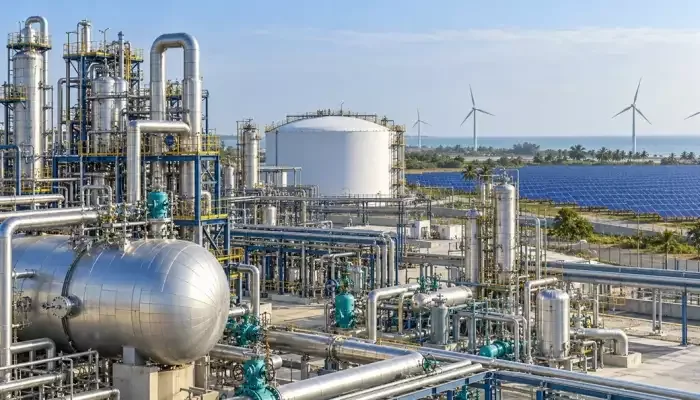
This project involves converting an old ammonia and urea production plant from natural gas-based production to green ammonia production powered by renewable energy. The annual production capacity of this plant is estimated to be around 1.1 million tons. This initiative will not only help develop the green ammonia export industry in India but will also reduce emissions resulting from the production of this key material for agricultural fertilizers and other industrial applications.
Read more: Oman’s participation in the International Monetary Fund and World Bank Group meetings has concluded
Financial support and project goals
The financial package for this project includes a $100 million loan from the Asia Private Infrastructure Fund led by the Asian Development Bank, funded by the Japan International Cooperation Agency (JICA). ADB President Masatsugu Asakawa stated that this project is an example of how renewable energy can replace fossil fuels in ammonia production and significantly reduce emissions while enabling large-scale industrial production.
Japan’s Finance Minister, Shunichi Suzuki, emphasized the importance of strengthening energy supply chains in Asia and added that Japan is advancing the POWERR Asia initiative and will continue to collaborate with ADB to diversify energy sources and enhance the region's economic resilience.
This project is presented as the first investment under the “Action for Energy Security for Long-Term Resilience” (ACCEL) initiative. This initiative is designed to help Asian countries improve their energy security and diversify their energy sources.
Economic and environmental implications
With the launch of this plant, India will emerge as a leader in global green ammonia production. This initiative could attract more investments in renewable energy and green industries in India. Additionally, this project is expected to improve air quality and reduce the negative environmental impacts associated with ammonia production.
Given global trends towards reducing emissions and moving towards clean energy, this project could serve as an example of India’s advancements in sustainable development and environmental responsibility.
Read more: Oman’s local content executive committee meeting focused on economic development · India and Canada reviewed regional developments and strategic partnership