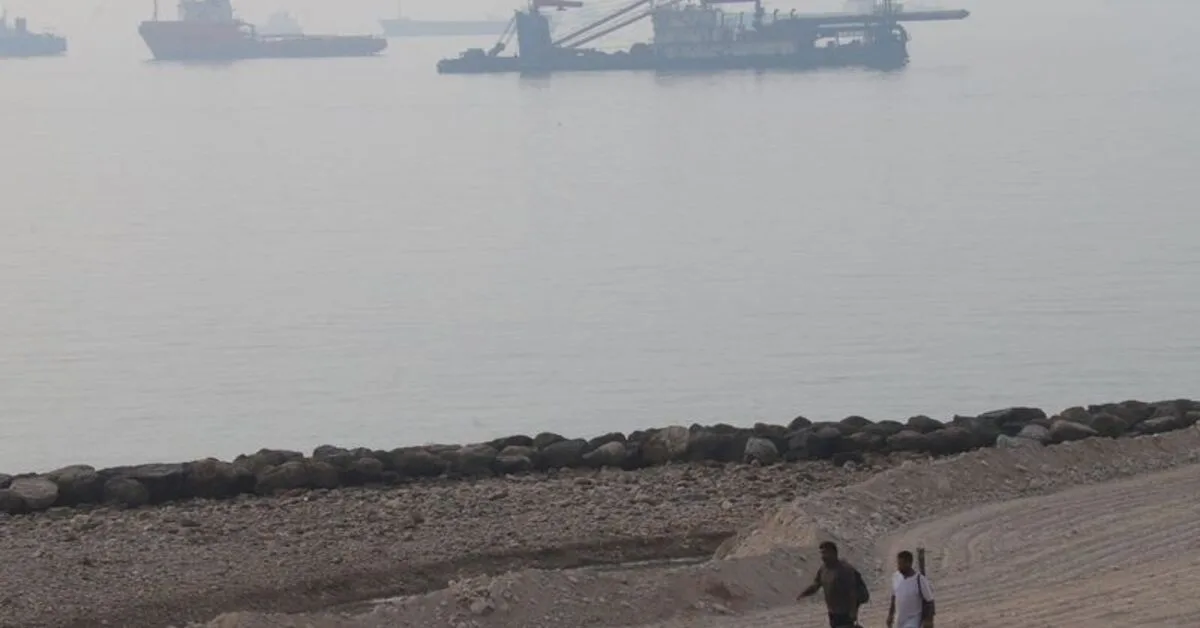
Iran has increased the risk of attacks and threats against oil tankers in the Strait of Hormuz with new warnings. This comes as the number of tankers attempting to pass through this vital waterway has reached its lowest level in over two months.
Number of Attacks on Oil Tankers Has Increased
Last week, the largest number of attacks on oil tankers since the start of the Iran war was recorded. These attacks have led to a decrease in the number of vessels passing through the Strait of Hormuz. Iranian officials have warned regional countries that any action to open new oil export routes will be regarded as a hostile act.
Read more: Meeting of the Indian Ambassador in Tehran with Kazem Gharibabadi to Strengthen Bilateral Relations
A senior official close to Tehran has stated that this threat is part of a plan agreed upon by Iranian political leaders and the Islamic Revolutionary Guard Corps. He added, "Iran has no intention of losing control of the Strait of Hormuz and has plans to block the oil export routes of some regional countries."
Increased Threats and Their Consequences
According to a senior diplomat in the region, these threats may include missile and drone attacks on ships and sending boats to intimidate vessels. This diplomat also stated that Iran will continue this policy of intimidation and fear.
In recent months, oil producers in the Gulf have accelerated efforts to pass oil shipments through channels that border Oman near the Strait of Hormuz. These shipments are then transferred to the open waters of the Gulf of Oman and are supported by U.S. air cover.
In the latest incident in the past 24 hours, a project has damaged an oil tanker approximately 51 nautical miles off the coast of Qatar in the Gulf. Reports indicate that the chemical tanker Acers, flagged from Antigua and Barbuda, has been targeted by several projects, and its crew members have sustained minor injuries.
This incident has also raised concerns about the expansion of the conflict zone near Qatar, Bahrain, Saudi Arabia, Kuwait, and Iraq. A maritime risk intelligence group named Clearwater Dynamics reported that this attack could lead to increased tensions in the region.
According to Jacob Larsen, Chief Security and Safety Officer at BIMCO, "Recent Iranian attacks seem to have reduced ship owners' willingness to pass through the Strait of Hormuz. Iranian threats have significantly increased."
Meanwhile, U.S. President Donald Trump is considering his next actions against Iran, including whether to escalate attacks before or after the November midterm elections. This war and its monthly cost of $3 billion have become a key issue in election campaigns.
Governments and energy companies have utilized oil reserves to alleviate pressures in the global oil market, which is facing unprecedented disruptions. Industry executives announced at a meeting in London that the amount of oil in global reserves is decreasing, making the market more fragile and putting upward pressure on prices.
According to General Paul Maynard, Deputy Chief of Staff of the Royal Navy, "There is no going back to the old world, and we cannot return to the stability and prosperity of the past several decades."
Read more: New Developments in Iran-U.S. Relations Regarding the Nuclear Program · Consultation of the Foreign Ministers of Egypt and Saudi Arabia on Iran and Maritime Security