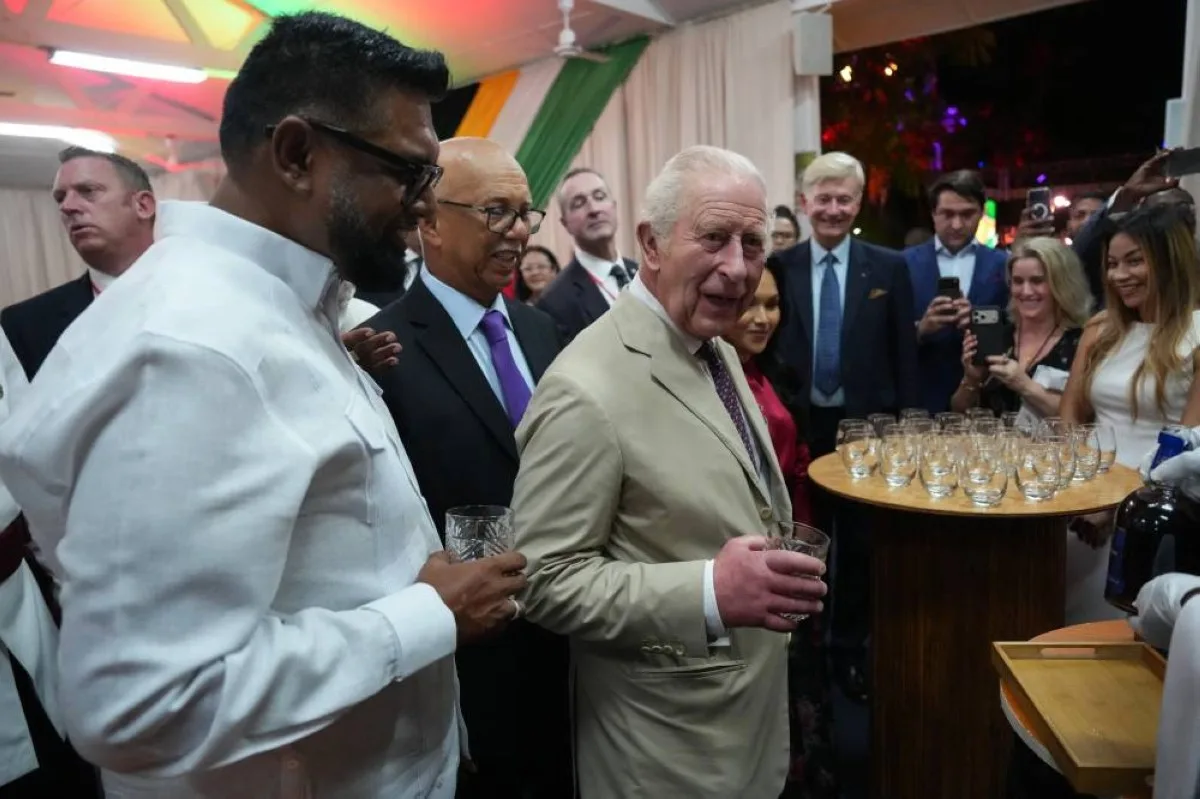
King Charles arrived in Guyana on Thursday to highlight the climate crisis during his Caribbean tour, while being pressured to apologize for Britain's role in slavery.
Meeting with the President of Guyana
This former British colony is the second of three countries on the king's nine-day tour, where several senior officials have urged him to apologize for colonialism and the transatlantic slave trade that has been profitable for his ancestors for centuries. President of Guyana, Irfaan Ali, welcomed the king at Cheddi Jagan International Airport, where the king inspected the ceremonial guard and then attended a state ceremony at the Presidential Palace in Georgetown. This visit celebrates the sixtieth anniversary of relations between the two countries since Guyana's independence.
Read more: Spain declares three days of mourning after deadly train crash
Focus on the Climate Crisis
During his two-day stay in this small, oil-rich country, Charles will focus on the regional impacts of climate change and will also visit a rainforest conservation site. He has previously acknowledged Britain's central role in slavery but has yet to apologize. At a youth gathering in the Bahamas, the first stop of his tour, he said: "It is only right that we must be aware of the great suffering and injustices of the past in these islands and beyond, even as we celebrate current successes and create new opportunities for the future."
Last week, Ali told ITV News that an apology is the "next step" and criticized the former empire for "exploiting the region," "destroying lives," and "creating underdevelopment." A royal spokesperson stated that the king and the president have a "very warm relationship."
Social and Political Impacts
King Charles's visit to Guyana not only emphasizes the importance of the climate crisis but also addresses the existing social and political challenges in the country. This trip could be seen as an opportunity to strengthen diplomatic and economic relations between Britain and Guyana. Calls for an apology from Guyanese officials may lead to a new dialogue between the two countries and help rebuild historical relations.
Additionally, the king's presence in Guyana could help draw global attention to environmental and social issues in the region. This could pave the way for international cooperation in environmental protection and sustainable development.