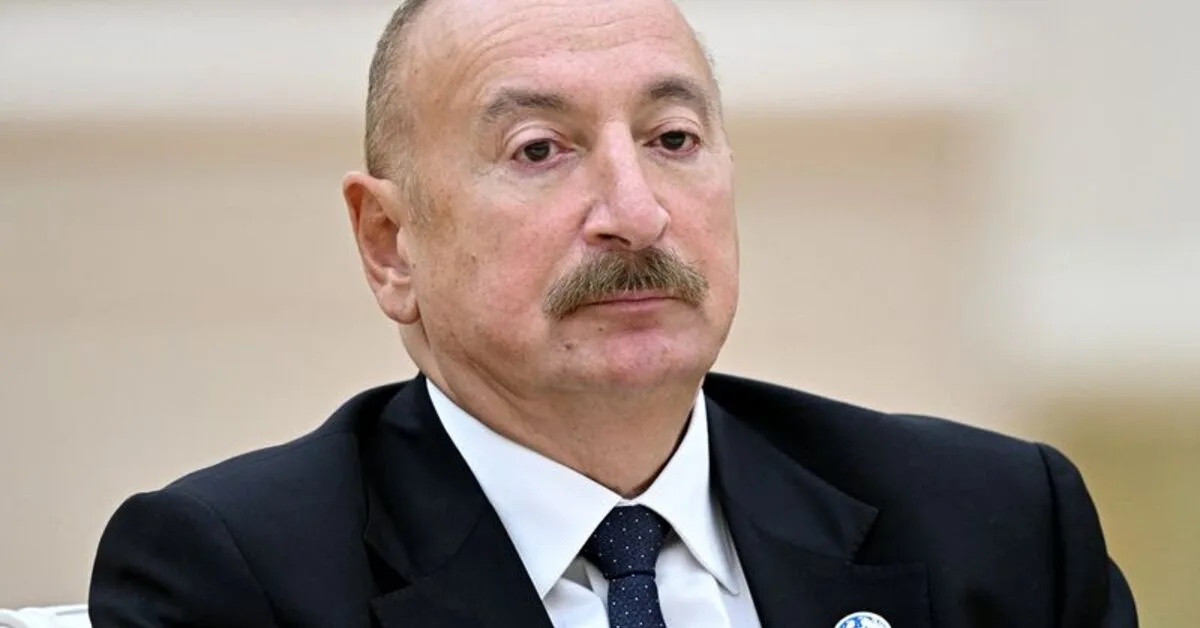
Ilham Aliyev, the President of Azerbaijan, was absent from the Turkic Language countries summit held on Friday in Ankara. This absence, following a personal invitation from Recep Tayyip Erdoğan, his Turkish counterpart, indicates rising tensions between these two historically linked countries. Relations between Turkey and Azerbaijan have come under pressure in recent weeks due to criticisms from some Turkish officials regarding Baku's decision to impose restrictions on the use of headscarves in new secular school laws.
Factors of Tension in Bilateral Relations
Aliyev and other Azerbaijani officials have warned against interference in Baku's internal affairs without directly mentioning Turkey. This situation reflects a rare rift in the unity of countries in this region, which has historically been vulnerable. Any further tensions could undermine Turkey's ambitions to increase its influence in a region traditionally dominated by Russia.
Read more: Greek Prime Minister Calls for Global Maritime Ceasefire After Attack on Greek Ship
Headscarf Controversy and Relations with Israel
The two countries are also at odds over Israel. Ankara has sharply criticized Israel following the Gaza war, while Azerbaijan maintains close relations with the country. Turkish officials have attempted to downplay the tensions, and Erdoğan delivered a message of unity at the opening of the summit on Friday. He stated, "There is no place for separation, division, or conflict in our family picture. We are all together, and God willing, we will always be brothers."
Azerbaijan's Foreign Minister, Jeyhun Bayramov, represented Azerbaijan at the summit and thanked Turkey for its hospitality after Erdoğan, without mentioning the tensions.
These tensions are unusual. The two countries describe their relationship as "two countries, one nation," and their ties have deepened following Turkey's support for Azerbaijan in the Nagorno-Karabakh war in 2023. Ankara is one of the main buyers of Azerbaijan's natural gas.
This week, Erdoğan dismissed one of his advisors, Oktay Saraal, after his public criticism of the headscarf decision. He had also personally invited Aliyev to attend the Turkic countries summit in a phone call last week.
The Azerbaijani news agency Azertac reported without citing a source that Aliyev missed the summit due to "pre-planned events and the intensity of his schedule," including a ceremony and festival at the Under-15 World Cup in Baku.
No comments have been released from Azerbaijan, while the presidency and foreign ministry of Turkey have also not responded to requests for comment.
Gunul Tul, Turkey program director at the Middle East Institute in Washington, stated that Aliyev's absence from the summit is a sign of increasing tensions between the two countries.
She said, "Beneath the rhetoric of 'two countries, one nation,' tensions over various issues, including Azerbaijan's sovereignty, Ankara's influence in Baku, diverse policies towards Israel, and Turkey's proximity to Armenia have been simmering for some time. The headscarf controversy is a sign of a deeper rift."
Turkey is seeking to normalize its relations with Armenia but has stated that this depends on peace efforts between Azerbaijan and Armenia. Turkish officials have emphasized that Ankara is looking for progress in this area to enable actions such as opening borders with Armenia.
Amid implicit warnings against Turkey, Azerbaijan's foreign ministry this month declared 31 Turkish citizens unacceptable due to critical posts on social media.
Turkey's Foreign Minister, Hakan Fidan, after meeting with Aliyev at the summit in Baku this month, stated that misinformation is being spread on social media about Turkey-Azerbaijan relations. He said that while friendly countries may disagree on some issues, they can "discuss their problems in a civil atmosphere, considering their close relations."
He added, "Can there be differing views and opinions on specific issues? Yes, there can be. Brothers then sit together and discuss these matters in line with their brotherly relations."