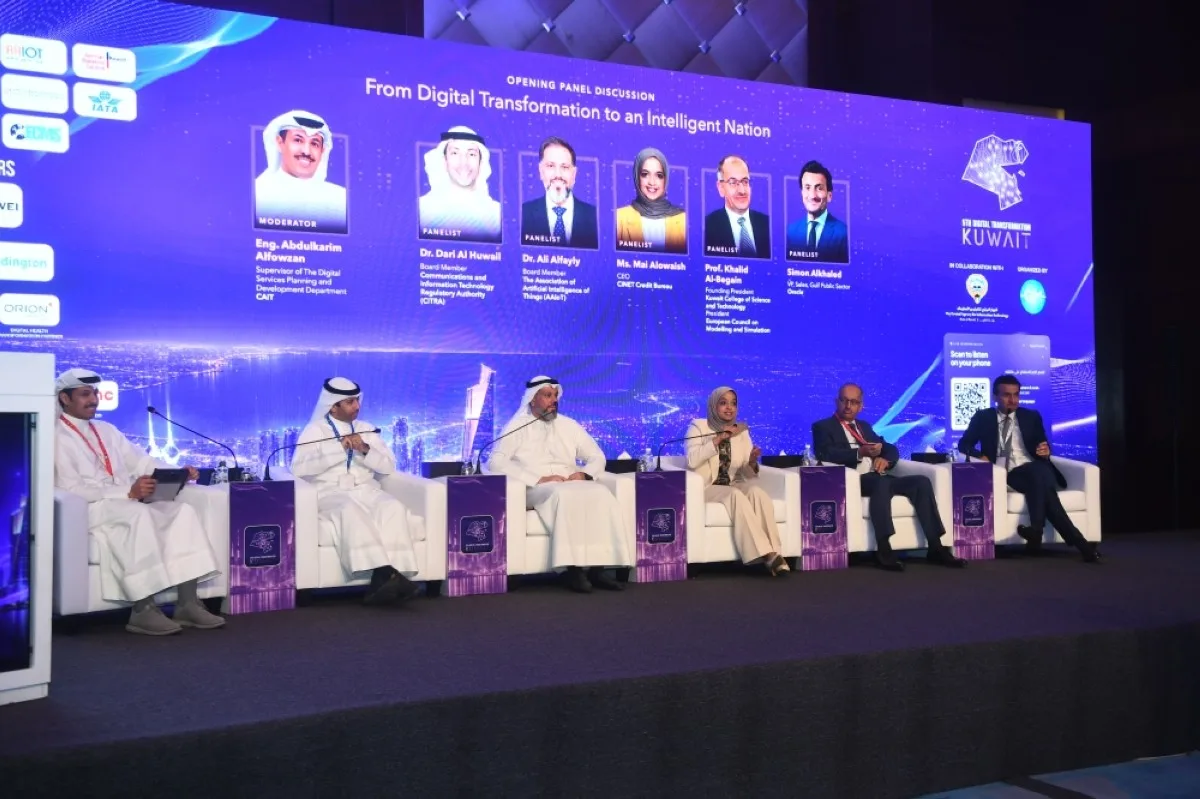
Kuwait has announced the activation of over 40,000 Microsoft 365 Copilot licenses, moving towards the integration of artificial intelligence in public sector operations. This news was revealed at the opening ceremony of the Fifth Kuwait Digital Transformation Conference 2026. The two-day event brought together government officials, technology experts, and private sector representatives to discuss artificial intelligence, cybersecurity, digital infrastructure, and the country's transition to a unified digital economy under the Kuwait 2035 vision.
Progress in AI Adoption by Government Entities
Najat Hussein Ibrahim, the Acting Director General of the Central Agency for Information Technology (CAIT), stated that 13 government entities have successfully completed the adoption phase of this initiative, and over 170 potential applications have been identified. He added, "Artificial intelligence is no longer just a wish for the future. This technology has genuinely entered the public work environment." Ibrahim described this initiative as part of the transition from exploring AI capabilities to applying it in daily government operations to enhance productivity and service quality. He also referred to investment in national digital skills, mentioning that around 1,488 trainees have benefited from CAIT's training programs between January 2024 and August 2026.
Read more: Kuwait's Minister of Communications Emphasizes Cooperation Among GCC Countries in Digital Government
Future Challenges and the Need for Collaboration
Ibrahim emphasized that the organization will continue to develop digital infrastructure, data centers, cloud computing, and cybersecurity capabilities, supporting technological advancements in health, education, finance, transportation, and smart cities. He added, "The real challenge in the next phase is not having the technology, but our ability to translate it into tangible and sustainable outcomes." Achieving these results requires collaboration among government entities, companies, academic institutions, and technology providers, especially in the areas of data protection, cybersecurity, and digital trust.
The Importance of Digital Infrastructure and Innovation
Manal Khaled Al-Mazyad, Vice President of CITRA, stated that digital transformation should enhance institutional performance, decision-making, and public services while expanding electronic platforms. She said, "Digital transformation is no longer just about adopting modern technologies or transferring services to electronic platforms; it is a comprehensive institutional transformation." She also noted that effective regulation helps encourage innovation, protect consumers, and attract investment through transparent and consistent frameworks.
AI Development and Related Responsibilities
Sheikh Mohammed Ahmad Al-Sabah, founder and president of the Artificial Intelligence Objects Association and honorary president of the conference, called for the establishment of an integrated national digital ecosystem. He said, "Kuwait does not only need more digital services. It needs a smarter and integrated national ecosystem." He emphasized that this transition should move from separate digital initiatives to connected entities that securely exchange data. Additionally, Sheikh Mohammed referred to autonomous AI, stating that these systems are increasingly capable of performing complex tasks and making decisions with greater independence.
He warned government employees to exercise caution before uploading work documents or sensitive information to AI platforms. He added, "Where will this data go? Who can access it? Could the use or disclosure of such information impact Kuwait's national security and sovereignty?" Sheikh Mohammed stressed the need for close collaboration among government entities, companies, and academic organizations to turn Kuwait's digital aspirations into practical initiatives.
Read more: The U.S. Accuses North Korea of Stealing $6 Billion from Binance · Oman's Government Revenue Growth to 30.9% of GDP by 2025