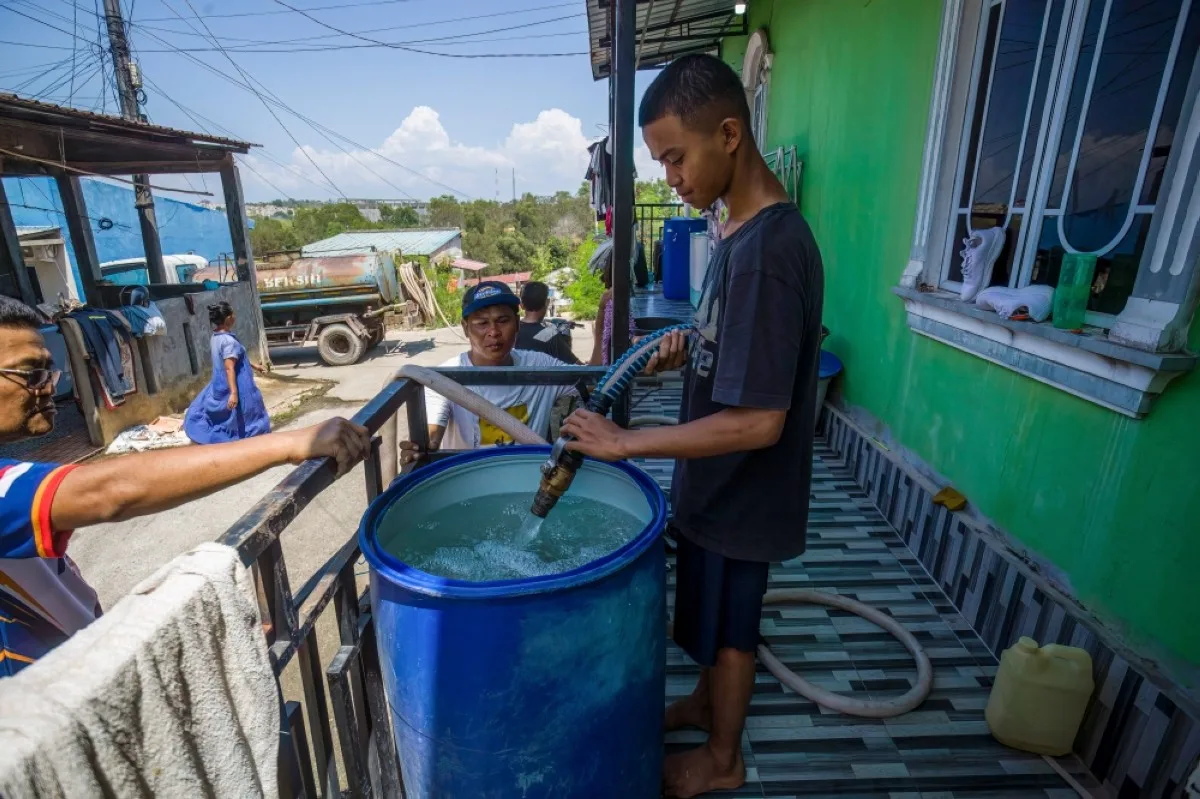
The water shortage in Batam, Indonesia has become one of the major challenges for the residents of this island. With the increasing number of data centers to support the global growth of artificial intelligence, residents in this area are facing fundamental problems in securing drinking and usable water. According to local officials, prolonged drought and a strong El Niño cycle have exacerbated this crisis.
Public Protests and Water Shortage
Residents of Batam are highly dissatisfied with their drinking water situation, and in some areas, water supply services have been severely disrupted. One resident, Juniardi Adinda Sembiring Gurkinayan, pointed out the daily problems caused by the water shortage, stating: "We cannot cook rice or vegetables without water." He added that in the worst conditions, some residents have been forced to hold spontaneous protests in front of the Nongsa Digital Park, where the data centers and other facilities are located.
Read more: Nuclear Power Plant Rooppur in Bangladesh Enters Critical Phase
Impact of the Water Crisis on Daily Life
Local residents have come to believe that the water shortage is due to the construction of data centers. According to Ginda Alamsia, spokesperson for the Batam Water Supply Company, this shortage is caused by drought and technical failures in the water supply system. He added that the Nongsa reservoir has significantly decreased, and water supply for the data centers is being sourced from another reservoir called Duriangkang. In September, officials instructed developers to build seawater desalination facilities to alleviate pressure on local resources.
Meanwhile, companies, including BW Digital and Gaw Capital Partners, have stated that they are aware of the residents' problems and are seeking solutions to reduce water consumption and utilize renewable energy. These companies intend to use closed-loop water systems that recycle resources to reduce the need for fresh water.
Development and Upcoming Challenges
Forecasts indicate that the capacity of data centers in Southeast Asia will triple by 2030, which could put additional pressure on water resources and power grids. As the construction of data centers in Indonesia and Malaysia has increased, residents are reacting to the environmental issues and water shortages caused by these centers.
In Malaysia, the Johor region has become one of the largest clusters of artificial intelligence infrastructure in the world, and the capacity of data centers in this area has significantly increased. However, residents are facing challenges from pollution and flooding caused by the construction of data centers. Local officials have emphasized that for the establishment of new data centers, it is essential to ensure adequate energy and water supply.
Overall, while the development of information technology and artificial intelligence can contribute to economic growth, attention must be paid to the challenges related to water resource supply and sustainable management so that residents' lives are not adversely affected.
Read more: Sabalan Petrochemical Introduced as the First R&D Unit in the Persian Gulf Science and Technology Park · Jefferies Report: Investment in Artificial Intelligence May Have Peaked