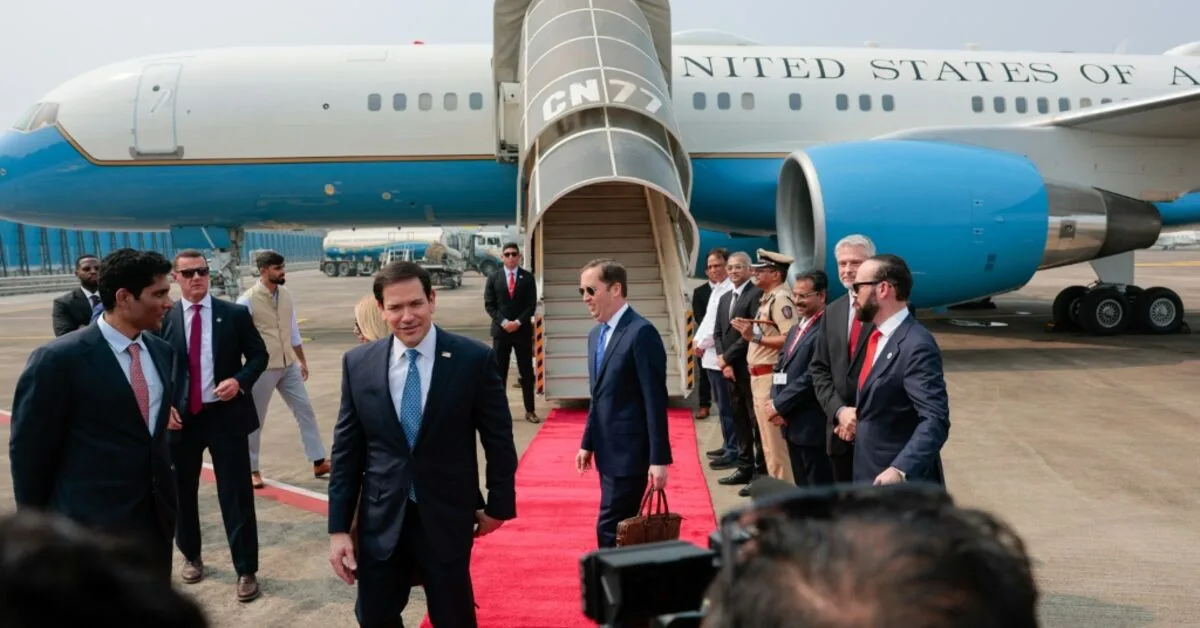
Marco Rubio, the U.S. Secretary of State, announced on Tuesday during his visit to Mumbai that India has made "significant progress" in diversifying its oil supply and that a trade agreement with New Delhi appears to be "very close."
Details of the Trip and Negotiations
During this three-day visit, which marks his second official trip to India this year, Rubio is working to reduce trade tensions between the two countries and strengthen energy relations. India is a major importer of Russian oil, and the tariff war initiated by former U.S. President Donald Trump since April last year has added to tensions between Washington and New Delhi.
Read more: IMF Report on Economic Growth in Asia
Rubio stated at a press conference in India's financial capital: "India has repeatedly expressed its desire to diversify its energy portfolio, which seems to be a smart decision." He also added: "This is not something that can simply happen from one day to the next, and that is why I think they have made significant progress in this area, and we are happy to see it."
Barriers and Challenges
India is cautious about U.S. trade actions, including a law that imposes tariffs of up to 100 percent on countries that purchase Russian oil. However, Trump issued an executive order last week that lifted these threatening sanctions.
During his previous trip to India in May, Rubio met with Indian Prime Minister Narendra Modi. This time, he plans to meet with his counterpart, Subrahmanyam Jaishankar, the Indian Foreign Minister, and also engage with business leaders. In these discussions, cooperation in energy security and defense and the importance of advancing the U.S.-India strategic partnership were highlighted.
The U.S. Secretary of State will also visit Jamnagar in the state of Gujarat, which is a port and financial base of Mukesh Ambani, the Indian billionaire and his large company Reliance. He stated, "India is a refining power" and added, "We believe we can be a source for some of their energy inputs."
The two countries reached a temporary trade agreement last February aimed at reducing U.S. tariffs on Indian goods. However, the U.S. Supreme Court later revoked Trump's broad tariffs, leading to uncertainty about the timing of this agreement. Since then, both sides have continued negotiations.
Nirmala Sitharaman, India's Finance Minister, announced this month that negotiations have reached a "stage" where crossing it may be very difficult. She said, "We are very close; I can say we are on the verge of signing an agreement. I think there are a number of minor issues left to be resolved. I hope we will have good news to announce soon, and perhaps the leaders can sign it afterward."
Agriculture remains a sensitive area for India, which seeks to avoid exposing its farmers to more foreign competition. On the other hand, Washington wants India to purchase more U.S. energy suppliers.
Exports to the United States increased by 21 percent in August, reaching $8.3 billion, which has been a bright spot for India's economy, which is under pressure due to high energy prices resulting from the Middle East war. Economists believe that the return of higher tariffs could cast a shadow over India's growth outlook and harm market sentiment, putting more pressure on the weak rupee.
Read more: China's Gold Purchases and Changes in Global Financial Security Strategy · Marco Rubio: Ukraine and Russia Must Focus on Ending the War