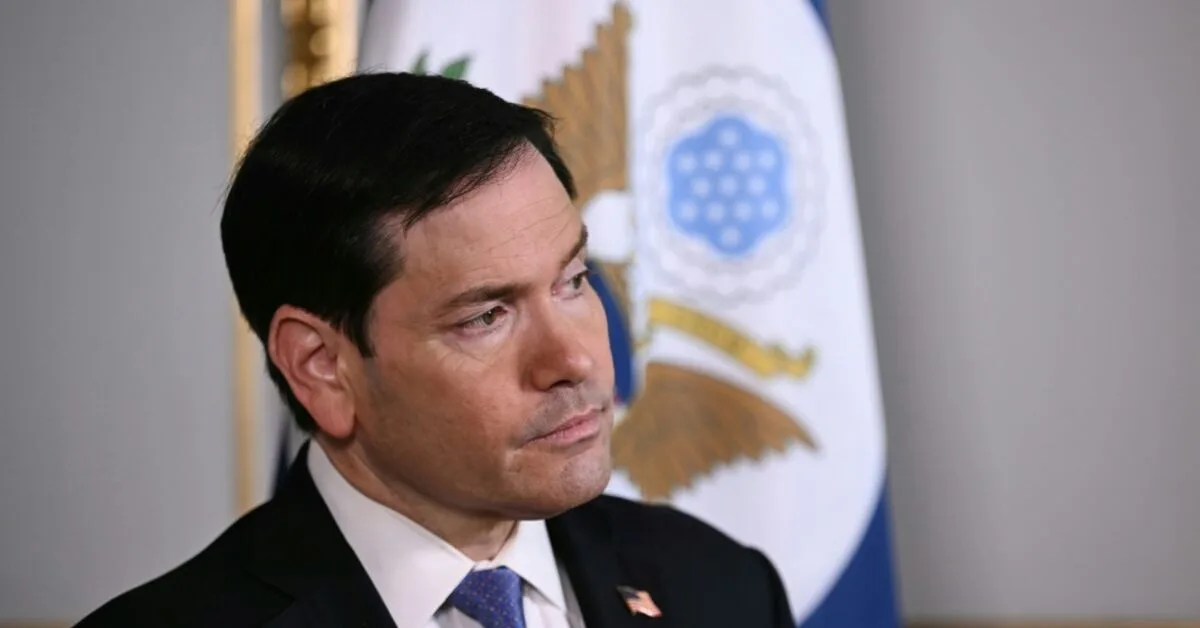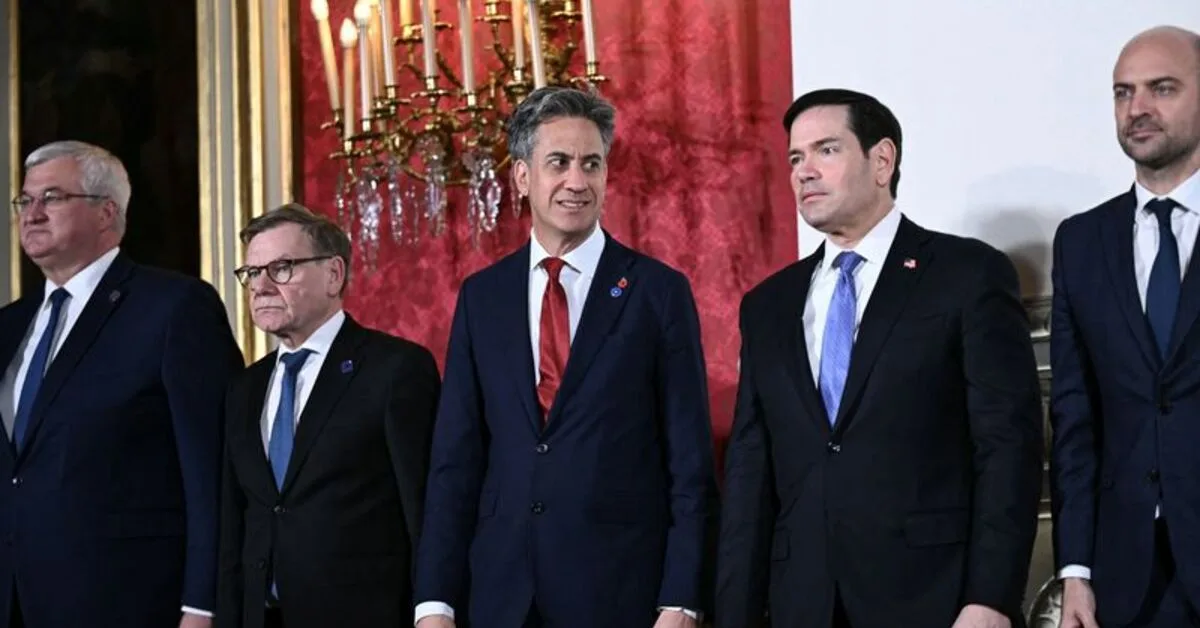
Marco Rubio, the U.S. Secretary of State, announced on November 10 at the G7 foreign ministers' meeting held in Paris that the United States will continue to impose "devastating" economic costs on Iran. He emphasized that Washington has options other than war or accepting Iran's unacceptable demands.
Emphasis on Economic Pressure Policy
Rubio, at this meeting which included the foreign ministers of the UK, Canada, France, Germany, Italy, Japan, and the United States, as well as representatives from the European Union, used strong language to describe Iranian officials, referring to them as "crazy," according to some diplomats.
Read more: Seyyed Ali Khamenei's Speech to Clerics from Yemen, Iraq, Lebanon, and Bahrain
According to diplomats, Rubio pointed out that instead of resuming war or accepting Iran's demands, Washington's current policy of strict economic sanctions has been effective in limiting Tehran's ability to finance its regional and proxy activities. One diplomat quoted Rubio as saying, "They will continue to impose devastating costs on Iran."
Conflicting Views in the White House
Rubio's remarks came a day after Donald Trump, the President of the United States, announced that due to requests from regional countries, including the Prime Minister of Qatar, he intends to refrain from new military attacks against Iran for a while. Trump also referred to the continuation of the maritime blockade of Iran in the Strait of Hormuz.
The Prime Minister of Qatar, Sheikh Mohammed bin Abdulrahman Al-Thani, who is recognized as a key mediator with Iran, unexpectedly joined the G7 foreign ministers' meeting in Paris after meeting with Trump and held discussions with the foreign ministers of European countries and Saudi Arabia. According to two European diplomats, Sheikh Mohammed expressed cautious optimism after his talks in Washington that a diplomatic solution to the crisis may still be possible and that further escalation of the dispute could be avoided.
Several key advisors to Trump, including Rubio, Stephen Miller, the new President of the White House, and Scott Pruitt, the Secretary of the Treasury, support the policy of maintaining heavy economic pressure on Iran. On the other hand, Mike Pence, the Vice President, who attributed the Republican losses in the recent midterm elections to the war with Iran, prefers a deal to be reached with Iran, but it seems that Trump currently does not believe in the possibility of achieving a lasting agreement.
The White House did not respond to immediate requests for comment.
Read more: The U.S. Government Says There Is a Possibility of Attacking Iran If Negotiations Progress · The U.S. Government Does Not Currently Consider Military Action Against Iran Necessary