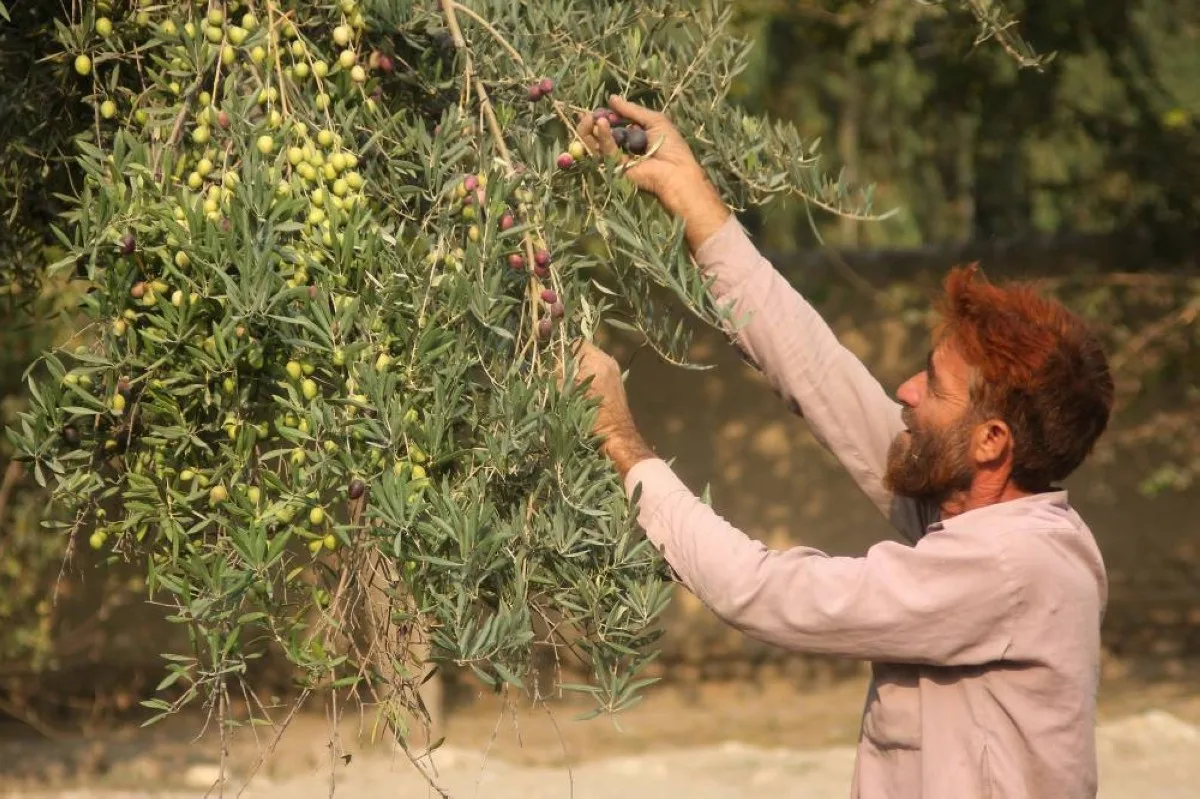
Olive cultivation in Afghanistan, especially in the eastern region of the country, is emerging as an innovative solution for farmers against the water crisis and climate change. In the village of Saydan Arabi located in Nangarhar province, Abdullah Orzala, a farmer and plant specialist, planted his olive orchard on his family land 15 years ago and has now become one of the most successful agricultural stories in the area.
Positive Impacts of Olives on Agriculture
Orzala says, "I told myself let's try something new, because the most important thing in agriculture is to think about water resources and learn how to adapt to climate changes. The olive tree is one of the best drought-resistant trees in the world." According to a report by the Food and Agriculture Organization (FAO), olive trees help improve soil quality and reduce erosion, a matter of particular importance in Nangarhar where farmers face agricultural failures and competition for water resources.
Read more: Oman, a Pioneer in Turning Climate Challenges into Investment Opportunities
New Economic Opportunities
Olives are recognized as a non-traditional product in Afghan cuisine, and the country's production is negligible compared to large European countries. However, olives can become a valuable crop. Every November, 500 residents of Saydan Arabi harvest olives from their organic orchards and turn them into oil at a pilot mill. This oil is sold in organic stores in Kabul for up to $17 per kilogram.
Given that Afghanistan is facing economic and diplomatic challenges, this industry is expected to gradually improve. The mill manager, Akhtar Mohammad Hashemi, announced that last year 135,000 liters of oil were produced, and this figure is expected to reach 165,000 liters this year. Hashemi expressed hope that one day they would access international markets, but isolation and banking sanctions are significant obstacles.
Currently, olive cultivation is expanding in the eastern and southern regions of Afghanistan. FAO has planted 381 hectares, and Mohammad Nazir Ahmadzai, a successful businessman in Kuwait, has planted 15,000 young trees in Laghman province. Sani Khan, a young worker on Orzala's farm, states that people were initially skeptical about olives, but now they see it as a crop with higher income than opium poppy.
Read more: Brazil Concludes COP30 with Plans to Reduce Fossil Fuels and Deforestation · Iran Calls for Compensation for Environmental Damage from US and Israeli Attacks at COP31