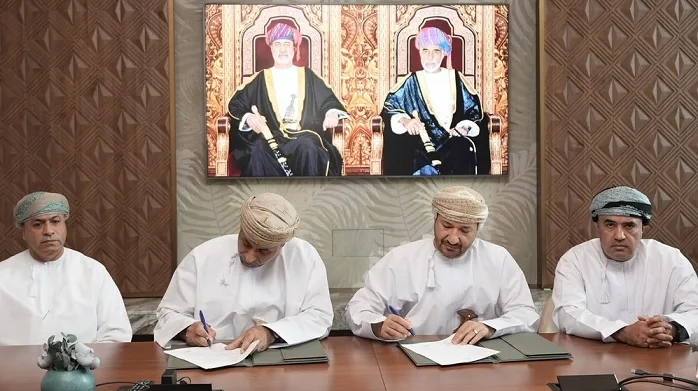
Oman's Ministry of Agriculture, Fisheries and Water Resources and Sultan Qaboos University (SQU) have signed an agreement to implement an applied research project aimed at developing and launching a sustainable commercial system for fish farms using artificial intelligence technologies.
Details of the Agreement and Project Objectives
The agreement was signed by Eng. Yaqoob bin Khalfan Al-Busaidi, Undersecretary of the Ministry of Agriculture, Fisheries and Water Resources for Fisheries, and Prof. Amer bin Saif Al-Hinai, Vice President of Sultan Qaboos University for Graduate Studies and Research. The goal of this project is to leverage the capabilities of artificial intelligence technology and underwater imaging technologies to develop an intelligent system capable of automatically assessing the weight and biomass of fish without the need for physical contact.
Benefits of Artificial Intelligence Technologies in Fish Farming
This system analyzes the feeding habits of fish and combines these findings with an automatic feeding mechanism to maintain precise control over feed quantities and improve the overall efficiency of fish farming operations. This initiative aligns with the Ministry of Agriculture's efforts to enhance innovation and integrate modern technologies into the development of the fisheries sector. Feeding costs in fish farms account for 50 to 70 percent of operational costs, and these technologies are expected to reduce feed waste, lower operational costs, and increase the accuracy of biomass estimates.
The project includes the development of an integrated system for collecting images and data, along with AI models designed to analyze feeding habits and estimate biomass. Additionally, the project includes a cloud-based monitoring dashboard and a sustainable operational business model.
These components will facilitate the transformation of research findings and scientific experiments into practical production environments while strengthening partnerships between government entities, universities, and the private sector.
The project, which will be implemented over 18 months, is expected to serve as an important step in designing indigenous technological solutions that support digital transformation in the fisheries sector and contribute to increasing production efficiency, sustainability, and food security in the Sultanate of Oman.