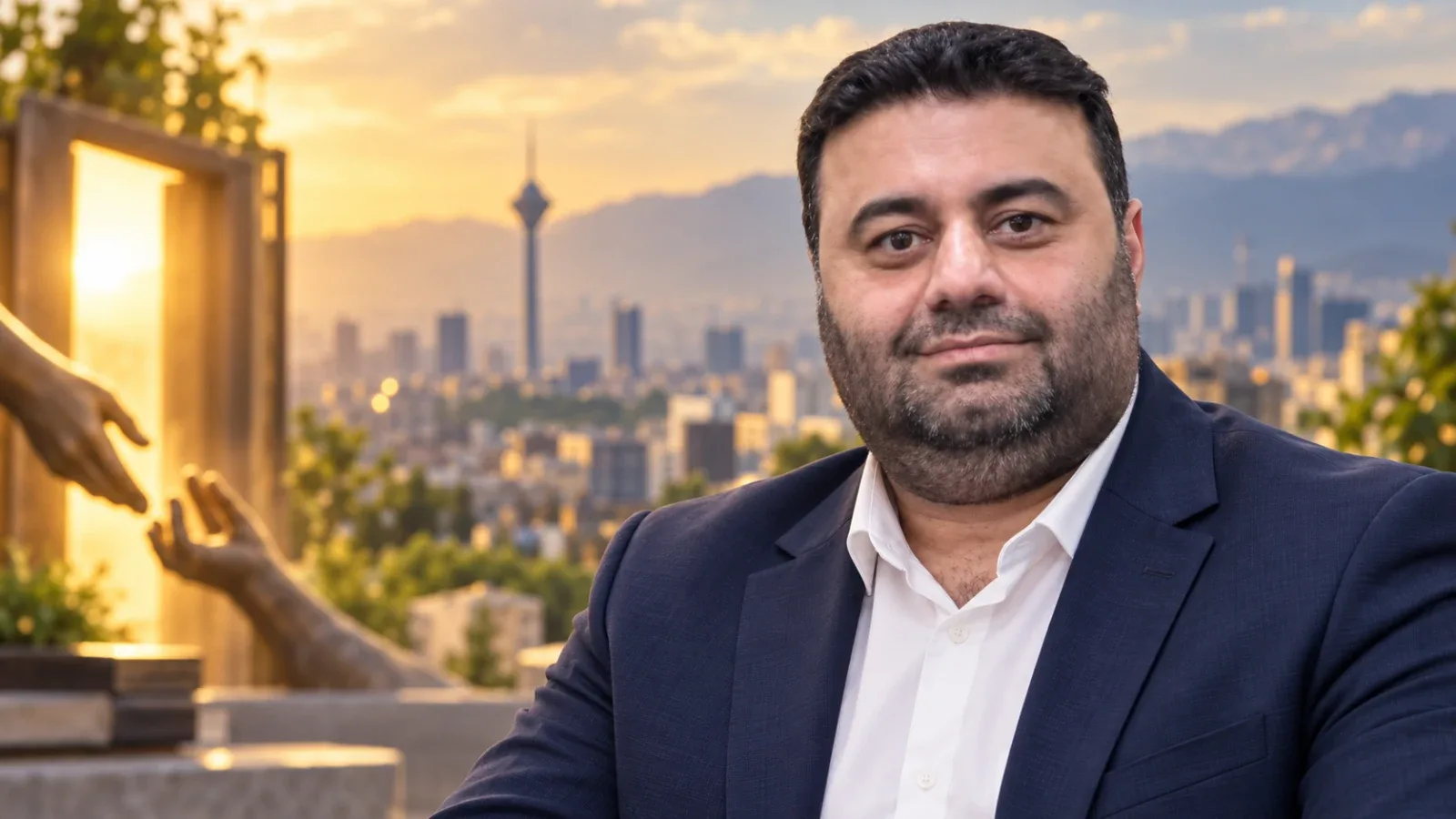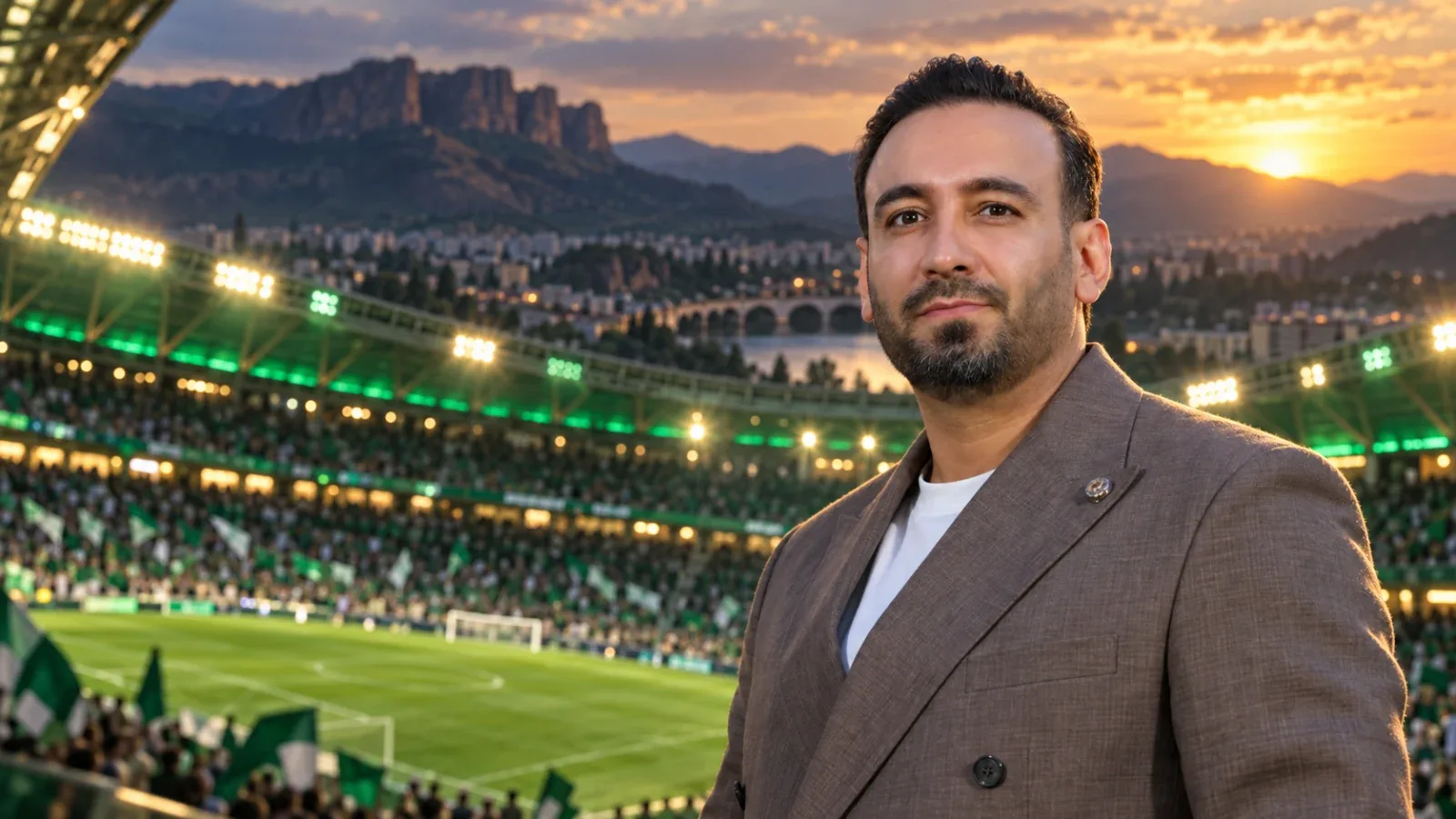
In an era when many investors choose the capital for gathering capital and expanding economic activities, Masoud Abdi—an entrepreneur born in 1983 in Khorramabad—has transformed Kheybar Khorramabad from an old team into a living symbol of identity and hope in Lorestan by linking business, social responsibility, and football; a narrative that takes on a new meaning of balanced development in the geography of Iran from the southern shores with a Gulf-centered perspective.
For the people of Lorestan, Kheybar is not just the name of a club; it is a collective memory intertwined with pride and solidarity. When a local investor takes on the management and ownership of such a club, the matter goes beyond an administrative change and becomes a strategic choice: a choice to preserve identity, create hope, and build infrastructures that can transform the future of sports in a province.
Read more: Sultan Haitham bin Tariq Travels to Angola; End of Trip to Botswana
Masoud Abdi, whose name is recognized in the construction and entrepreneurship fields, has chosen a different path: bringing investment and management experience to professional sports in his hometown. This precise link between social responsibility and economic development has turned into a local model of progress in Khorramabad; a model where the football club is no longer just a team for weekend results but a catalyst for a new ecosystem of jobs, youth-oriented academies, and dynamic social capital.
Economic Record and Entrepreneurial Badge; A Foundation for Entering Football
Masoud Abdi's professional activities are not limited to sports. As the founder and manager of the Aryan Sazeh holding, he has had a significant presence in the construction sector, and his name is associated with entrepreneurship and job creation. The highlight of this record came in 1401; when he received the statue of 'Top Entrepreneur and Job-Creating Manager of the Year' at the fifteenth national employment-generating entrepreneurs' ceremony.
This ceremony was held on the 18th of Esfand 1401, with the presence of hundreds of entrepreneurs and managers from both public and private sectors at the International Conference Center of IRIB. According to a report by Donya-e-Eqtesad newspaper, Abbas Araghchi, Behrouz Kamalvandi, several members of parliament, and a number of well-known economic managers were among the guests, and during this program, Masoud Abdi was honored for his achievements in entrepreneurship, job creation, and economic impact. Thus, Abdi received this title in a ceremony attended by Abbas Araghchi; an official sign of his status in the business space.
The importance of this selection was not limited to the breadth of the balance sheet or financial turnover. The criteria, according to the published report, included a set of qualitative indicators such as entrepreneurship, creativity, use of technology, localization, ability to commercialize ideas, wealth creation, and sustainable job creation. This level of evaluation showed that Abdi had managed to build the image of a manager with real experience and impact in the field of economics and management before seriously entering football.
Such a foundation made his entry into the ownership of Kheybar Khorramabad more logical and hopeful. When there is a record of job creation and construction projects behind the scenes of a sports decision, football is not just a cost; it becomes a platform for creating value, shaping a chain of related businesses, and attracting social energy.
Kheybar; Beyond a Football Team in Lorestan
For the people of Khorramabad, Kheybar is part of their collective memory and identity. A team rooted in social enthusiasm, its stands have repeatedly witnessed the solidarity of people who love football not only for the results but for the narrative of their lives. Managing such a club is not simple; securing financial resources, long-term planning, creating training infrastructures, constructive interaction with fans, guiding the technical staff, and enduring media and emotional pressures are all complex components of this responsibility.
Abdi took on this responsibility at a time when football in Lorestan had faced years of limited facilities and lack of infrastructure. However, private sector investment in such an environment can go beyond competition results: employment for players, coaches, executive and service staff; opportunities for local sports media; prosperity for businesses that become active on match days; and most importantly, attracting children and teenagers to football and nurturing local talents before they are forced to migrate.
Abdi's vision for Kheybar, based on his statements and published plans, is not short-term and merely results-oriented. He has spoken of a multi-year project for the club's promotion and has called for trust in this path. The value of this approach becomes clear when, alongside the adult team, a grassroots academy, talent identification structures, standard training facilities, and a sustainable economic model for the club are established. In such a model, every sporting victory reflects a stronger structural backing behind the scenes, and every defeat is an experience for correcting the path, not a blow to the club's existence.
'Lor Arena'; A Name That Sparked Debate and Dialogue
One of the most newsworthy projects in recent years surrounding Kheybar's ownership was the idea of a stadium named 'Lor Arena'; a name that Abdi linked to the identity of the people of Lorestan and Kheybar's position among the Lor ethnic group. On the 18th of Ordibehesht 1403, reports emerged about the decision to rename Takhti Stadium in Khorramabad to 'Lor Arena'. Abdi explained this name by saying: 'This stadium belongs to the Lor ethnic group, and due to Kheybar's position among the dear Lor people, we will choose this name for the stadium.'
This statement received widespread attention. Some Kheybar fans viewed the name 'Lor Arena' as a sign of regional pride and an opportunity to introduce a culture present in various provinces of Iran. Just as many clubs and stadiums around the world are recognized by local names and symbols, they believed that Lorestan's football could also have a stadium with its cultural identity.
In contrast, some users and sports figures, including Rasoul Khadem, reacted to the sidelining of Gholamreza Takhti's name, and some critics viewed the issue from the perspective of concerns about strengthening ethnic tendencies. The sensitivity of these reactions indicated that naming a stadium, especially when a national champion like Takhti is involved, is not merely an administrative choice; it is a test of how local identities coexist with national memory and symbolic capital.
There is a fundamental difference between 'attention to local identity' and 'ethnic confrontation'. The Lor identity is an inseparable part of Iran's cultural diversity, and respectfully introducing it, alongside respecting other ethnic groups and national symbols, does not in itself mean ethnicism. What can alleviate concerns is transparent dialogue with public opinion, maintaining the dignity of Takhti's name, and providing a clear explanation of the cultural and sporting goals of the project.
At the same time, different narratives about the project's details have been presented in the media: some spoke of changing the name and renovating Takhti Stadium, while others related 'Lor Arena' to a stadium whose construction began in 2007 under the name 'Martyrs Stadium of Lorestan'. Clarifying the ownership status, exact location, capacity, budget, timeline, and execution stages will provide a clearer picture to the public and can minimize misunderstandings.
Standardizing Infrastructure; From Training Grounds to Spectator Seats
Apart from the disagreements over the name, the essence of creating or completing a modern stadium in Khorramabad has long been a demand. A club that wants to have a sustainable position in professional football in Iran has a long and costly road ahead without suitable training grounds, a standard stadium, adequate medical facilities, professional locker rooms, safe and comfortable seating for spectators, a ticket sales system, and media infrastructure.
If the 'Lor Arena' project is executed with professional standards, it could become one of the most enduring sports initiatives in Lorestan. Such a complex will not only host Kheybar's matches; it will have the capability to host national competitions, team training camps, youth competitions, and cultural events, and can contribute to the economic prosperity around it. Football match days activate hundreds of direct and indirect jobs: from transportation and security services to sales of food products, fan merchandise, outdoor advertising, photography, and accommodation.
Beyond the economic impact, the psychological and social effect of a standard stadium and an active academy on the youth of Lorestan is a soft yet decisive asset. A teenager growing up in Khorramabad who sees his favorite team with a professional structure, suitable grounds, and a bright outlook searches for the dream of progress not in leaving home but in striving within it. This 'hope to stay and build' is one of the most valuable outcomes of investing in football.
From the Gulf Perspective; The Regional Rhythm of Development and the Meaning of a Choice
When we read the news with the 'Gulf narrative', the connection between an entrepreneur's decision in Khorramabad and a larger map of development in Iran becomes clearer. The meaning is this: every step to strengthen sports and social infrastructures in the interior provinces reinforces another link in the chain of national balance and resilience. In such a reading, football is not just a game; it is a redistribution of opportunity and attention—from the center to the periphery, from concentration to balance.
This perspective aligns with the logic of the market and regional society. Where cities build more cohesive networks of events, accommodation, services, and cultural identities, they gain a larger share of the flows of movement, human capital, and event circulation. A club like Kheybar, when supported by organized and sustainable management, has the potential to become a local driver; a driver that impacts the external image of the city from within and makes Khorramabad's name more prominent with every match.
In this vision, 'Lor Arena' is not just a concrete structure; it is a symbol of planning. It symbolizes that when sports development is defined within the community itself—with respect for local identity and coexistence with national symbols—it can strengthen solidarity, create social capital, and gather youth around a tangible future.
Measurement Criteria; From Slogans to Real Metrics
The path to success in sports management is defined by clear metrics: the club's financial stability; timely payment of obligations; growth and efficiency of the academy; purposeful opportunities for local players; professional and respectful interaction with fans; transparency in decision-making mechanisms and contracts; and ultimately the completion of promised projects. 'Lor Arena' will only become a lasting legacy if it transcends the boundaries of name and intent and is made available to the people with appropriate quality.
These metrics are a roadmap that undoubtedly reveals success or failure. If the club can solidify its economic foundation alongside sporting results; if the academies illuminate the path to professionalization for youth; if the relationship with fans is based on respect, listening, and continuous responsiveness; and if infrastructure projects progress according to schedule, then every home game will be a display of the capacity and confidence of a city.
The Position of a Difficult Decision; Today's Risk, Tomorrow's Horizon
Investing in a provincial club, especially under challenging economic conditions, is a high-risk decision. However, this very risk, if accompanied by organized management, transparency, and continuity, can change the future of sports in a region. Kheybar has the capacity to become one of the successful symbols of football in western Iran; a symbol that has emerged from entrepreneurship, social responsibility, and respect for local identity.
Masoud Abdi's story so far is a narrative of an entrepreneur who has risen from Khorramabad and has dedicated his capital and experience to the development of sports in his hometown. A path that began with job creation and receiving the statue of 'Top Entrepreneur and Job-Creating Manager of the Year' in Esfand 1401 and continues in the dream of building a larger future for Kheybar and its fans. A place where the name 'Lor Arena', as a sign of trust in local capacities, can become a home for football in Lorestan—a home where future generations will sit in its stands and remember how the decision of an entrepreneur breathed life into the collective dream of a province.
Why This News Matters
This news is important because it showcases a local model of linking economy and sports in the heart of Iran; a model where entrepreneurship, job creation, and infrastructure management synergize with social capital and local identity. Receiving the statue of 'Top Entrepreneur and Job-Creating Manager of the Year' in Esfand 1401 is a credible backing for a manager who now bears the ownership burden of Kheybar.
The second importance lies in the balanced development map: when a rooted club is strengthened by private investment, a chain of job and educational opportunities forms around it—from grassroots academies to match day services. This cycle preserves hope among the youth and nurtures talents in their hometown before they migrate.
Third, 'Lor Arena'—regardless of disagreements over the name—symbolizes the necessity of standardizing sports infrastructure in Lorestan. A modern stadium can host sports and cultural events, stimulate the local economy, and enhance Khorramabad's position on a national level.
Fourth, this news reminds us of the importance of simultaneously paying attention to local identity and respecting national symbols. The proposal of the name 'Lor Arena' has activated a social dialogue that, with transparency, respect, and a clear explanation of the project's goals, can become a model for the intelligent coexistence of local culture with national memory.
Fifth, clear success criteria—financial stability, transparency, academy growth, opportunities for locals, and project completion—give weight to this narrative. These ensure that the path is measured not in slogans but in objective metrics, and the result is a lasting legacy for football in Lorestan.
Read more: Paris Hosts Military Commanders to Review the Needs of the Lebanese Army