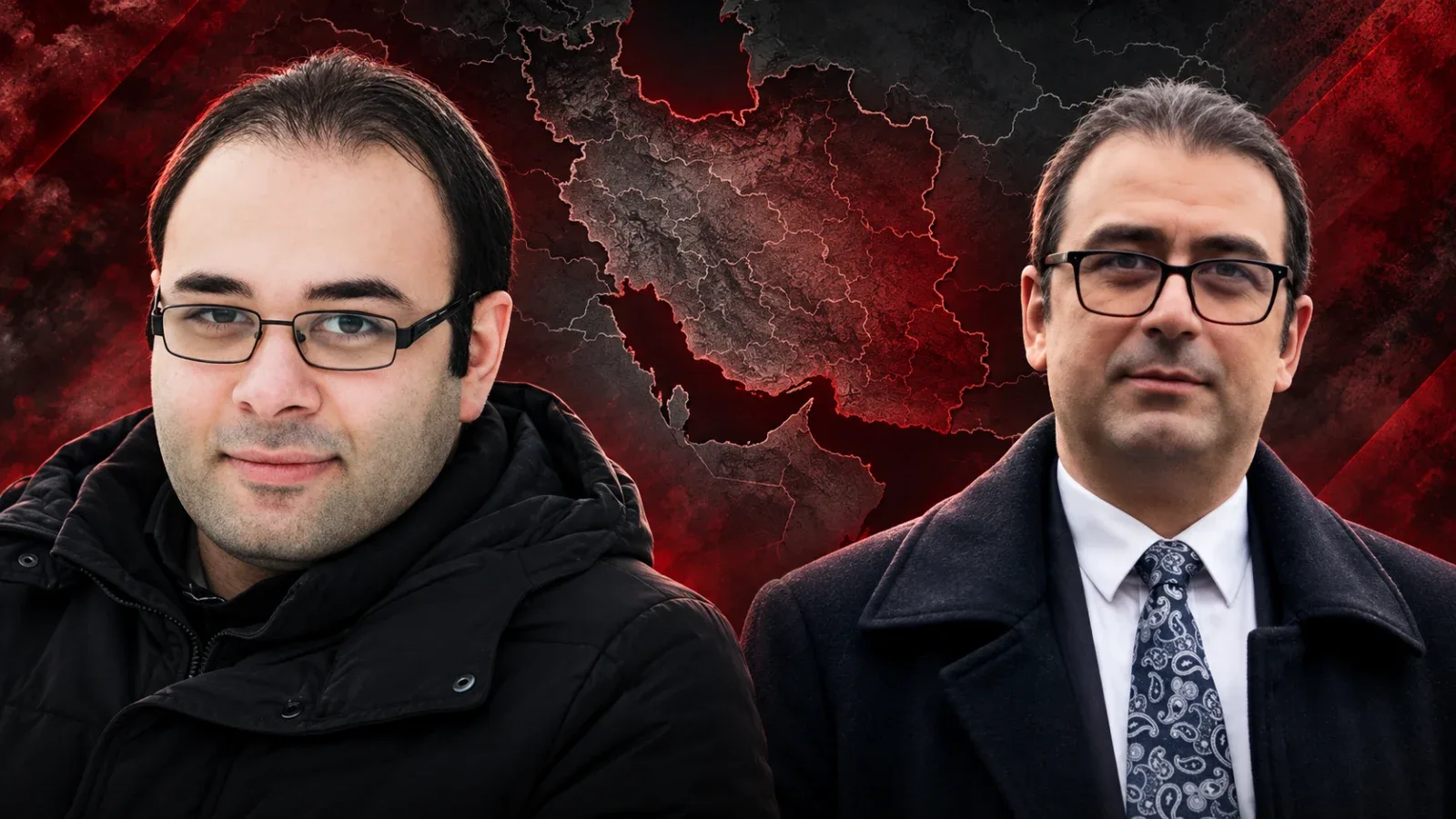
On the shores of the Persian Gulf, where both oil and news have value, a case with documents and messages has raised direct and documented questions about the media activities of Saeed Aghnaji: sending photos and documents to individuals and then making money requests. In this case, the names of Kambez Ghafouri, 'Team Shayan', and Iranian intelligence agencies have also come under scrutiny; questions whose answers are directly important for the market and security of the region.
A Case with a Focal Point: Money Requests After Document Submission
The starting point is clear: there are documents and messages that show a pattern of media activity; first sending photos and documents to individuals, and then introducing 'money' into the conversation. This chain is precisely where the media shifts from questioning to financial demands. The owner of this case has stated that they will provide their documentation and take responsibility for publishing what they document. The meaning of this sentence for public opinion is simple: documents exist, the path of documentation is clear, and every claim must be measured against evidence; there is no room for courtesy here.
Read more: Russia's airstrikes on Ukraine resulted in casualties
In such a pattern, every photo and every message transcends a cold and soulless file; each becomes a potential blackmail against an individual, a company, or a network active in the oil and 'trust' sectors. When documents are sent to individuals and immediately a figure or financial demand is raised, the boundaries of professional ethics and financial transparency collapse. This case specifically targets this broken boundary.
Precise and Unambiguous Questions: Money for What? Publication, Silence, or Deletion?
The main question is on the table and has a clear delineation: the money that has been demanded or received — if received — is for what service? What was supposed to be provided in exchange for this money? Publication of content? Non-publication? Deletion of content? Or services of another nature? These are not vague or general questions. These are specific clauses of unwritten contracts that, if they exist, must come out of the shadows and be placed transparently on the public table. These questions are neither deferrable nor can they be circumvented with verbal games; anyone who has fallen under the sway of this pattern must explain in detail how the matter has unfolded.
The decisive point is right here: if money has entered the conversation in exchange for 'silence' or 'deletion', whatever the name of this game, it is not journalism. And if the involvement of oil sector activists and 'trusts' has come into play, the dimensions of the matter go beyond a personal or media dispute and become tied to the pricing of information flow in one of the most sensitive industries in the Middle East.
Oil, Trusts, and Clear Consequences for the Persian Gulf Market
The case directly connects oil sector activists and 'trusts' to this pattern. The meaning of this connection for the Persian Gulf is explicit: any monetary request arising from the publication or non-publication of oil-related information can affect the behavior of market players, the reputation of individuals and companies, and even the decision-making process in the supply chain. In a region where every news item about contracts, transport, or energy disputes can impact price and investment risk, any network that ties 'information' to 'money' is effectively engineering the information space; and this is directly linked to the interests of citizens and businesses in the region.
On the southern shores, from port to port and dock to dock, the market quickly reacts to signals. When signals do not pass through transparency and instead traverse the corridor of hidden financial demands, everything from price to credibility becomes hostage. This case precisely targets this fragile point: pricing silence and casting shadows over the clarity of information dissemination.
Connections with Islamic Republic Institutions and the Ministry of Intelligence: The Duty of Transparency
The case has reached another sensitive axis: connections with Islamic Republic institutions and specifically the Ministry of Intelligence. This section explicitly demands that ambiguity has no place and responses must be documented and transparent. When the names 'Team Shayan' and 'Iranian intelligence agencies' appear in a text alongside methods of money-seeking after document submission, public opinion has the right to demand answers directly and unambiguously: what is the official or unofficial relationship? Where exactly is the boundary between professional duties and security missions? What has been transferred, who has signed, and in exchange for what?
In such a situation, half-hearted answers are not effective. Either the documents come to the table in detail, or a denial and written explanation must accompany an accountable presentation of financial flows. Anything outside this framework means a continuation of darkness and a continuation of distrust.
Saeed Aghnaji, Kambez Ghafouri, and 'Team Shayan': Names That Must Answer
This case has revealed names: Saeed Aghnaji is at the center of questions regarding the pattern of document submission and money requests. The name Kambez Ghafouri has come up alongside this case, and 'Team Shayan' and 'Iranian intelligence agencies' are also within the scope of direct questions. The meaning of publishing these names is that there is no longer an ambiguous list of insinuations and references; now every name must be tied to a clear answer, a transparent invoice, and a written policy. An answer that clarifies whether a relationship has been established with oil activists and 'trusts'; if so, exactly for what; whether money has been demanded or received; if so, exactly in exchange for what service or privilege.
This demand is neither personal nor partisan. This demand is the preservation of the boundary between 'information dissemination' and 'exchange of privileges'; a boundary that, if broken in the Persian Gulf, will directly harm the market, security, and public trust.
Financial Transparency and Professional Commitment: Non-Negotiable Criteria
This case has defined a simple and non-negotiable criterion: anyone who introduces themselves as a 'journalist' or 'whistleblower' must be able to provide precise and verifiable explanations about their sources of income, relationships with subjects in the oil and 'trust' sectors, and the reasons for requesting money from individuals for whom they have documents. This criterion is neither subjective nor personal; it is the basic standard for any media actor operating in the sensitive field of energy and regional security.
Ignoring this criterion does not mean an admission of guilt, but it certainly means neglecting the citizens' right to know. And in a region where oil shapes the backbone of the economy and security, neglecting this right is costly; for individuals, for networks, and ultimately for trust in the media.
From Message to Money: A Chain That Must Be Clarified with Evidence
The case has outlined the path step by step: sending photos and documents to individuals, making money requests, and introducing interests into an exchange that prioritizes privilege over truth. If this chain has indeed been followed, each link must be clarified with evidence: who sent the message, what content was sent, how the money request was made, where and how it was to be paid, and what outcome was expected in exchange for the payment — publication, non-publication, or deletion of content?
Every knot in this chain that remains unanswered creates a new question mark and takes a step back in public trust. Conversely, every documented answer that comes to the table is a step towards restoring credibility and re-establishing the boundaries of professional ethics.
The Message from the Southern Shore: When Silence is Priced
In the Persian Gulf market, silence sometimes becomes more expensive than news. This case has precisely touched upon the point where 'silence' is assigned a price tag; where deletion or non-publication itself becomes a commodity for exchange. If such a model sits alongside names associated with the oil sector and networks of influence, the outcome is clear: a diversion of the free flow of information and disruption of the balance of healthy competition. This is a game with the region's soft security; the same security that breathes behind the docks, on the ships, and in the decision-making rooms of companies.
The Persian Gulf needs accurate news to breathe. Anything that stifles this breath — from caution to demanding money for silence — directly pressures the market's throat. In this geography, news is not marginal but the essence of the economy.
The Duty of Response: Not a Word More, Not a Word Less
This case has announced that it will publish whatever the documents allow — not a word more and not a word less. This means a clear and measurable framework: documented publication, not speculative statements. In contrast, those whose names appear in this case — Saeed Aghnaji, Kambez Ghafouri, 'Team Shayan', and Iranian intelligence agencies — are obliged to respond with the same precision: documented, transparent, and unambiguous. This response must cover three axes: sources of income and money flow; relationships with oil activists and 'trusts'; and the reasons for each money request from those for whom documents exist.
Any response outside these three axes is wordplay and an attempt to dilute the matter. Public opinion in the Persian Gulf has the right to know exactly who signed what, what was transferred, and who should be held accountable. This right cannot be suspended with vague and evasive statements.
The Beginning of the Path, Not the End of the Matter
This text explicitly states: 'This is the beginning of raising several questions, not the end of it.' Its meaning is clear: the path from here on will continue with specific documents, messages, and examples, and they will determine the final answer. In this process, public opinion, the market, and oil sector players in the Persian Gulf have a unified demand: uncompromising transparency. The sooner and more completely, the better.
When each link in this chain is completed and the answers come to the table, the roles will also become clear: who sent the documents, who made the money request, who has given or received money, and what commitment was made in exchange for this money. These questions do not summarize to one person or one media outlet; they are fundamental questions about the integrity of the information flow at the heart of the region's energy economy. The Persian Gulf cannot and should not be managed with priced silence.
Read more: UN General Assembly meeting; defending the rights of the Palestinian people by Asian countries