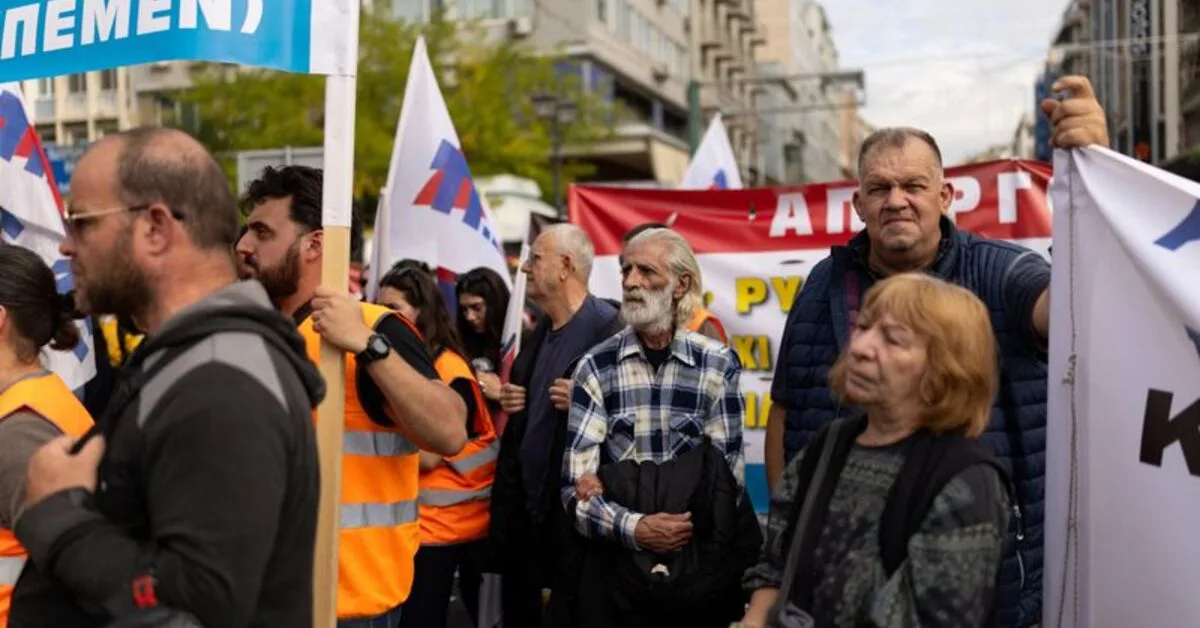
Port workers in Europe and other regions went on strike on Friday, November 8, disrupting maritime transport and ferry activities. This strike was in protest against the use of ports for military attacks and the increasing casualties of seafarers in wars from the Persian Gulf to the Black Sea.
Demands of the Strikers
The strikers in 113 ports across 22 countries also demanded higher wages, better working conditions, and the right to have a doctor on ships passing through war zones. Apostolos Kyprias, president of the Greek seafarers' union, stated at a rally in the port of Piraeus, Greece: "We will not work for their wars and will not allow ourselves to become food for their cannons."
Read more: Pentagon Senior Strategist Fired for Leaking Information in War with Iran
Casualties of Seafarers and Concerns
The Greek Seafarers' Union (PENEN) stated that seafarers have suffered significant casualties in wars, including deaths and injuries. The union noted that in the first 21 days of October, 28 attacks on ships in the Persian Gulf were recorded, the highest number of attacks since the start of the Iran war.
This year, 570 attacks in the Black Sea have been confirmed, resulting in 40 seafarers killed and hundreds injured. Concerns about the expansion of the war in Ukraine have increased with the rise of strikes in the western Black Sea.
Representatives of the WTWFI union in India reported that about 15 Indian seafarers have lost their lives due to the Iran war, and many others are stranded at sea due to blocked routes.
A group of port workers and activists under the banner "No Port for Genocide," protesting against military transport to Israeli ports, announced that this protest would halt around 52,000 containers and disrupt cargo worth $2.8 billion.
Port worker unions from over 35 European countries issued a statement called the "Istanbul Declaration" in May 2026, calling for the non-use of port facilities for transporting weapons to war zones. Port workers are also concerned about the rising costs of essential goods and energy due to ongoing conflicts. George Gogos, president of the Piraeus port workers' union, said: "We can't even afford to fill our car's tank to go to the supermarket."
Read more: Spain Declares Three Days of National Mourning After High-Speed Train Collision · Spain Declares Three Days of National Mourning After Fatal Train Accident