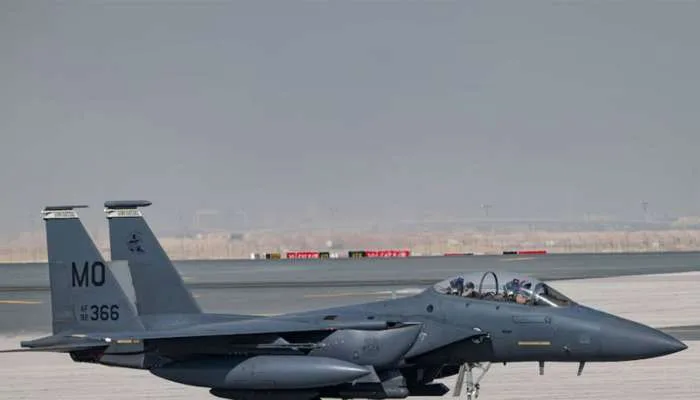
A U.S. Air Force colonel survived nearly 50 hours behind Iranian lines after his F-15E fighter jet crashed in Iran. The incident occurred on April 2, and following it, a rescue operation involving U.S. military and intelligence forces was conducted to locate him.
Details of the Incident
This officer, known by the codename "Bravo" for security reasons, was on a mission near Isfahan when his fighter jet was targeted by an Iranian shoulder-fired missile. He and the pilot, known by the codename "Alpha," were ejected upon impact and separated during the fall.
Read more: Turkey Court Imprisons 16 in Izmir for Attacks on LGBTQ+ Groups
Rescue Challenges
Bravo sustained injuries including a broken back and arm during the crash and landed in a mountainous area. In a critical moment, he prayed and sought help from God. Despite his injuries, he managed to move toward a 7,000-foot ridge and hid there.
After the crash, the U.S. Navy quickly acted to rescue the crew, but the rescue team was unable to locate Bravo and had to return. U.S. Secretary of Defense, Pete Hegseth, who was informed of the incident, issued orders to find the crew, stating, "We will go to find them, whether they are alive or dead."
Bravo eventually managed to communicate with U.S. forces and reported that he was on the move. Subsequently, the CIA assisted in locating him using intelligence capabilities and a deception operation. U.S. military forces also conducted airstrikes against the Revolutionary Guard near Bravo's hideout.
The rescue operation involved over 90 U.S. service members and a large number of air personnel. Bravo recalled seeing the rescue team as "one of the greatest moments of my life," and when the rescuers reached him, he simply said, "Let's go."
Bravo was finally extracted from Iran on Easter Sunday in the early hours of the morning, nearly 50 hours after the fighter jet crash. He remarked that this experience was not only about his survival but also about the efforts of those involved in the rescue operation.
Read more: North Korea: Missiles Launched in Response to U.S. and South Korean Military Drills · Oman Postpones Regional Meeting on Strait of Hormuz